The Benefits of IP67 Laser Distance Sensors in Heavy Industry
Industrial environments often expose sensors to dust, water, vibration, and extreme operating conditions.
In these situations, a standard capteur de distance may fail quickly due to contamination or internal damage.
An IP67 rated distance laser sensor is specifically designed to operate reliably in harsh industrial environments such as:
- mining operations
- steel manufacturing plants
- outdoor la logistique yards
- automated factories
By combining high-precision mesure laser with rugged protective housings, these sensors enable stable and accurate distance monitoring even in the most challenging conditions.
What Is an IP67 Laser Distance Sensor?
An IP67 laser sensor is a mesure de la distance device designed with a sealed housing that prevents dust ingress and protects internal electronics from water exposure.
According to the IEC 60529 standard, the IP rating defines the level of protection against solid particles and liquids.
For IP67 devices:
- 6 – Dust Tight
Complete protection against dust ingress.
- 7 – Water Protection
Protection against immersion in water up to 1 meter for a limited time.
This level of protection ensures that Détecteurs de distance à laser remain operational even in harsh industrial environments.
Why Heavy Industry Requires IP67 Laser Sensors
Industrial production environments often involve conditions that can damage standard sensors.
Typical risks include:
| Environmental Factor | Impact on Standard Sensors |
|---|
| Dust & particles | Optique contamination |
| Water spray | Circuit corrosion |
| Vibration | Component misalignment |
| Temperature variation | Measurement instability |
Un IP67 laser distance sensor solves these problems by using:
- sealed industrial housing
- reinforced optical window
- stable electronic protection
- industrial communication interfaces
Key Benefits of IP67 Laser Distance Sensors
1 Reliable Measurement in Dust-Heavy Environments
Industries such as mining, cement production, and grain storage generate large amounts of airborne dust.
Dust entering a sensor can cause:
- inaccurate readings
- optical blockage
- premature failure
An IP67 sealed laser sensor prevents dust from entering the housing, ensuring reliable measurement.
Typical applications:
- bulk material level monitoring
- conveyor belt distance monitoring
- mining vehicle positioning
2 Waterproof Operation for Outdoor Systems
Many industrial measurement tasks occur outdoors.
Examples include:
- port container yards
- agricultural automation
- reservoir monitoring
- outdoor robotics
An IP67 waterproof capteur de distance laser can withstand rain, humidity, and temporary water exposure.
This makes it ideal for:
- outdoor AGV navigation
- construction site monitoring
- smart infrastructure systems
3 Rugged Mechanical Protection
Industrial systems often expose sensors to vibration and mechanical stress.
IP67 capteurs laser typically feature:
- metal protective housings
- reinforced mounting structures
- electromagnetic shielding
These features protect the sensor in environments such as:
- steel rolling production lines
- heavy machinery systems
- automated warehouse equipment
4 Stable High-Precision Measurement
Modern industrial laser sensors can provide millimeter-level accuracy and rapid measurement speeds, enabling reliable real-time monitoring in automation systems.
Benefits include:
- precise object positioning
- accurate distance monitoring
- improved automation efficiency
These capabilities make laser sensors ideal for:
- robotic guidance
- industrial automation systems
- safety distance monitoring
Real Industrial Applications of IP67 Laser Distance Sensors
Mining Industry
Laser sensors are widely used for:
- ore pile height monitoring
- conveyor belt distance measurement
- vehicle positioning in mining tunnels
Why IP67 matters:
Mining environments contain extreme dust and vibration, which require sealed industrial sensors.
Steel Manufacturing
Steel plants use laser distance sensors for:
- slab positioning
- furnace material monitoring
- crane positioning
Challenges include:
- high temperatures
- dust and sparks
- strong vibration
IP67 protection ensures long-term reliability.
Entrepôts automatisés
Automation systems require reliable sensors for:
- AGV navigation
- pallet positioning
- collision prevention
Compact IP67 laser sensor modules can easily integrate into robotics and warehouse automation systems.
Infrastructure Monitoring
Laser sensors are increasingly used for long-term structural monitoring.
Examples:
- bridge displacement monitoring
- tunnel deformation measurement
- construction site distance tracking
Because laser measurement is non-contact, it allows accurate monitoring without affecting the structure.
Real Industrial Case Studies Using IP67 Laser Distance Sensors
Case Study 1: Mining Conveyor Belt Distance Monitoring
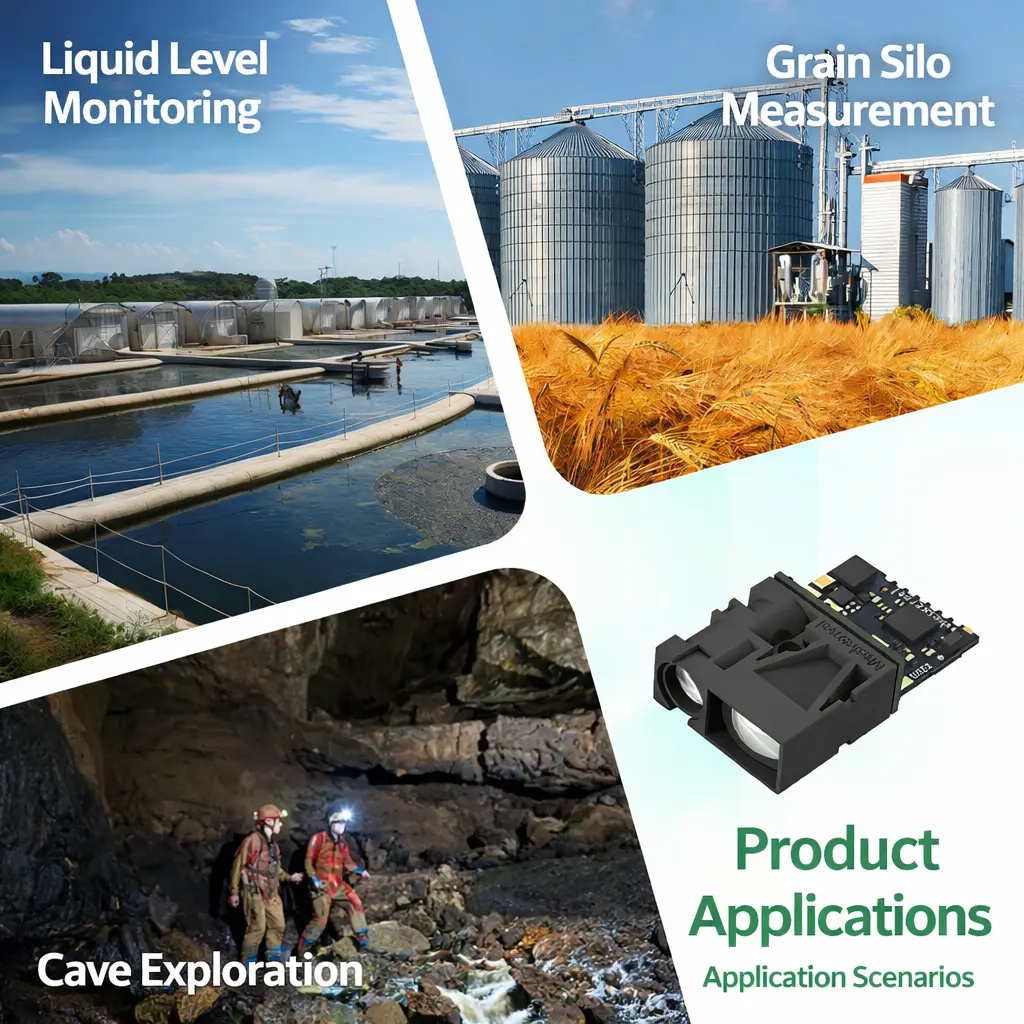
Mining operations generate large amounts of dust, vibration, and mechanical movement, making reliable sensing extremely challenging. In these environments, IP67 laser measuring sensors are widely used to monitor the distance between conveyor belts and transported materials.
By installing an IP67 télémètre laser sensor above the conveyor line, operators can continuously measure the height of ore or bulk material moving along the belt. This helps prevent material overflow, detect abnormal loading conditions, and improve overall operational efficiency.
Because IP67 distance sensors are fully protected against dust and temporary water exposure, they can operate reliably even in underground mines or open-pit mining environments where traditional sensors often fail.
Typical benefits include:
- real-time material height monitoring
- early détection of conveyor overload
- improved safety in mining operations
Case Study 2: Automated Warehouse Robot Navigation
Modern logistics centers rely heavily on autonomous mobile robots (AMRs) and automated guided vehicles (AGVs) to transport goods efficiently. These robots require accurate distance measurement to navigate safely within busy warehouse environments.
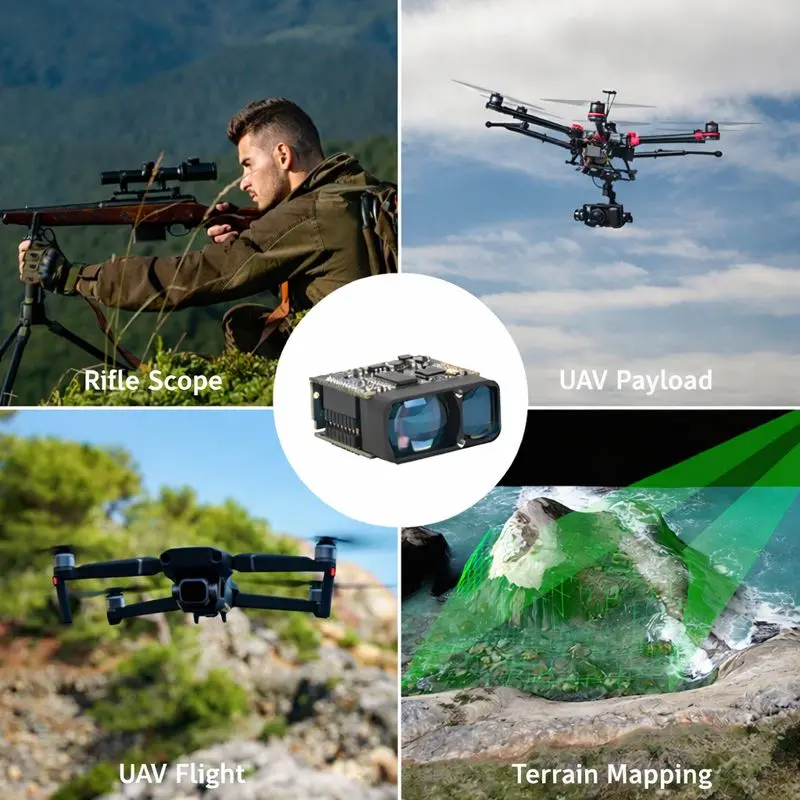
IP67 capteurs de mesure laser are commonly integrated into warehouse automation systems to provide precise distance measurement for navigation, obstacle detection, and pallet positioning.
In automated warehouses, IP67 rated laser sensors offer several advantages:
- stable measurements even in dusty storage areas
- reliable operation during continuous 24/7 logistics operations
- compact design for easy integration into robotics platforms
By enabling precise distance measurement, IP67 laser sensors help robots maintain safe distances from shelves, equipment, and workers, improving both efficiency and workplace safety.
Case Study 3: Outdoor Construction and Infrastructure Monitoring
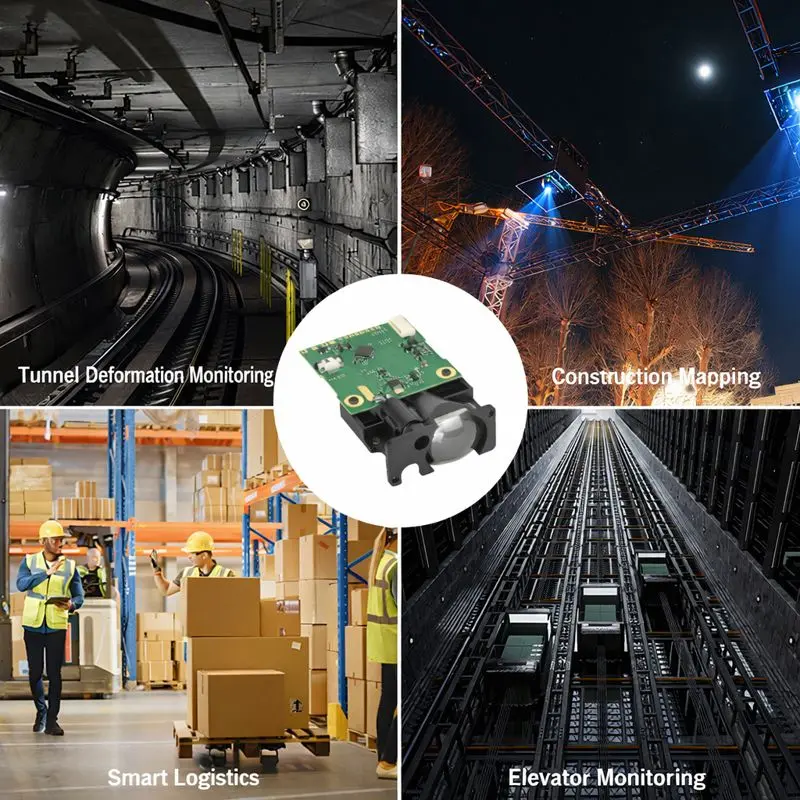
Construction sites and infrastructure projects often require long-term distance monitoring in outdoor environments where sensors are exposed to rain, dust, and temperature fluctuations.
In these applications, IP67 laser range sensors are used for tasks such as:
- monitoring bridge displacement
- measuring construction equipment positioning
- tracking structural movement in tunnels or buildings
Because IP67 télémétrie laser sensors are designed for harsh environments, they can maintain stable performance even when exposed to outdoor weather conditions.
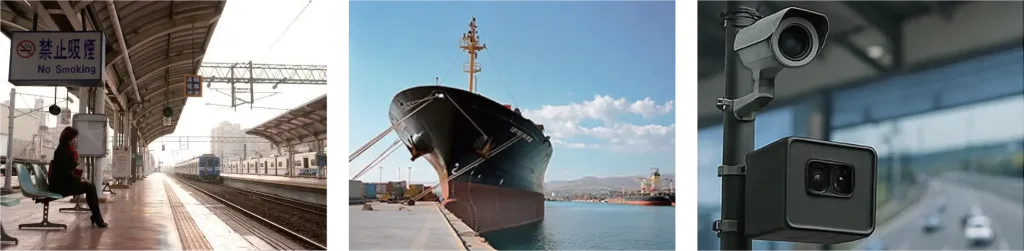
Engineers often choose IP67 Laser Distance Sensors for infrastructure monitoring because they provide:
These capabilities make them ideal for smart infrastructure and construction automation systems.
Customization Options for Industrial Laser Sensors
Industrial projects often require customized sensor specifications.
Manufacturers with strong R&D capabilities can provide customization in several areas.
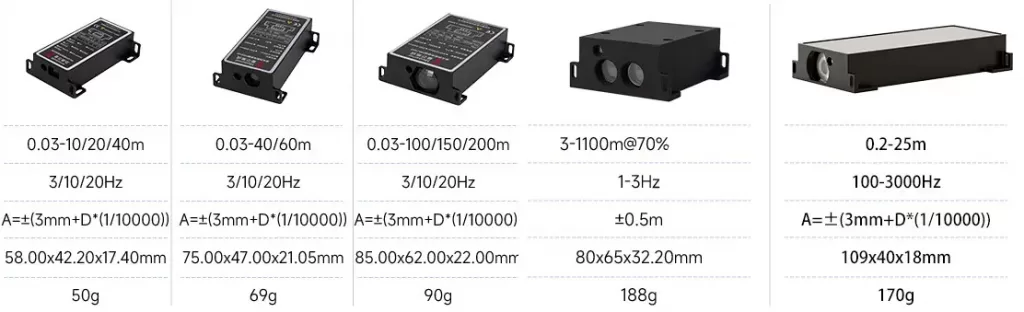
Plage de mesure
Depending on the application:
- short range: 10–50 m
- medium range: 100–200 m
- long range: 1000 m+
Communication Interfaces
Industrial control systems often require different communication protocols.
Les options les plus courantes sont les suivantes :
- UART
- RS232
- RS485
- MODBUS
- CAN
These interfaces allow seamless integration with PLC and industrial control systems.
Protection Level
Different environments require different protection levels.
Options may include:
Protective housings can be customized to ensure the sensor meets specific environmental requirements.
How to Choose the Right IP67 Laser Distance Sensor
When selecting an industrial sensor, engineers should consider:
1 Measurement range
Ensure the sensor range exceeds the maximum required measurement distance.
2 Accuracy requirements
High-precision applications may require millimeter-level accuracy.
3 Environmental conditions
Consider dust levels, moisture, vibration, and temperature.
4 Communication compatibility
Verify compatibility with PLC or industrial controllers.
5 Integration size
Compact modules simplify integration into equipment.
Why Work with an Experienced Laser Sensor Manufacturer
Industrial laser measurement requires expertise in:
- optical engineering
- signal processing
- industrial electronics
- environmental protection design
Manufacturers with strong R&D capabilities can provide:
- custom sensor design
- application engineering support
- reliable industrial protection solutions
Companies with long-term experience in technologie de mesure par laser often develop high-precision sensors with stable performance and flexible customization options.
Quick Summary
IP67 Laser Distance Sensors are rugged industrial sensors designed for accurate distance measurement in dusty, wet, and harsh environments. With complete dust protection and water resistance, these sensors are widely used in mining, steel production, warehouse automation, and outdoor robotics where standard sensors cannot operate reliably.
FAQ
What are IP67 Laser Distance Sensors?
IP67 Laser Distance Sensors are industrial measurement devices designed to provide accurate, non-contact distance measurement while operating in harsh environments. The IP67 rating means the sensor is fully protected against dust and can withstand temporary immersion in water, making it suitable for mining, automation, and outdoor industrial applications.
Why are IP67 Laser Distance Sensors important in heavy industry?
Heavy industrial environments often contain dust, water spray, vibration, and temperature fluctuations. IP67 Laser Distance Sensors are specifically designed to withstand these conditions while maintaining stable précision des mesures. Their sealed housing protects internal optics and electronics, ensuring reliable performance in factories, mines, and steel plants.
Are IP67 Laser Distance Sensors waterproof?
Yes. IP67 Laser Distance Sensors are designed to resist water exposure. The IP67 protection level means the sensor is completely dust-tight and can withstand temporary immersion in water up to one meter. This makes IP67 sensors ideal for outdoor monitoring systems and industrial environments with high humidity or water spray.
Where are IP67 Laser Distance Sensors commonly used?
IP67 Laser Distance Sensors are widely used in industrial environments that require reliable distance measurement under harsh conditions. Typical applications include:
mining conveyor monitoring
steel production lines
automated warehouse systems
outdoor robotics and autonomous vehicles
infrastructure and construction monitoring
What industries use IP67 Laser Distance Sensors?
Industries that frequently use IP67 Laser Distance Sensors include mining, steel manufacturing, logistics automation, construction engineering, and smart infrastructure monitoring. In these sectors, sensors must operate continuously in dusty, wet, or vibrating environments where standard distance sensors may fail.
How accurate are IP67 Laser Distance Sensors?
Most IP67 Laser Distance Sensors provide millimeter-level measurement accuracy depending on the model and measurement range. High-precision industrial sensors can deliver fast response times and stable readings, making them suitable for automation systems, robotic positioning, and industrial safety monitoring.
How to choose the right IP67 Laser Distance Sensor?
When selecting IP67 Laser Distance Sensors, engineers should consider several factors:
required measurement range
précision des mesures
operating environment
communication interface compatibility
sensor size and installation requirements
Choosing the correct industrial sensor ensures stable performance and long-term reliability.