TTL vs RS485 telemetro laser modules are one of the most common interface comparisons engineers face when selecting a laser sensore di distanza for real-world applications.
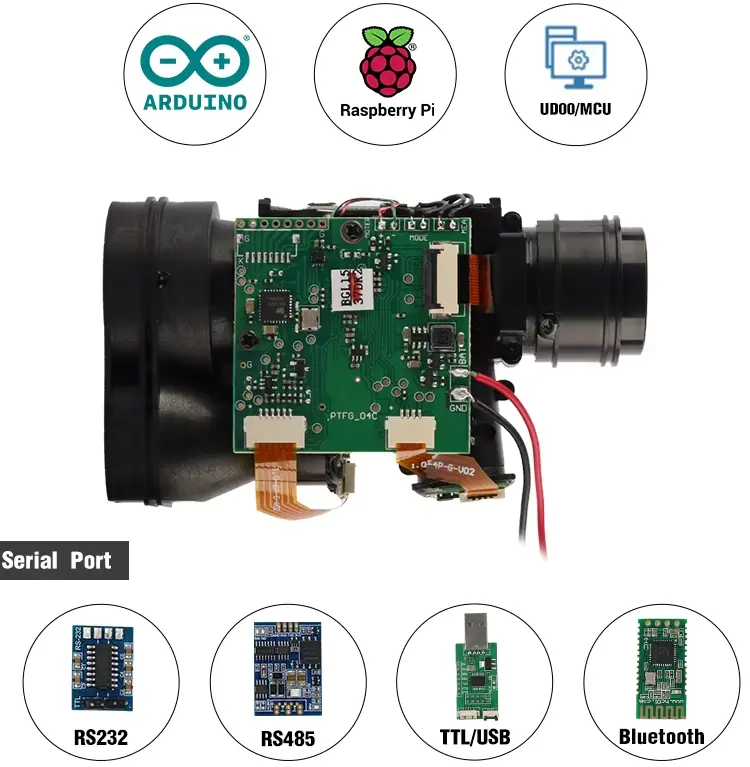
While both TTL and RS485 laser rangefinder modules transmit distance data reliably, they are designed for very different wiring distances, system architectures, and operating environments.
In this guide, we compare TTL vs RS485 laser rangefinder modules from an engineering and application perspective—covering signal transmission distance, noise immunity, wiring complexity, scalability, and typical use cases—to help you choose the right interface for your project, whether you are building a microcontroller-based prototype or deploying a long-distance industrial measurement system.
For engineers and OEM buyers, choosing the wrong interface can lead to unstable communication, higher wiring costs, and costly redesigns during deployment.
Quick Overview: TTL vs RS485 Laser Rangefinder Modules
| Caratteristica | TTL Laser Rangefinder Module | RS485 Laser Rangefinder Module |
|---|
| Signal type | Single-ended UART (TX/RX) | Differential (A/B) |
| Typical voltage | 3.3V / 5V TTL | ± differential |
| Max cable length | < 1 m (recommended) | Up to 1,200 m |
| Noise immunity | Basso | Very high |
| MCU compatibility | Direct (ESP32, Arduino, STM32) | Requires RS485 transceiver |
| Industrial suitability | Medio | Alto |
If your project moves beyond prototyping, this comparison becomes critical.
What Is a TTL Laser Rangefinder Module?
A TTL laser rangefinder module outputs distance data via UART at TTL logic levels. It is commonly used in:
- Embedded controllers
- Robotica
- UAVs
- Smart devices
- Evaluation and rapid prototyping
Key Advantages of TTL Modules
- Plug-and-play with ESP32, Arduino, STM32
- Minimal external components
- Low power consumption
- Fast development and debugging
Limitations to Consider
- Very limited cable length
- Sensitive to EMI and ground noise
- Not ideal for harsh industrial environments
TTL laser rangefinder modules are excellent inside enclosures, where cable runs are short and environments are controlled.
TTL Laser Rangefinder Module: Selection, Integration & Buying Guide
What Is an RS485 Laser Rangefinder Module?
An RS485 laser rangefinder module uses differential signaling to transmit distance data, making it ideal for:
- Automazione industriale
- Outdoor installations
- Long cable runs
- Electrically noisy environments
Key Advantages of RS485 Modules
- Communication distance up to hundreds of meters
- Strong noise immunity
- Multi-drop networking capability
- Stable performance in industrial environments
Trade-Offs
- Requires RS485 transceiver or interface board
- Slightly higher system complexity
- Marginally higher cost
For field-deployed systems, RS485 is often the safer long-term choice.
TTL vs RS485: Real Application Scenarios
Scenario 1: Embedded Device or Robot (Short Distance)
Consigliato: TTL laser rangefinder module
- MCU located close to sensor
- Short internal wiring
- Battery-powered system
TTL minimizes complexity and speeds up development.
Scenario 2: Industrial Automation or AGV System
Consigliato: RS485 laser rangefinder module
- Long cable runs
- Motors, relays, inverters nearby
- 24/7 operation
RS485 ensures stable communication even in noisy environments.
Scenario 3: Outdoor or Distributed Sensors
Consigliato: RS485 laser rangefinder module
- Outdoor EMI exposure
- Long-distance data transmission
- Centralized controller
RS485 dramatically reduces data corruption and maintenance issues.
Cost Comparison: Hidden Costs Matter
While TTL modules are usually cheaper per unit, system-level costs tell a different story.
| Cost Factor | TTL | RS485 |
| Module price | Lower | Slightly higher |
| Wiring cost | Basso | Moderato |
| Debug time | Higher in noisy env. | Lower |
| Maintenance | Higher risk | Lower |
For production systems, RS485 often reduces total cost of ownership.
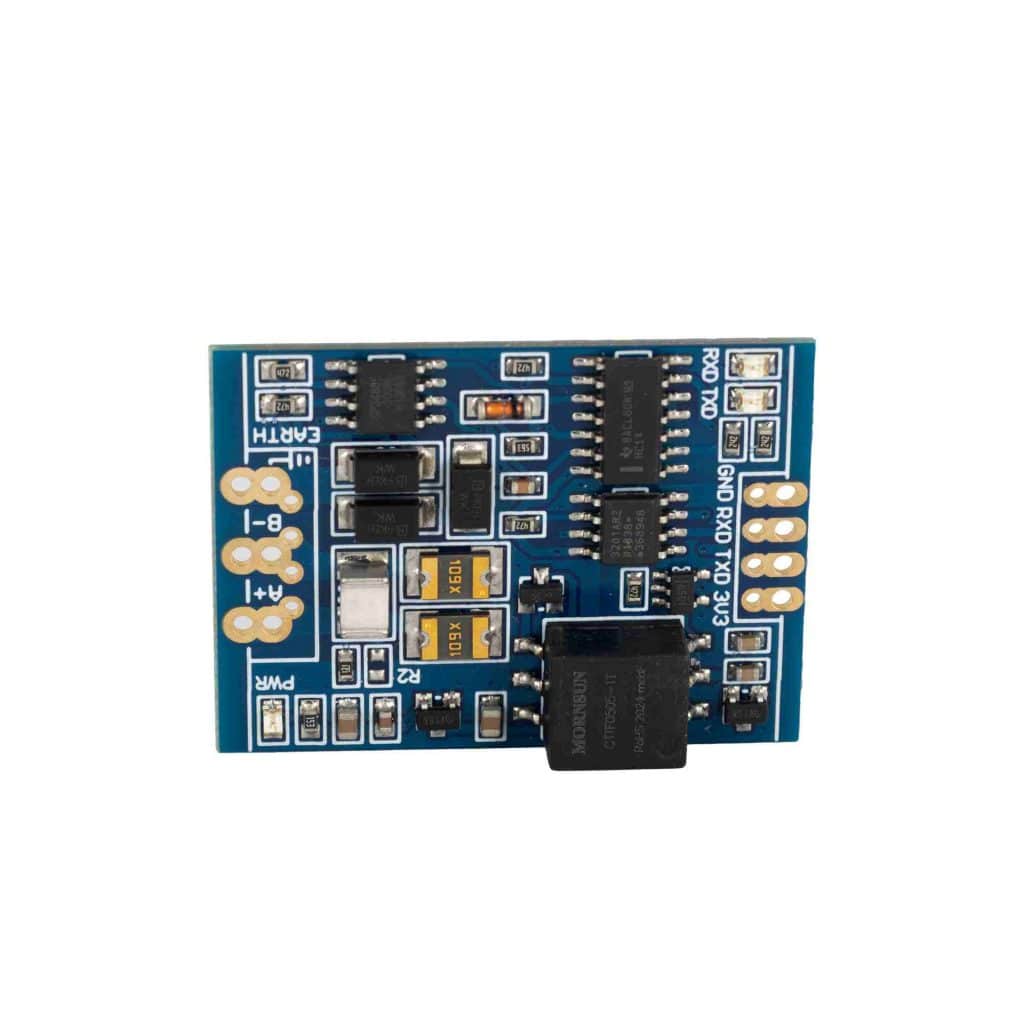
Can One Laser Rangefinder Module Support Both TTL and RS485?
Yes. Many industrial manufacturers offer laser rangefinder modules with:
- Native TTL UART
- Optional RS485 interface
- Protocol-level compatibility
This allows OEM customers to:
- Prototype with TTL
- Deploy with RS485
- Use the same ottico and ranging core
This flexibility is especially valuable for scaling products.
Which One Should You Choose?
Choose TTL laser rangefinder module if:
- MCU is located next to the sensor
- Cable length is under 30–50 cm
- Environment is low-noise
- Fast prototyping is the priority
Choose RS485 laser rangefinder module if:
- Cable length exceeds 1 meter
- System operates outdoors or in factories
- Long-term stability is critical
- Multiple sensors share one bus
Industrial-Grade Laser Rangefinder Modules for OEMs
For OEM and system integrators, the interface choice is only part of the decision. Industrial projects also require:
- Long-term supply
- Stable optical performance
- Industrial temperature range
- Custom protocols and baud rates
Meskernel offers laser rangefinder modules with TTL and RS485 options, designed for industrial automation, robotics, UAVs, and smart infrastructure.
👉 If you are unsure which interface fits your application, our engineers can recommend the optimal module based on your system architecture.
Final Thoughts: Design for Deployment, Not Just Prototyping
TTL vs RS485 is not about which interface is better — it is about which one fits your deployment environment.
Selecting the right laser rangefinder module interface early helps you avoid redesigns, communication failures, and scaling issues later in the product lifecycle.
If you are planning a commercial or industrial system, making the right choice now can save months of engineering effort.
FAQ
Can I convert a TTL laser rangefinder module to RS485?
Yes, using an external RS485 transceiver, but native RS485 modules are more reliable for industrial use.
Is RS485 slower than TTL UART?
No. RS485 supports similar baud rates and offers much better noise immunity.
Which interface is better for outdoor laser rangefinder applications?
RS485 is strongly recommended for outdoor and long-distance installations.
https://meskernel.net/oem-laser-distance-sensor/