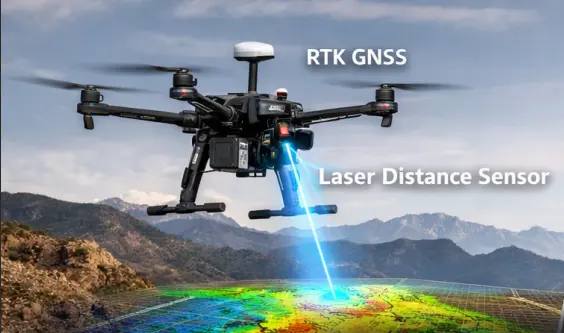
In the era of precision Navigation and industrial automation, accurate measurement is critical. A laser sensor for RTK system provides highly precise distance and positioning data by integrating Laser-Entfernungsmessung with Real-Time Kinematic (RTK) GPS technology. This combination enables centimeter-level accuracy, making it essential for Vermessung, autonomous vehicles, drones, and industrial applications where precision and reliability are paramount.
What is a Laser Sensor for RTK System?
A laser sensor for RTK system is a device that measures distances using laser technology while synchronizing with RTK GPS data to achieve extremely accurate real-time positioning. Unlike standard GPS, which typically offers meter-level accuracy, the integration of RTK correction signals allows the sensor to deliver precision down to centimeters.
These sensors are widely used in environments where both Abstandsmessung and spatial accuracy are critical, including mapping projects, precision agriculture, autonomous navigation, and industrial automation systems. By combining Lasermessung and RTK corrections, these sensors ensure reliable and repeatable results even in complex terrains or dynamic environments.
Key Applications
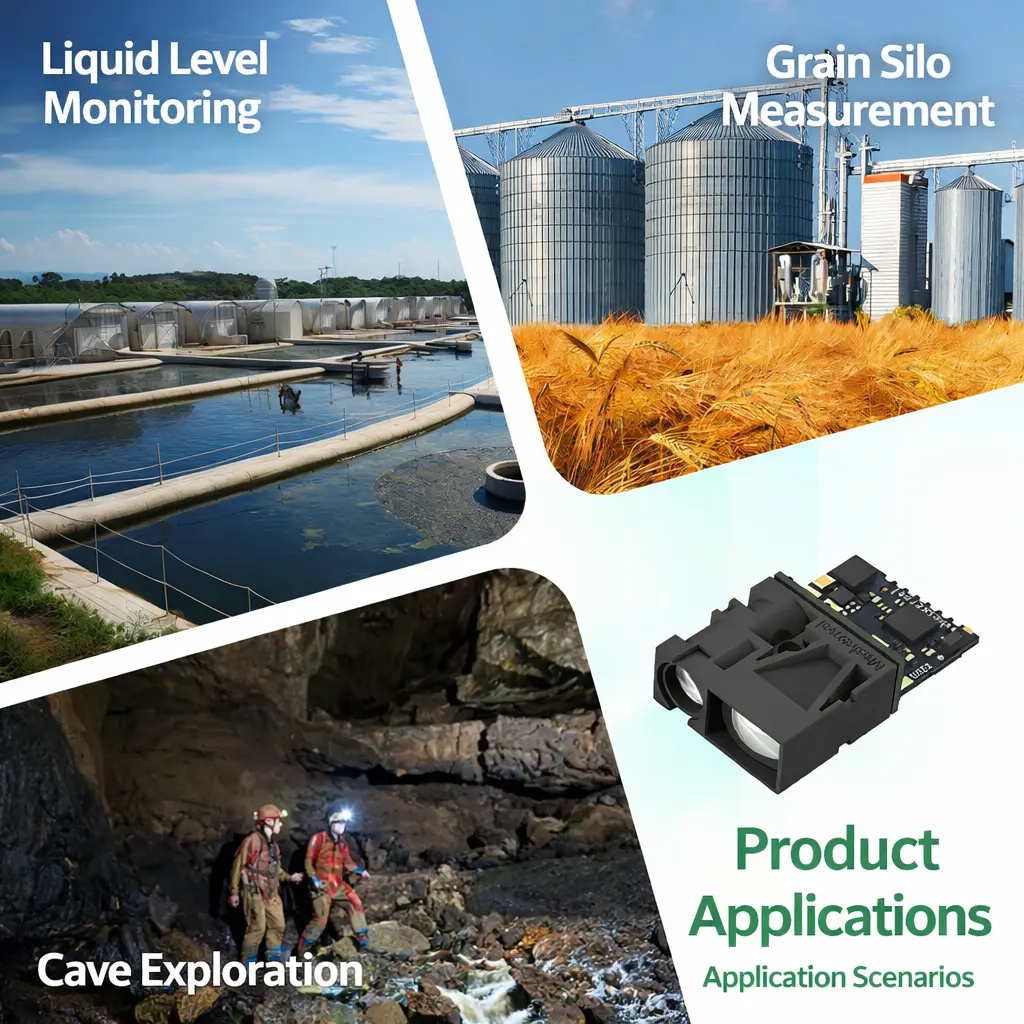
Laser-Sensoren for RTK systems have a wide range of industrial and commercial applications:
- Autonomous Vehicles & Drones – Enable accurate navigation, obstacle Erkennung, and real-time route planning for self-driving cars, UAVs, and robotic platforms.
- Surveying & Mapping – Essential for land surveying, Konstruktion projects, and infrastructure inspection where centimeter-level accuracy is required.
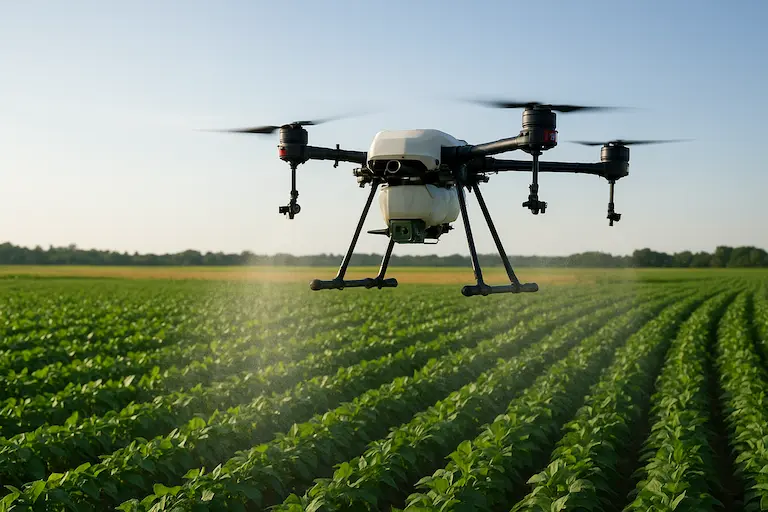
- Precision Agriculture – Supports machinery guidance, field mapping, crop monitoring, and automated irrigation systems.
- Industrial Automation – Used for robotic arm positioning, automated assembly lines, and equipment alignment in factories.
These applications highlight the critical role of combining laser sensing and RTK technology for real-time, precise measurements that boost operational efficiency and safety.
Types of Laser Sensors for RTK Systems
Choosing the right sensor depends on your specific application. The most common types include:
- Flugzeit (ToF) Sensors – Measure distance by calculating the time it takes for a laser pulse to reflect back to the sensor. Suitable for medium- to long-range measurements, with fast response times.
- Phase-Shift Sensors – Determine distance by measuring the phase difference between emitted and reflected laser signals. Offer higher precision over longer distances than ToF-Sensoren, ideal for surveying and mapping applications.
- LiDAR Sensors – Emit multiple laser pulses to scan an environment and create high-resolution 3D maps. Widely used in drones, autonomous vehicles, and industrial environment scanning. Handle dynamic environments with moving objects or obstacles.
To make it easier to compare their strengths and applications, here’s a detailed comparison:
Comparison Chart: ToF vs Phase‑Shift vs LiDAR Sensors
| Feature / Metric | ToF (Time‑of‑Flight) | Phase‑Shift | LiDAR (Light Detection and Ranging) |
|---|
| Principle of Operation | Measures time taken for a laser pulse to travel to a target and return | Measures phase difference between emitted and returned laser signal | Emits multiple laser pulses/scans to create detailed 3D point clouds |
| Messung der Entfernung | Direct distance calculation from flight time | Distance derived from continuous wave phase differences | Range from time of pulses + scanning algorithms |
| Typischer Bereich | Medium (up to 100–200 m) | Medium to long (up to ~500–1000 m) | Short to long (tens of meters to several kilometers) |
| Genauigkeit | Moderate (±1 cm to ±5 cm) | High (±1 mm to ±1 cm) | Very high (±1 cm or better) |
| Auflösung | Lower than Phase‑Shift and LiDAR | High single‑point resolution | Highest (with dense scanning, 3D point resolution) |
| Update / Response Rate | Schnell | Schnell | Variable (scans slower than single‑point but provides map data) |
| Output Data | Simple range values | High-precision range values | 3D point clouds or detailed distance maps |
| RTK Integration | Good – suitable for real-time distance + coordinate correction | Excellent – high precision enhances RTK performance | Excellent – ideal for mapping + dynamic spatial modeling with RTK |
| Bester Anwendungsfall | Real-time measurement on mobile platforms, robotics | Precision surveying and long-range measurement | 3D mapping, environmental scanning, autonomous navigation |
| Typical Platforms | UAVs, AGVs, robots | Survey instruments, fixed stations | Drones, autonomous vehicles, topographic mapping rigs |
| Cost Level | Mid | Mid–High | Hoch |
| Environmental Tolerance | Mäßig | Gut | High (often with filtering & adaptive algorithms) |
| Data Complexity | Niedrig | Mäßig | High (requires more processing) |
This chart helps determine which sensor type best fits your RTK system:
- ToF Sensors are ideal for real-time navigation and medium-range applications where simple distance measurements are sufficient.
- Phase-Shift Sensors provide high precision and long-range capabilities, perfect for surveying, industrial automation, and mapping.
- LiDAR Sensors deliver detailed 3D spatial data, making them the top choice for autonomous navigation and complex mapping tasks.
Explore the performance and applications of ToF, Phase‑Shift, and LiDAR sensors
Key Features to Consider When Buying
When purchasing a laser sensor for RTK system, keep the following factors in mind:
- Accuracy & Range – Ensure centimeter-level precision and coverage of required distances.
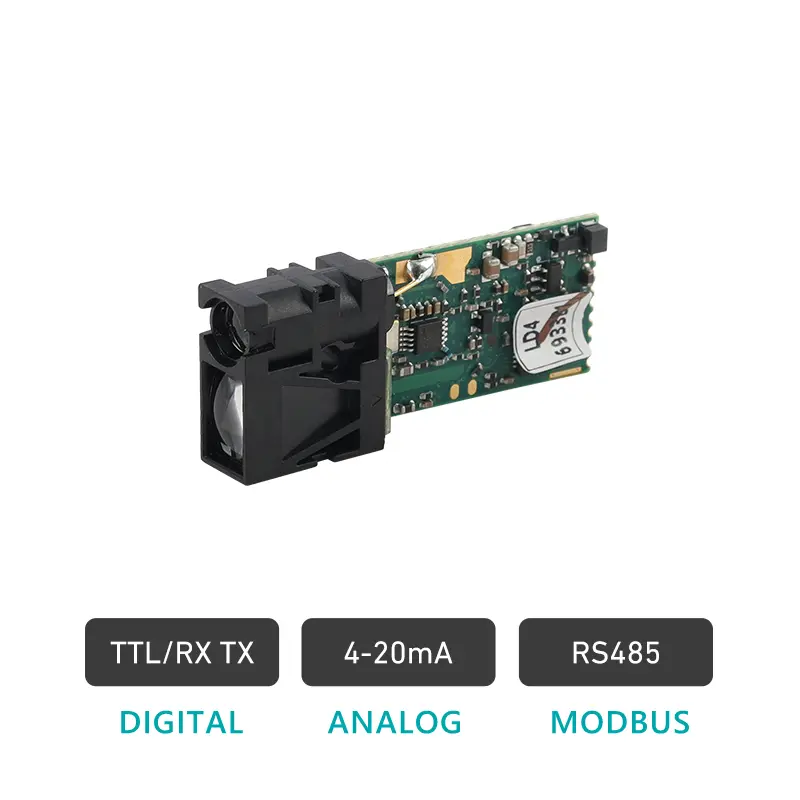
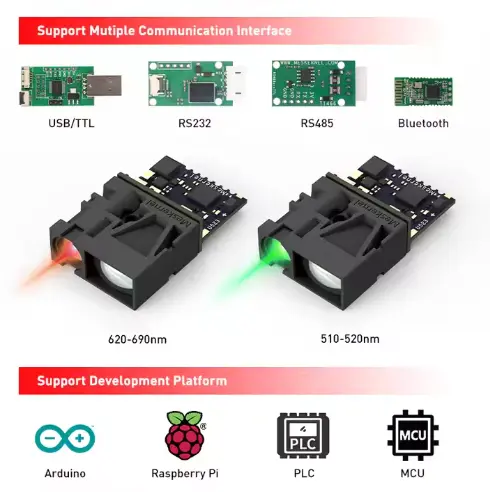
- Interface & Integration – Check compatibility with RTK receivers, PLCs, Mikrocontroller, oder UAV control systems.
- Environmental Adaptability – Resistance to dust, moisture, vibration, and temperature variations.
- Update Rate & Response Time – Essential for real-time navigation and monitoring in autonomous systems.
- Power Supply & Size – Important for drones or mobile platforms where weight and power consumption matter.
Evaluating these factors ensures the sensor delivers reliable performance and integrates seamlessly into your system.
Explore live demonstrations of laser distance sensors on our YouTube
Benefits of Using Laser Sensors in RTK Systems
Integrating laser sensors with RTK systems provides several advantages:
- Centimeter-Level Precision – Achieve highly accurate positioning and measurement.
- Real-Time Monitoring – Ideal for dynamic environments where continuous, up-to-date data is essential.
- Automation & Integration – Supports smart industrial control, robotics, and autonomous navigation.
- Reliability in Harsh Conditions – Performs well in challenging environments such as construction sites, farms, or industrial facilities.
Buying Guide & Tips
To select the most suitable laser sensor for RTK systems, follow these guidelines:
- Define Messgenauigkeit Requirements – Identify the precision level needed for your application.
- Consider Environmental Conditions – Evaluate temperature, humidity, dust, and vibration.
- Check System Compatibility – Ensure the sensor integrates with your RTK receiver, UAV, or industrial controller.
- Review Sensor Technology – Compare ToF, Phase-Shift, and LiDAR sensors in terms of range, speed, and cost.
- Manufacturer Support & Calibration – Choose brands offering calibration, technical support, and industrial certifications.
Schlussfolgerung
A laser sensor for RTK system is essential for high-precision measurements in surveying, autonomous navigation, industrial automation, and precision agriculture. By combining laser ranging with RTK GPS, these sensors provide centimeter-level accuracy, reliable real-time data, and seamless integration with modern control systems.
For high-precision, durable, and customizable laser sensors compatible with RTK systems, MESKernel offers solutions tailored to industrial, surveying, and automation needs.
Meskernel heute kontaktieren to explore sensors designed for precise distance measurement, real-time positioning, and efficient workflow integration.
FAQ: Laser Sensor for RTK System – Buying & Application Guide
What is a laser sensor for RTK system, and why is it important?
A laser sensor for RTK system is a precision measurement device that works with Real-Time Kinematic (RTK) technology to provide centimeter-level positioning. It is essential for projects requiring high accuracy, such as land surveying, construction, and autonomous machinery. Choosing the right sensor ensures reliable measurements and reduces errors that can be costly in large-scale projects.
How does a laser sensor for RTK system improve measurement accuracy?
By combining Laserdistanz measurement with RTK positioning, a laser sensor for RTK system calculates precise locations in real-time. This minimizes errors caused by terrain, vibrations, or environmental factors, making it ideal for professional surveying and industrial applications.
What factors should I consider when buying a laser sensor for RTK system?
Key factors include:
Messbereich und Genauigkeit – ensure it meets your project needs.
Environmental suitability – IP rating for dust, water, and temperature resistance.
Interface & data output – compatibility with your RTK controller or PLC.
Response time and update rate – critical for real-time monitoring.
Supplier reliability and support – check warranty, calibration, and technical support.
What are common applications for laser sensors in RTK systems?
Laser sensors for RTK systems are used in:
Land surveying & mapping – for high-precision topographic data.
Construction & civil engineering – monitoring elevations and site layouts.
Autonomous vehicles & drones – precise navigation and obstacle detection.
Industrial automation – integrating with PLCs for real-time monitoring and quality control.
How do I compare different laser sensors for RTK systems?
When comparing sensors, focus on:
Accuracy and resolution
Maximum measurement distance
Update rate and response time
Environmental durability (IP rating, temperature range)
Compatibility with your RTK system
Total cost, including calibration, maintenance, and potential downtime
Are there cost-effective options for a laser sensor for RTK system?
Yes. While premium laser sensors for RTK systems offer the highest precision, mid-range sensors may be sufficient for many applications. Evaluate your project requirements carefully to balance cost and performance. Consider supplier support and long-term reliability, not just initial price.
How can I ensure my laser sensor works optimally in challenging conditions?
Ensure the sensor has:
Appropriate IP rating for dust and water protection
Anti-vibration or shock resistance
Calibration compatible with your RTK system
Regular maintenance and proper installation are also crucial for long-term performance.