Modern automation systems demand accurate, stable, and repeatable distance measurement. Whether you are upgrading a production line, integrating a robotic system, or sourcing sensors for an OEM project, High-Precision Laser Sensors play a decisive role in system performance, product quality, and long-term reliability.
This article is written for buyers, engineers, and system integrators who are actively evaluating or purchasing laser distance sensors. It focuses on practical selection criteria, real-world applications, and performance benefits, helping you make confident purchasing decisions.
Why High-Precision Laser Sensors Matter in Automation
In automation, inaccurate distance data leads directly to:
- Positioning errors
- Product inconsistency
- Equipment downtime
High-Precision Laser Sensors solve these issues by providing non-contact, real-time distance and displacement measurement with high accuracy and fast response.
Key advantages
- Consistent measurement accuracy over long operating cycles
- No mechanical wear, reducing maintenance costs
- Fast sampling rates, suitable for dynamic systems
- Easy integration with PLCs, controllers, and embedded platforms
For applications where reliability and precision directly affect ROI, laser sensors are a proven solution.
Common Applications That Require High-Precision Laser Sensors
Robotic Systems and Automated Assembly
Robots rely on precise feedback for positioning and alignment. Laser sensors are widely used for:
- End-effector positioning
- Assembly height control
- Automated alignment tasks
If your system requires repeatable positioning or closed-loop control, a high-accuracy laser distance sensor ensures stable operation.
Conveyor and Production Line Automation
On automated lines, laser sensors are used to:
- Detect object height and presence
- Measure spacing and gaps
- Control positioning without physical contact
Compared with mechanical switches, laser sensors provide continuous measurement, not just on/off signals.
AGV and Mobile Automation Equipment
For AGVs and mobile robots, laser distance sensors support:
- Obstacle detection
- Safety distance monitoring
- Docking and positioning
Compact and lightweight sensors are especially suitable for space-constrained platforms.
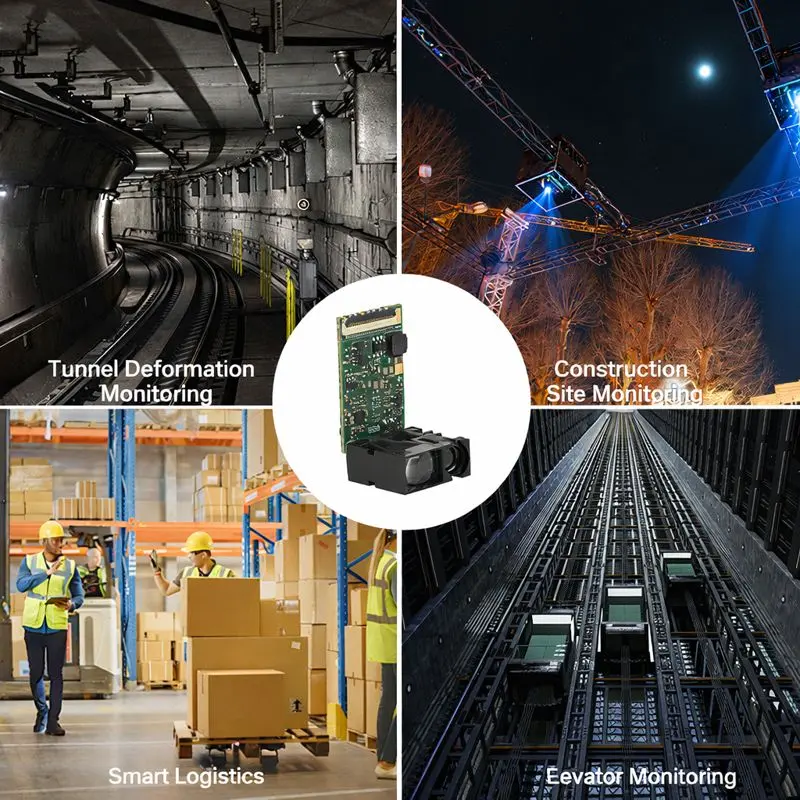
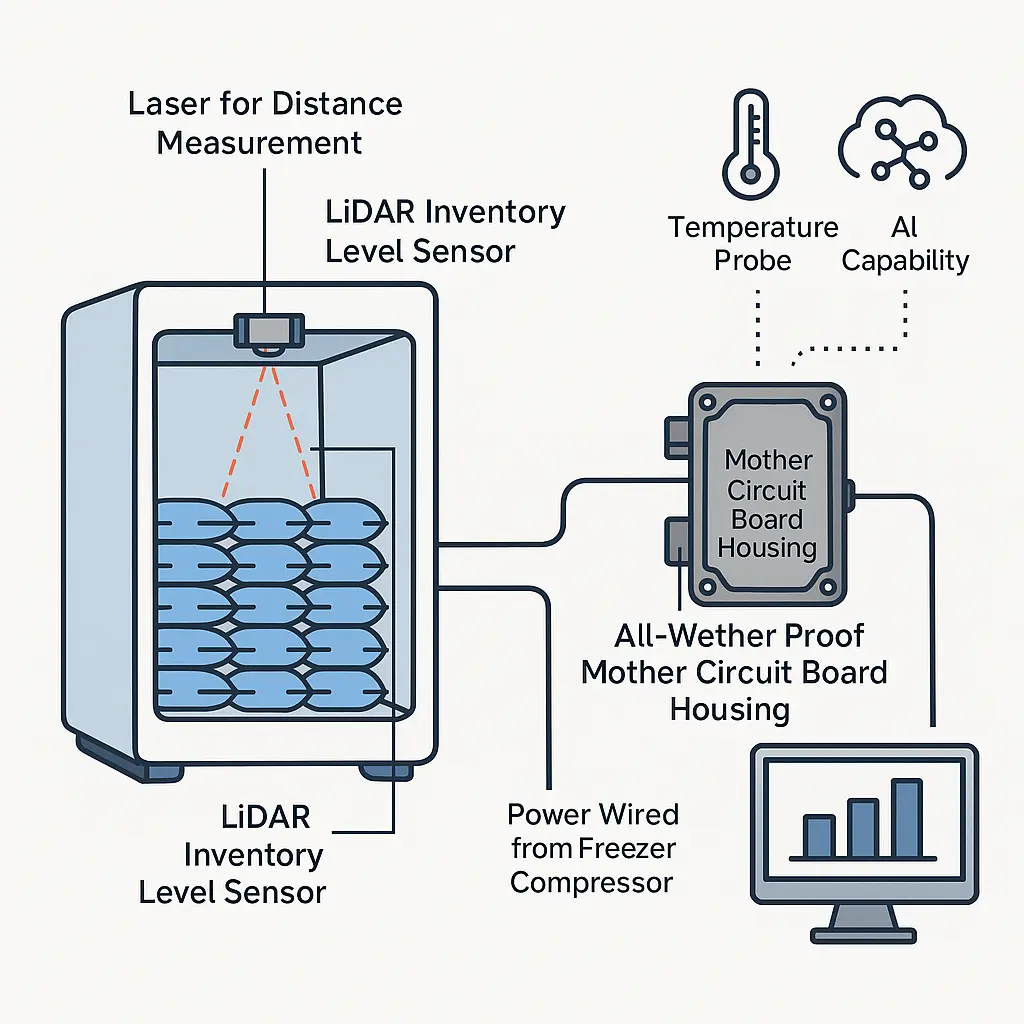
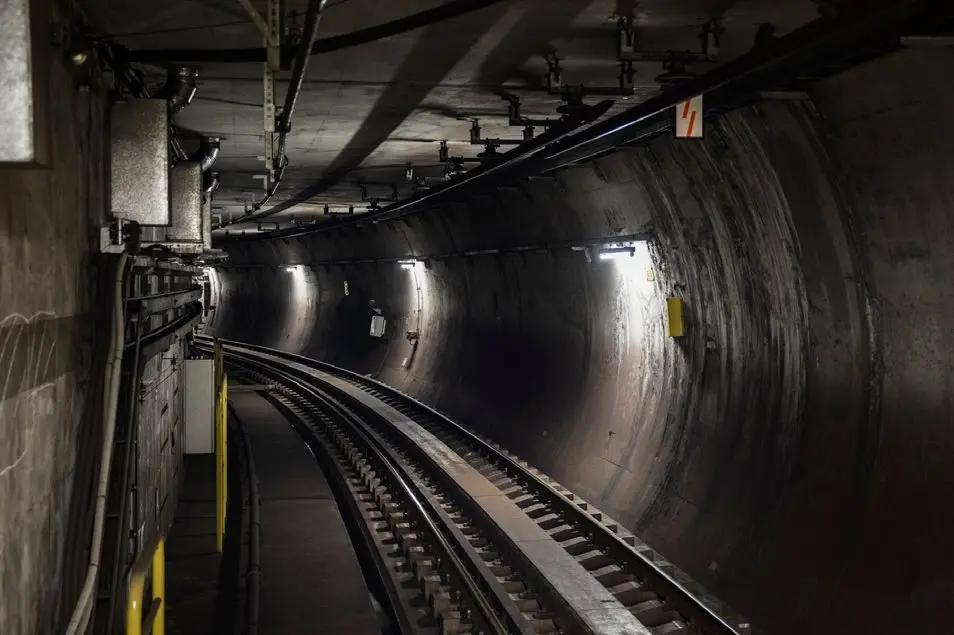
In autonomous logistics systems, laser ranging sensors for AGVs are widely used to enable precise navigation, obstacle detection, and safe mobile robot operation.
Quality Inspection and Dimensional Control
Laser sensors enable inline measurement of:
- Thickness
- Flatness
- Position deviation
This allows manufacturers to detect issues before defects leave the production line, reducing waste and rework.
How High-Precision Laser Sensors Work
Different applications require different measurement principles:
- Time of Flight (ToF)
Ideal for medium to long-distance measurement. Commonly used in automation, logistics, and outdoor environments.
- Phase Shift Technology
Offers higher accuracy at moderate ranges. Suitable for industrial positioning and inspection tasks.
- Laser Triangulation
Best for short-range, ultra-high precision measurement, often used in displacement and surface inspection.
Tip for buyers:
Match the technology to your required accuracy, distance range, and installation space—not just the specification sheet.
Laser Sensors vs Other Measurement Technologies
| Solution | Accuracy | Durability | Maintenance | Suitable for Automation |
|---|
| High-Precision Laser Sensors | Very High | High | Low | Yes |
| Ultrasonic Sensors | Low–Medium | Medium | Low | Limited |
| Mechanical Probes | High | Low | High | Limited |
| Infrared Sensors | Medium | Medium | Low | Short-range only |
For systems where precision and long-term stability matter, laser sensors provide the best balance.
How to Select the Right High-Precision Laser Sensor
1. Define Measurement Requirements
Ask:
- What is the required measurement range?
- What accuracy is needed for stable operation?
Short-range, micron-level tasks require different sensors than long-range positioning.
2. Choose the Right Output Interface
Common options include:
- Analog output (0–10V, 4–20mA) for PLC systems
- Digital output (RS232, RS485) for controllers and IPCs
- Industrial protocols such as Modbus for automation networks
3. Consider the Installation Environment
Check:
- Ambient light conditions
- Dust, vibration, and temperature
- Reflectivity of target surfaces
Industrial-grade laser sensors are designed to maintain accuracy in challenging environments.
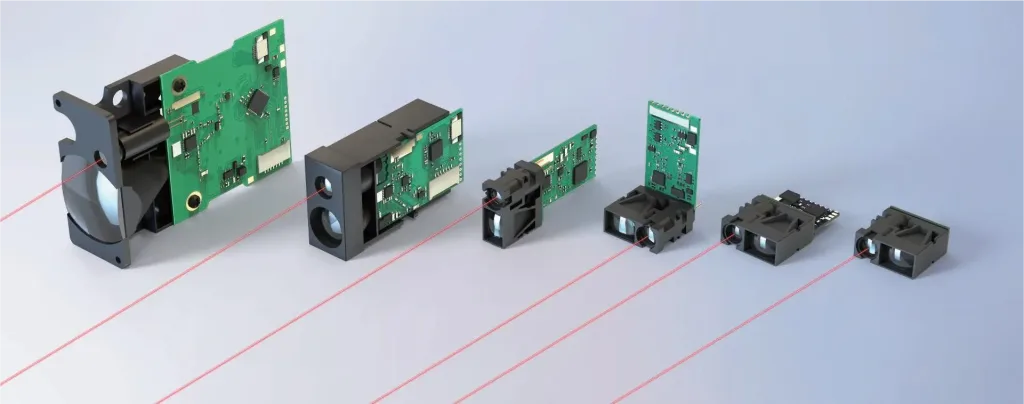
4. Evaluate Size and OEM Integration Needs
For embedded or OEM projects, compact modules offer:
- Easier mechanical integration
- Lower system weight
- Greater design flexibility
To further evaluate real-world performance, many buyers prefer to review actual measurement and stability tests before making a decision.
Meskernel provides model-specific laser sensor testing videos, covering accuracy, response speed, and real application scenarios. You can explore these demonstrations on the Meskernel YouTube channel, where each high-precision laser sensor model is tested under practical conditions.
▶ View laser sensor test videos on Meskernel’s official YouTube channel
Quick Buyer Answer
What is the main benefit of using High-Precision Laser Sensors in automation?
High-Precision Laser Sensors provide non-contact, accurate, and real-time distance measurement, enabling reliable positioning, quality control, and motion feedback in automated systems.
Future-Proofing Your Automation Investment
As automation systems evolve, buyers increasingly prioritize:
- Higher measurement speed
- Smaller and lighter sensor designs
- Improved performance on reflective or dark targets
- Seamless compatibility with modern control systems
Choosing a reliable High-Precision Laser Sensor today ensures your system remains competitive and scalable in the future.
Conclusion: A Smart Choice for Precision-Driven Automation
For buyers and engineers evaluating automation components, High-Precision Laser Sensors are not just measurement tools—they are performance enablers. From robotic assembly and AGVs to production lines and inspection systems, these sensors deliver the accuracy, stability, and reliability modern automation demands.
By selecting the right laser sensor based on real application needs, you can improve system efficiency, reduce downtime, and achieve long-term operational value.
FAQ: High-Precision Laser Sensors for Automation Buyers
What is a high-precision laser sensor used for in automation systems?
High-precision laser sensors are used in automation systems to measure distance, position, or displacement with high accuracy and repeatability. Typical uses include robotic positioning, conveyor control, AGV navigation, and inline quality inspection where non-contact measurement is required.
How accurate are high-precision laser distance sensors?
Most industrial high-precision laser distance sensors offer accuracy from ±1 mm down to micron-level precision, depending on the measurement principle and range. Laser triangulation sensors provide the highest accuracy at short distances, while Time-of-Flight sensors are optimized for longer ranges.
What measurement range should I choose for my application?
Choose a sensor whose measurement range comfortably covers your maximum working distance plus safety margin.
Short-range (mm to cm): displacement and thickness measurement
Medium-range (0.1–10 m): automation and robotics
Long-range (10 m+): logistics, positioning, and outdoor systems
Selecting an oversized range may reduce effective resolution.
Are laser distance sensors suitable for continuous 24/7 industrial operation?
Yes. Industrial-grade high-precision laser sensors are designed for continuous operation with stable output, minimal drift, and long service life. Non-contact measurement eliminates mechanical wear, making them suitable for 24/7 automation environments.
Can laser sensors work on dark, shiny, or reflective surfaces?
Modern laser sensors are engineered to handle low-reflectivity and high-reflectivity targets. Performance depends on wavelength, optical design, and signal processing algorithms. For challenging surfaces, it is recommended to specify target material during sensor selection.
What output interfaces are available for automation integration?
Common interfaces include:
Analog output (0–10 V, 4–20 mA) for PLC systems
Digital interfaces (RS232, RS485)
Industrial protocols such as Modbus
Choose the interface that matches your control architecture and response time requirements.
How do laser distance sensors compare to ultrasonic sensors?
Laser sensors provide higher accuracy, faster response, and better directional measurement than ultrasonic sensors. Ultrasonic sensors are more affected by temperature, airflow, and surface angle, making laser sensors the preferred option for precision automation.
Are high-precision laser sensors safe to use in industrial environments?
Yes. Most industrial laser distance sensors comply with laser safety standards (such as Class 1 or Class 2). They are safe for use in industrial automation when installed and operated according to manufacturer guidelines.
Can I integrate a laser sensor into an OEM or embedded system?
Absolutely. Many manufacturers offer compact OEM laser sensor modules designed for easy mechanical and electrical integration. These modules are ideal for robotics, mobile equipment, and custom automation systems.
What factors affect the price of a high-precision laser sensor?
Pricing depends on:
Measurement range and accuracy
Sensor technology (ToF, phase shift, triangulation)
Output interface and protocol support
Environmental protection and housing design
Higher precision and industrial robustness typically increase cost.
How do I verify sensor performance before purchasing?
Buyers often request:
Technical datasheets
Accuracy test reports
Sample testing or evaluation units
Application-specific performance validation
Providing real test data helps ensure the sensor meets project requirements.
What information should I prepare before requesting a quotation?
To receive an accurate quotation, prepare:
Required measurement range and accuracy
Target surface material
Output interface and protocol
Installation environment and operating conditions
Estimated order quantity
This information allows suppliers to recommend the most suitable model.
How long is the typical delivery time for industrial laser sensors?
Delivery time varies by model and customization level. Standard models are often available within a few weeks, while customized or OEM versions may require additional lead time.
Are high-precision laser sensors suitable for Industry 4.0 systems?
Yes. With digital interfaces and protocol support, high-precision laser sensors integrate easily into smart factories, enabling data-driven monitoring, predictive maintenance, and real-time process optimization.
How long do high-precision laser sensors typically last?
With proper installation and operation, industrial laser sensors can operate reliably for many years, even in demanding automation environments, due to their non-contact measurement principle.
Why should buyers review laser distance sensor test videos before purchasing?