When developing industrial equipment, robotics, UAVs, or smart measurement systems, one common question arises early in the design phase:
Should I integrate a distance laser meter module, or choose a complete laser sensor with enclosure?
The answer depends on your product architecture, production scale, and customization needs. In this article, we compare laser distance meter modules and complete télémètre laser sensors, helping OEMs choose the right solution for performance, cost, and long-term scalability.
Module vs Enclosure: Core Differences Explained
1. Laser Distance Meter Module (Bare Module)
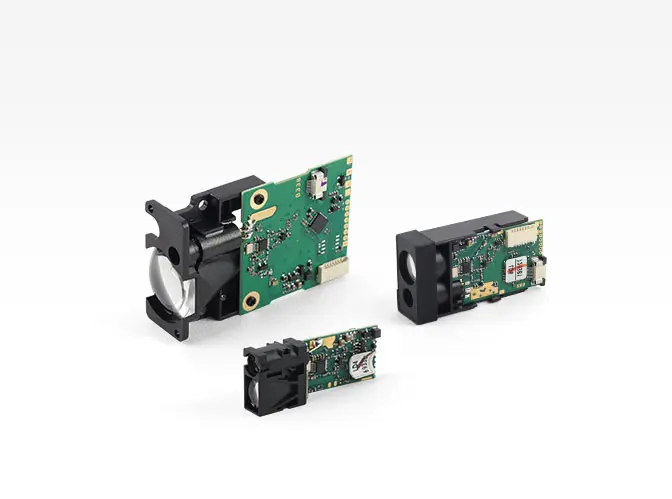
A laser distance meter module is the core ranging unit without an external housing. It typically includes the laser emitter, receiving optics, signal processing circuit, and communication interface.
Meilleur pour :
- OEM projects with custom mechanical design
- Embedded systems and compact devices
- High-volume production where BOM optimization matters
Principaux avantages
- Smaller size and lighter weight
- Easier thermal integration with your system
- Full control over enclosure, connectors, and layout
- Lower unit cost at scale
Meskernel offre une large gamme de laser measuring sensor modules, from short-range phase-based modules to laser rangefinder module long range solutions reaching hundreds or even thousands of meters.
2. Complete Laser Sensor (With Housing)
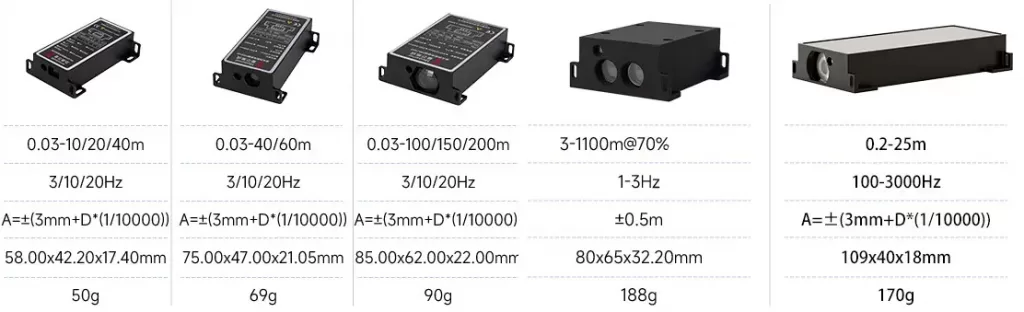
A complete sensor integrates the module into a protective enclosure, often with standardized mounting points and IP protection.
Meilleur pour :
- Rapid deployment projects
- Industrial environments requiring dust/water resistance
- Low to medium production volumes
Principaux avantages
- Plug-and-play integration
- Factory-calibrated and sealed
- Available IP54 / IP67 protection options
- Reduced engineering workload
However, enclosure-based sensors offer less flexibility if your product has strict space, weight, or thermal constraints.
OEM Integration Considerations You Shouldn’t Ignore
For OEM customers, the choice goes beyond “module or enclosure.” Below are the most critical technical factors.
Communication Interfaces: TTL, UART, RS485 & More
Most industrial and embedded projects require seamless communication with controllers, PLCs, or embedded boards.
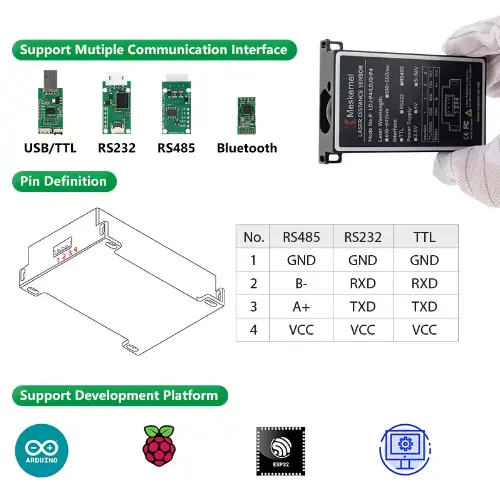
Meskernel laser modules support:
- TTL / UART (3.3V or CMOS) – ideal for embedded systems
- RS232 / RS485 – stable long-distance industrial communication
- Modbus, custom ASCII or HEX protocols
- Optional multi-module bus communication
This makes Meskernel modules easy to integrate into automation systems, robotics platforms, and industrial controllers without additional interface boards.
Thermal Design, Calibration & Long-Term Stability
Heat Dissipation
Bare modules allow OEMs to:
- Mount directly to metal frames or heat sinks
- Design airflow paths inside their own enclosure
- Achieve better long-term signal stability
Calibrage
Meskernel modules are factory-calibrated and can be:
- Re-calibrated after final assembly
- Tuned for specific distance ranges or surfaces
- Optimized for indoor or outdoor environments
Stability
With over 20 years of mesure laser experience, Meskernel designs modules with:
- Low repeatability error
- Traitement stable des signaux
- Consistent performance across temperature ranges
This is especially important for laser rangefinder module long range applications where environmental noise increases with distance.
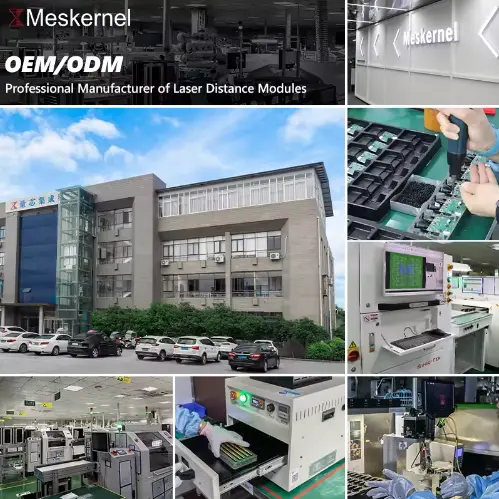
Why OEMs Choose Meskernel Laser Distance Meter Modules
Meskernel is not just a module supplier—it is an OEM & ODM partner.
Customization Capabilities Include:
- Measuring range, accuracy, frequency
- Laser wavelength (red / green / 905nm)
- Communication interface & protocol
- Power supply design (DC, battery, low-power)
- PCB layout & connector type
- Structural adaptation to your enclosure
- IP level customization when housing is required
From early concept to mass production, Meskernel follows a structured customization process covering solution design, functional verification, sample testing, and scale manufacturing.
Module or Complete Sensor: How to Decide?
| Project Requirement | Recommended Choice |
|---|
| Custom enclosure & compact design | Laser distance meter module |
| Fast deployment | Complete sensor |
| High-volume OEM production | Laser measuring sensor module |
| Harsh industrial environment | Enclosed sensor (IP54/IP67) |
| Cost optimization | Bare module |
| Long-range custom system | Laser rangefinder module long range |
Réflexions finales
If you are an OEM developing your own equipment, laser distance meter modules provide unmatched flexibility, scalability, and cost efficiency. Complete sensors remain a great option for standardized or time-critical deployments—but modules are the foundation of truly differentiated products.
If you are evaluating laser rangefinder module long range solutions or need a customized laser measuring sensor module, working with a manufacturer that understands OEM integration makes all the difference.
👉 Contact Meskernel to discuss your project requirements and explore tailored laser distance solutions built for your application.
What is a laser distance meter module?
A laser distance meter module is the core ranging unit without an external enclosure. It integrates the laser emitter, receiver, signal processing circuit, and communication interface, allowing OEMs to embed it directly into their own products and housings.
What is the difference between a laser distance meter module and a complete sensor?
The main difference is integration level.
A laser distance meter module offers maximum flexibility for OEM integration and customization, while a complete sensor includes a protective housing and is ready for plug-and-play use. Modules are better for custom designs and mass production, whereas complete sensors are ideal for rapid deployment.
Which is better for OEM projects: module or complete sensor?
For most OEM projects, a laser measuring sensor module is the better choice because it allows custom mechanical design, optimized thermal management, flexible communication interfaces, and lower unit cost at scale. Complete sensors are more suitable for standardized or low-volume applications.
What communication interfaces do laser distance meter modules support?
Most industrial laser distance meter modules support multiple interfaces, including TTL / UART, RS232, and RS485. Some modules also support Modbus, custom ASCII or HEX protocols, and multi-module bus communication, making them suitable for automation and embedded systems.
Is TTL or RS485 better for laser distance meter modules?
It depends on the application.
TTL / UART is ideal for embedded systems and short-distance communication inside devices.
RS485 is better for industrial environments requiring long-distance, noise-resistant communication.
Many OEMs choose modules that support both options for future scalability.
What is a long-range laser rangefinder module?
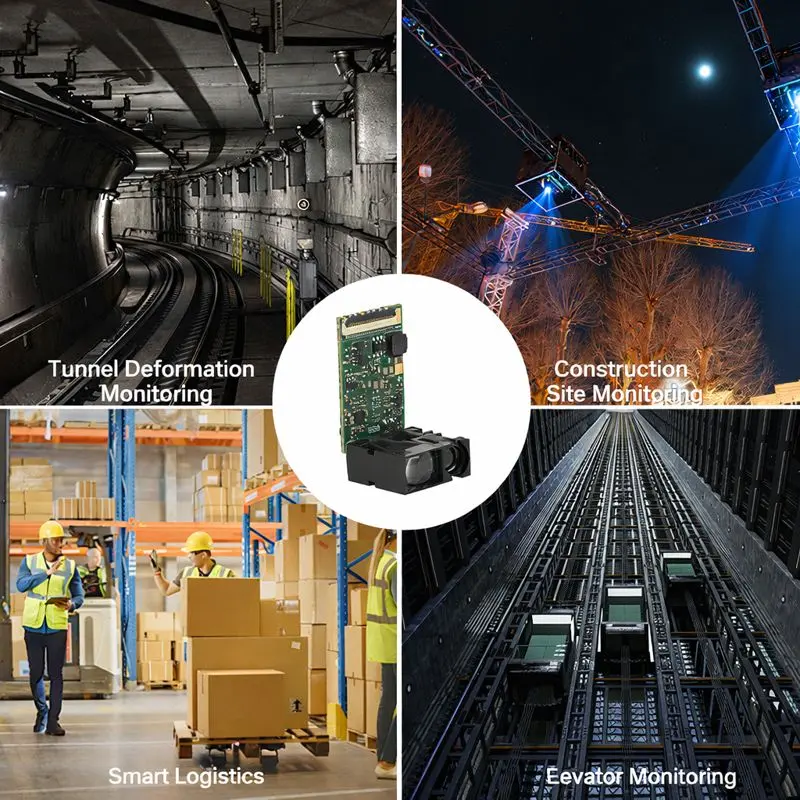
A laser rangefinder module long range typically refers to a pulse-based or dToF module capable of measuring distances from several hundred meters to multiple kilometers. These modules are widely used in UAVs, arpentage equipment, security systems, and outdoor monitoring applications.
Are laser distance meter modules factory calibrated?
es. High-quality laser distance meter modules are factory calibrated before shipment. For OEM projects, calibration can also be adjusted or fine-tuned after final assembly to match the customer’s enclosure design, optique window, or target surface characteristics.
How does thermal design affect laser distance measurement accuracy?
Thermal stability directly affects signal consistency and précision des mesures. Using a bare laser measuring sensor module allows OEMs to design better heat dissipation through metal frames, heat sinks, or airflow paths, improving long-term performance compared to fully enclosed sensors.
Can laser distance meter modules be customized for OEM use?
Yes. OEM manufacturers like Meskernel offer extensive customization options, including measurement range, accuracy, frequency, communication protocol, laser wavelength, power supply design, and mechanical structure adaptation.
When should I choose a complete laser distance sensor instead of a module?
You should choose a complete sensor if your project requires fast deployment, minimal engineering effort, or operation in harsh environments where IP-rated protection (such as IP54 or IP67) is essential and customization is not a priority.
Are laser distance meter modules suitable for industrial automation?
Yes. Laser distance meter modules are widely used in industrial automation due to their compact size, stable performance, and support for industrial communication interfaces such as RS485 and Modbus. They are commonly integrated into positioning systems, material handling equipment, and smart manufacturing solutions.
How do I choose the right laser distance meter module for my project?
To choose the right module, consider:
Plage de mesure et précision requises
Fréquence de mesure
Interface de communication
Conditions environnementales
Power consumption constraints
Customization and production volume
Consulting with the module manufacturer early can significantly reduce development time and integration risk.