Quick 거리 센서 Selection Guide
- Need millimeter-level accuracy indoors? → Choose a 레이저 거리 sensor (phase-based)
- Working in bright sunlight or long range (>100 m)? → Use a ToF 레이저 거리 측정기 module
- Space or budget limited for embedded projects? → Consider a compact 레이저 거리 센서 module
- Unsure about range, accuracy, or interface? → See the selection checklist below
This guide helps engineers and project developers choose the right distance sensor based on range, accuracy, environment, and integration needs.
Choosing the Right Distance Sensor is a critical decision for engineers, system integrators, and product developers. The sensor you choose directly affects 측정 정확도, system stability, cost, and long-term reliability. With so many technologies available—laser distance sensors, ultrasonic sensors, 적외선 센서, and ToF sensors—it is easy to choose the wrong solution if application requirements are not clearly defined.
This guide is written to help you choose the right distance sensor for real projects, with a strong focus on laser distance sensor selection, industrial use cases, and OEM integration scenarios.
👉 If you are evaluating practical solutions, you can also explore Meskernel’s 레이저 거리 센서 for industrial and OEM applications.
Why Distance Sensor Selection Matters
In real-world projects, 거리 측정 is rarely performed in ideal laboratory conditions. Factors such as:
- Ambient light and sunlight interference
- Target surface color and reflectivity
- Measurement range and accuracy requirements
- Installation space and mechanical constraints
- Output interface and system integration
all influence sensor performance. Choosing an unsuitable sensor often leads to unstable data, false readings, or complete system redesign.
For applications requiring high accuracy, long range, and 비접촉식 측정, a laser distance sensor is often the preferred solution.
Common Distance Sensor Technologies Compared
Before selecting a sensor, it is important to understand the strengths and limitations of each technology.
초음파 거리 센서
Ultrasonic sensors measure distance using sound waves.
장점:
- 저렴한 비용
- Simple integration
제한 사항:
- 제한된 범위
- Affected by temperature, humidity, and airflow
- Poor performance on angled or soft surfaces
Typical use cases include short-range obstacle 탐지 and basic level measurement.
적외선 거리 센서
Infrared (IR) sensors estimate distance based on reflected infrared light.
장점:
- Compact size
- Low power consumption
제한 사항:
- Short measurement range
- Strongly affected by ambient light
- Lower accuracy
These sensors are often used in consumer electronics rather than industrial measurement systems.
Laser Distance Sensors (Recommended for Industrial Projects)
A laser distance sensor measures distance using laser light, typically based on Time of Flight (ToF) or phase-shift principles.
주요 이점:
- Long measurement range (from centimeters to hundreds of meters)
- High accuracy and repeatability
- 비접촉식 측정
- Strong resistance to environmental interference
This makes 레이저 거리 센서 ideal for industrial automation, UAVs, robotics, 측량, and OEM measurement systems.
For compact integration, many projects adopt a Laser Rangefinder Module rather than a finished handheld device.
Key Factors When Choosing a Laser Distance Sensor
If your project requires precise and reliable measurement, the following parameters should guide your sensor selection.
1. 측정 범위
Clearly define both the minimum and maximum distance your application requires.
- Short-range laser distance sensor: < 10 m
- Mid-range laser distance sensor: 10–100 m
- Long-range laser rangefinder module: > 100 m
Selecting a sensor with excessive range may increase cost unnecessarily, while insufficient range will limit system functionality.
2. Accuracy and Resolution
Accuracy requirements vary significantly by application:
- ±1–3 mm: industrial positioning, automation
- ±5–10 mm: level measurement, presence detection
High-precision projects should prioritize phase-based or high-resolution ToF laser distance sensors.
To better understand the differences, refer to Meskernel’s in-depth guides on Time of Flight (ToF) ranging and phase-based laser distance measurement, which explain accuracy limits and real-world performance trade-offs.
3. Target Surface and Environment
Consider:
- Surface color (dark vs reflective)
- Angle of incidence
- Outdoor vs indoor use
- Sunlight exposure, dust, fog, or vibration
Industrial-grade laser distance sensors are designed to maintain stable performance under harsh conditions.
4. Output Interface and Integration
OEM and embedded projects often require flexible interfaces, such as:
- UART / TTL
- RS232 / RS485
- 아날로그 output (4–20 mA, 0–10 V)
- 디지털 protocols
Choosing a 레이저 거리 센서 모듈 with the correct interface simplifies system integration and reduces development time.
5. Size, Power, and Mounting
Compact laser distance sensor modules are ideal for:
- 로봇 공학
- UAVs
- Handheld devices
- Embedded systems
Low power consumption is critical for battery-powered applications.
Typical Applications That Require Laser Distance Sensors
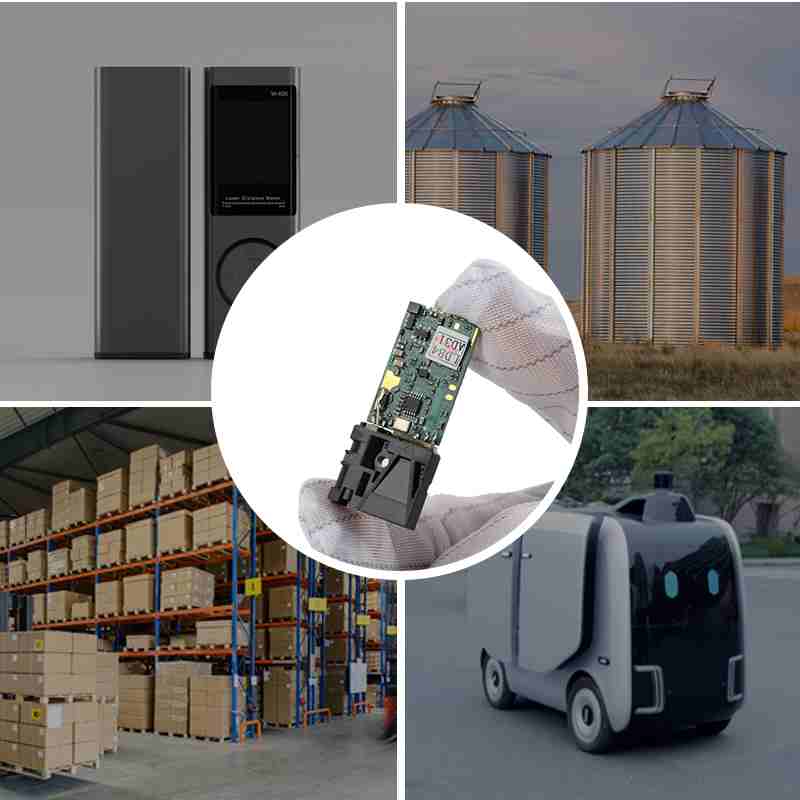
Laser distance sensors are widely used in:
- Industrial automation and positioning systems
- Robotics and AGV navigation
- UAV altitude measurement and 장애물 회피
- Stock level and warehouse measurement
- Surveying and mapping systems
- OEM measurement modules
If your project involves long range, high precision, or outdoor measurement, laser technology is usually the optimal choice.
Choosing the Right Distance Sensor by Application
Different applications impose very different requirements on distance measurement. Selecting the right sensor starts with understanding the real operating conditions.
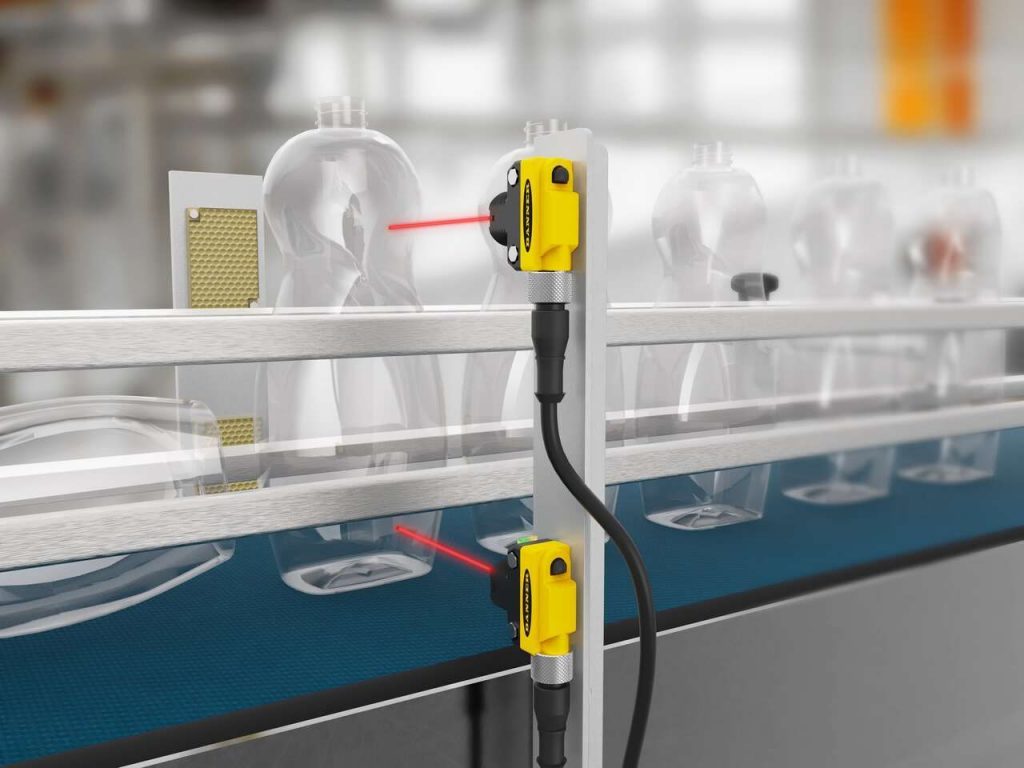
Industrial Automation & Factory Measurement
Robotics, AGV & Mobile Platforms
- Typical range: 0.05–30 m
- Key challenges: vibration, compact size, fast response
- Recommended solution: compact laser distance sensor module with UART or RS485
UAV & Outdoor Measurement
- Typical range: 1–300 m
- Key challenges: sunlight interference, long-distance accuracy
- Recommended solution: ToF laser rangefinder module designed for outdoor use
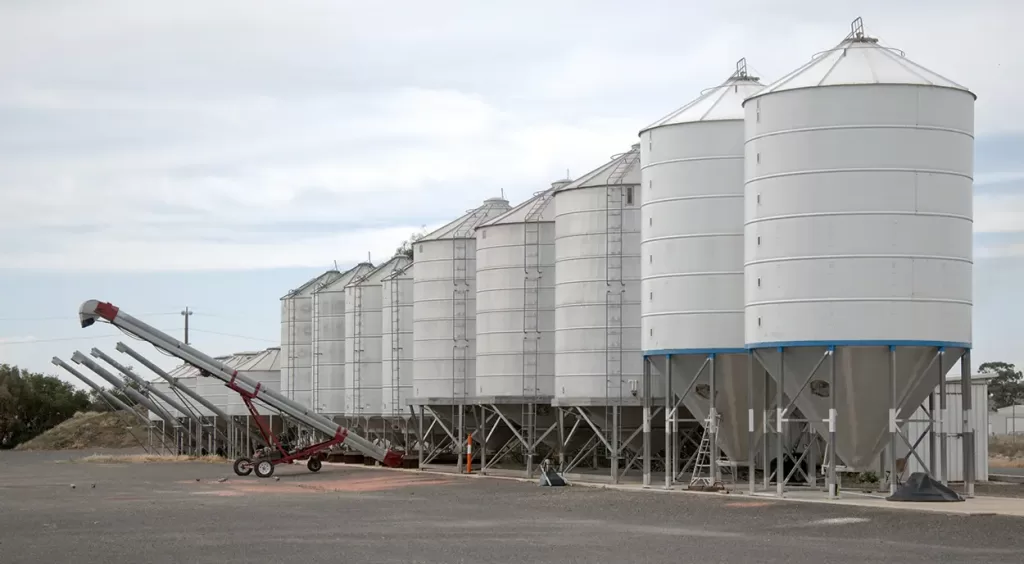
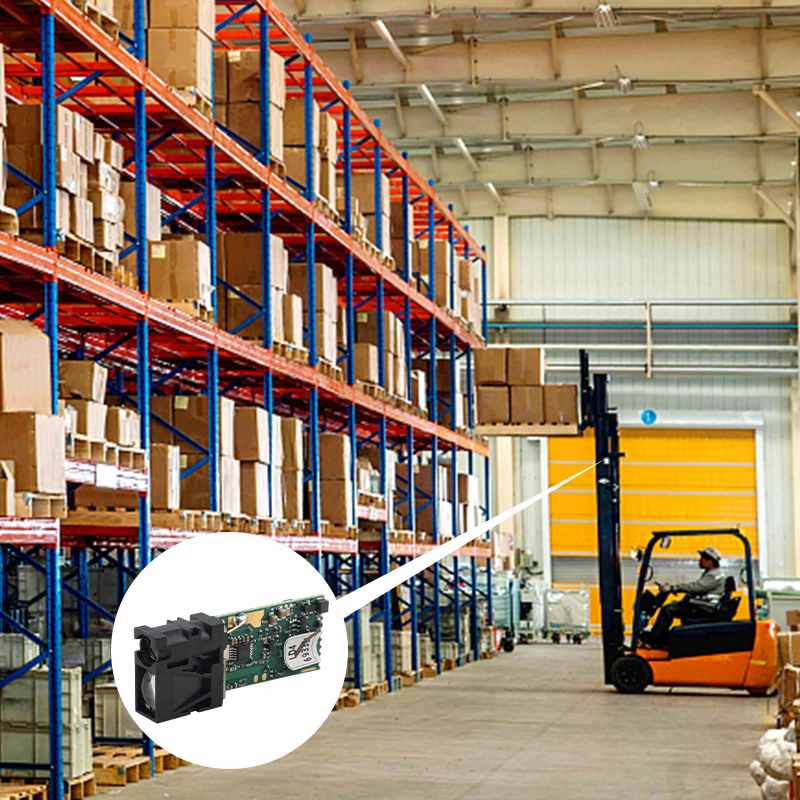
Stock Level & Warehouse Monitoring
- Typical range: 0.5–40 m
- Key challenges: dusty environments, dark targets
- Recommended solution: laser distance sensor with strong signal processing

 비행 시간 및 삼각 측량

Common Mistakes When Selecting a Distance Sensor
Many distance measurement projects fail not because of sensor quality, but because of incorrect selection assumptions.
- Choosing range without considering accuracy: Long range does not guarantee usable precision.
- Ignoring target surface reflectivity: Dark or angled surfaces require higher 광학 performance.
- Underestimating sunlight and ambient light: Consumer sensors often fail outdoors.
- Using consumer-grade sensors for industrial systems: These typically lack long-term stability and protection.
Avoiding these mistakes early can significantly reduce system redesign costs.
Distance Sensor Technology Comparison
| 요구 사항 | 초음파 센서 | 적외선 센서 | 레이저 거리 센서 |
|---|
| Long measurement range | ❌ | ❌ | ✅ |
| Outdoor performance | ❌ | ❌ | ✅ |
| 높은 정확도 | ❌ | ❌ | ✅ |
| Industrial stability | ⚠️ | ❌ | ✅ |
| OEM integration | ⚠️ | ❌ | ✅ |
For projects requiring reliability and scalability, laser distance sensors consistently outperform alternative technologies.
Choosing the Right Output Interface for Your System
Beyond measurement performance, interface selection plays a crucial role in system integration.
Common interfaces include:
- UART / TTL: Ideal for embedded systems, 마이크로 컨트롤러, and compact OEM designs
- RS232 / RS485: Preferred for industrial automation and long-distance communication
- Analog output (4–20 mA / 0–10 V): Suitable for PLC-based control systems
Selecting a laser distance sensor module with the correct interface simplifies integration and reduces development time.
Checklist Before Choosing a Distance Sensor Supplier
When sourcing laser distance sensors for industrial or OEM projects, evaluate suppliers using the following criteria:
- Proven industrial-grade sensor design
- Long-term supply stability
- Detailed technical documentation
- Custom protocol or firmware support
- Experience with OEM and system integration projects
Working with an experienced manufacturer helps ensure consistent performance across product lifecycles.
How to Choose a Reliable Laser Distance Sensor Supplier
Beyond technical specifications, supplier capability is equally important.
Look for manufacturers that provide:
- Industrial-grade laser distance sensor modules
- Long-term supply stability
- Technical documentation and integration support
- Customization options for OEM projects
메커널 specializes in laser distance sensor modules and laser rangefinder solutions designed for industrial and OEM applications, offering stable performance, compact design, and professional technical support.
Choosing the right distance sensor is not just about specifications—it is about matching technology to real application needs. For projects that demand accuracy, reliability, and scalability, a laser distance sensor offers clear advantages over ultrasonic or infrared alternatives.
By clearly defining your project requirements and selecting a proven laser distance sensor solution, you can significantly reduce development risk and improve system performance.
If you are evaluating laser distance sensors for your next project, selecting an experienced manufacturer can make the difference between a successful deployment and costly redesigns.
자주 묻는 질문(FAQ)
What is the best distance sensor for industrial projects?
For industrial environments that require high accuracy, long range, and stable performance, a laser distance sensor is usually the best choice. Compared to ultrasonic or infrared sensors, 레이저 센서 provide better repeatability and resistance to environmental interference.
How do I choose between a laser distance sensor and an ultrasonic sensor?
ltrasonic sensors are suitable for short-range, low-cost applications. However, if your project involves outdoor use, long distances, small targets, or angled surfaces, a laser distance sensor offers significantly better performance.
What is the difference between a laser distance sensor and a laser rangefinder module?
A laser distance sensor is often a complete, ready-to-use device, while a laser rangefinder module is designed for OEM integration. Modules are ideal for embedded systems, robotics, UAVs, and customized measurement equipment.
Is ToF better than phase-based laser distance measurement?
Both technologies have advantages. ToF laser distance sensors are well suited for long-range and outdoor measurement, while phase-based sensors typically offer higher accuracy at shorter ranges. The right choice depends on your project requirements.
Can laser distance sensors work outdoors in sunlight?
Industrial-grade laser distance sensors are designed to handle strong ambient light and sunlight. Choosing the correct wavelength, optical design, and signal processing is essential for stable outdoor performance.