In modern industrial automation, precise measurement is crucial for efficiency and safety. A level 거리 센서 is an essential device that measures the distance or height of liquids, solids, or bulk materials, providing accurate monitoring and control in various industrial environments. From tanks and silos to automated production lines, these sensors ensure operational reliability and reduce human errors.
What is a Level Distance Sensor?
A level distance sensor is a device that determines the distance between the sensor and a target material, such as a liquid or solid surface. These sensors can be contact-based or non-contact and are widely used in industrial applications to monitor levels, prevent overflows, and optimize process control.
Depending on the technology used, level distance sensors can offer high precision, fast response times, and compatibility with automated systems like PLCs or 마이크로 컨트롤러.
Types of Level Distance Sensors
There are several types of level distance sensors, each suited for different materials and environments:
- Ultrasonic Level Sensors
- Use sound waves to measure distance.
- Contactless and ideal for liquids in tanks or open containers.
- Resistant to environmental contamination like dust or vapor.
- Laser / 광학 Level Sensors
- Use laser beams for precise 거리 측정.
- Perfect for solid materials, powders, and granular substances.
- Provide high accuracy and fast response times.
- Capacitive Level Sensors
- Measure changes in capacitance caused by the presence of material.
- Suitable for continuous level 탐지 in liquids.
- Compact and durable for tight spaces.
- Radar Level Sensors
- Emit microwave pulses to measure distance.
- Reliable in harsh conditions (dust, vapor, temperature extremes).
- Ideal for chemical tanks and large storage silos.
Each type has its advantages, and the selection depends on the target material, measurement range, and environmental conditions.
Key Features to Consider
선택할 때 Non-contact level detection sensor, consider the following:
- Measurement Range & Accuracy – Ensure the sensor covers your tank or silo size and provides the needed precision.
- Interface Compatibility – Sensors can output TTL, RS232, RS485, or 아날로그 signals for integration with PLCs or microcontrollers.
- 환경 조건 – Evaluate temperature, humidity, and dust exposure to select a robust sensor.
- Mounting & Installation – Some sensors require overhead installation, while others can be side-mounted.
- Response Time & Durability – For fast-moving processes, choose sensors with quick reaction times and long operational life.
산업 애플리케이션
Level distance measurement sensors are widely used in industrial sectors, including:
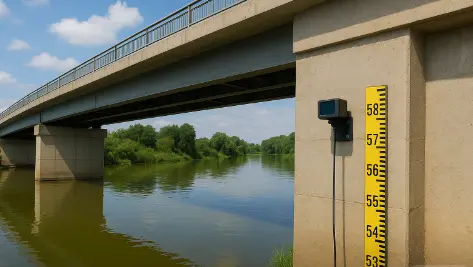
- 탱크 레벨 모니터링 – Measure water, oil, or chemical levels accurately.
- Silo & Bulk Material Measurement – Track granular or powdered materials in storage silos.
- Automated Production Lines – Detect material presence to trigger processes.
- Safety & Overflow Prevention – Prevent spills and material wastage with real-time monitoring.
By integrating level distance sensors into industrial systems, companies can achieve automation, improve operational efficiency, and ensure workplace safety.

Tips for Choosing the Right Sensor
To select the most suitable level distance measurement sensors:
- Determine the required measurement range and accuracy for your application.
- Consider environmental factors like dust, temperature, and vapor.
- Verify compatibility with your existing control system (PLC, microcontroller, or data acquisition system).
- Assess sensor durability and maintenance requirements.
- Review manufacturer support and calibration services.
Following these steps ensures optimal performance and long-term reliability.
Benefits of Using Level Distance Sensors
Implementing level distance sensors in industrial applications brings multiple advantages:
- Improved Production Efficiency – Continuous level monitoring reduces downtime and manual checks.
- Enhanced Safety – Prevent overflows and hazardous conditions.
- Automation & Remote Monitoring – Integrate sensors with PLCs for smart, automated control.
- 폐기물 감소 – Accurate measurement minimizes material loss.
결론
A level distance mesurement sensor is a versatile and indispensable tool for modern industrial operations. Whether you are monitoring liquids, solids, or bulk materials, choosing the right sensor improves efficiency, safety, and reliability.
For high-precision, durable, and customizable level distance sensors, 메커널 provides a wide range of solutions tailored to your industrial needs.
지금 Meskernel에 문의하세요 to explore sensors designed for your specific applications and achieve smarter industrial automation.
What is a level distance sensor and how does it work?
A level distance sensor is a device that measures the distance between the sensor and a target surface, such as a liquid, solid, or bulk material. It works using technologies like ultrasonic, laser, radar, or capacitive measurement, providing accurate readings for industrial monitoring, automation, and safety control.
What are the main types of level distance sensors?
The main types include:
초음파 센서 – contactless measurement of liquids and open surfaces.
Laser/Optical sensors – precise measurement for solids, powders, and granular materials.
Capacitive sensors – continuous level detection in liquids.
Radar sensors – reliable in harsh conditions such as dust, vapor, or extreme temperatures.
How do I choose the right distance sensor for my application?
Consider the following factors:
Measurement range and accuracy.
Target material (liquid, solid, or bulk).
Environmental conditions (temperature, dust, humidity).
Interface compatibility (TTL, RS232, RS485, or analog) for integration with PLCs or microcontrollers.
Installation type (top-mounted, side-mounted) and response time requirements.
Can level distance sensors be used for both liquids and solids?
Yes. Some sensors, like ultrasonic and radar sensors, are suitable for liquids, while laser/optical sensors are ideal for solids, powders, and granular materials. Choosing the right type ensures high accuracy and reliable measurements.
What are the industrial applications of level distance sensors?
Level distance sensors are widely used for:
Tank and reservoir level monitoring (water, oil, chemicals).
Bulk material measurement in silos and storage containers.
Automated production line monitoring for material presence.
Safety and overflow prevention in industrial processes.
What are the advantages of using a level distance sensor?
Improved efficiency – continuous monitoring reduces downtime and manual checks.
Enhanced safety – prevent spills and hazardous conditions.
Automation-ready – easy integration with PLCs or industrial control systems.
Reduced waste – accurate measurements prevent material loss.
How accurate are level distance sensors?
Accuracy depends on sensor type and technology:
Ultrasonic sensors typically offer ±2–10 mm accuracy.
레이저 센서 can achieve ±1 mm precision.
Radar sensors provide consistent accuracy in extreme environments.
Can level distance sensors integrate with industrial automation systems?
Yes. Most modern level distance sensors support standard industrial interfaces like TTL, RS232, RS485, and analog outputs, allowing seamless integration with PLCs, microcontrollers, or SCADA systems for automated monitoring and control.
How do I maintain or calibrate a level distance sensor?
Clean the sensor face regularly to remove dust, debris, or residue.
Check for software calibration via the sensor’s interface or controller.
Inspect wiring and connections for damage or corrosion.
Follow manufacturer-specific calibration instructions to maintain optimal accuracy.
Where can I buy reliable level distance sensors?
메커널 offers a range of high-precision, durable, and customizable level distance sensors suitable for liquids, solids, and bulk materials in industrial environments. Contact MESKernel for solutions tailored to your specific application.