Accurate distance measurement is a fundamental requirement in modern industrial systems. From automation and robotics to UAVs and infrastructure monitoring, the ability to measure distance reliably, precisely, and in real time directly impacts system performance and safety.
As a result, laser distance measurement solutions have become a preferred choice across many industries where traditional contact or low-precision sensors can no longer meet technical demands.
However, selecting a suitable laser distance measurement solution is not simply about choosing a sensor with the longest range or highest accuracy. In real-world projects, engineers and system integrators must consider the entire measurement system—including environment, integration method, output interface, stability, and long-term reliability.
This article provides a practical, engineering-oriented guide to laser distance measurement solutions, helping you understand how they work, where they are used, and how to choose the right solution for your specific application.
1. What Is a Laser Distance Measurement Solution?
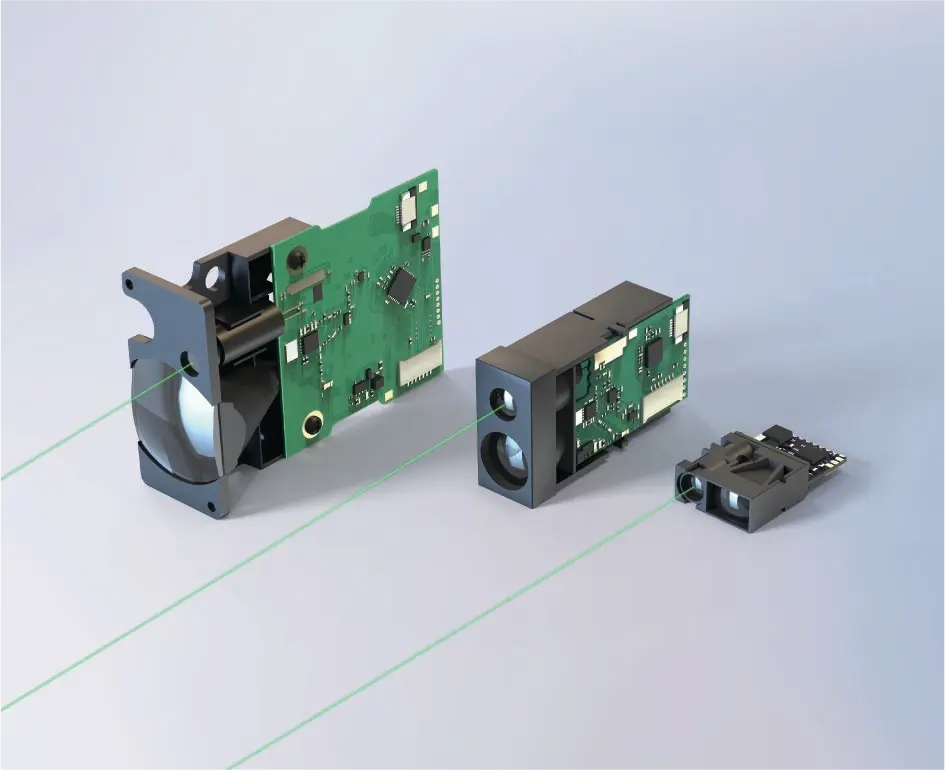
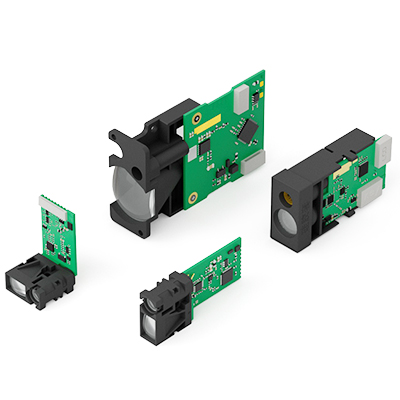
A laser distance measurement solution is more than a single sensor component. It refers to a complete distance-measuring system designed to operate reliably within a specific application environment.
A typical solution may include:
- A laser distance sensor or laser ranging module
- Optical and signal processing components
- Electrical interfaces and communication protocols
- Mechanical installation and alignment considerations
- Software or firmware for data processing and output
Unlike laboratory measurement devices, industrial laser distance measurement solutions must function continuously under real-world conditions such as vibration, temperature variation, dust, ambient light, and electromagnetic interference.
Therefore, when engineers discuss a “solution,” they are usually referring to a system-level approach, not just a laser emitter and receiver.
2. Why Laser Distance Measurement Is Widely Used in Industry
Laser-based distance measurement has become dominant in many industrial scenarios because it offers a unique combination of precision, speed, and flexibility.
Laser distance measurement is non-contact, which means:
- No physical wear on components
- No influence on the measured object
- Suitable for moving or fragile targets
High-quality laser distance measurement solutions can achieve millimeter-level or even sub-millimeter accuracy, depending on the technology and range.
2.2 Long Measurement Range
Compared to ultrasonic or infrared proximity sensors, laser-based solutions can measure:
- Several meters in compact industrial systems
- Hundreds or even thousands of meters in outdoor or surveying applications
This makes laser distance measurement ideal for large-scale industrial and infrastructure projects.
2.3 Fast Response and Real-Time Feedback
Many industrial processes require real-time distance data for:
- Closed-loop control
- Collision avoidance
- Position correction
laser ranging solution typically offer fast response times, making them suitable for automation and robotics.
3. Typical Applications of Laser Distance Measurement Solutions
Laser distance measurement solutions are used across a wide range of industries. Below are some of the most common application scenarios.
3.1 Industrial Automation and Smart Manufacturing
In automated production lines, laser ranging solution are used for:
These systems help improve production efficiency, reduce manual intervention, and maintain consistent product quality.
3.2 Robotics, AGV, and AMR Systems
Mobile robots, automated guided vehicles (AGVs), and autonomous mobile robots (AMRs) rely heavily on accurate distance data.
Laser distance measurement solutions support:
- Obstacle detection and avoidance
- Navigation and path correction
- Docking and positioning accuracy
Because robots often operate in dynamic environments, stability and resistance to interference are critical factors.
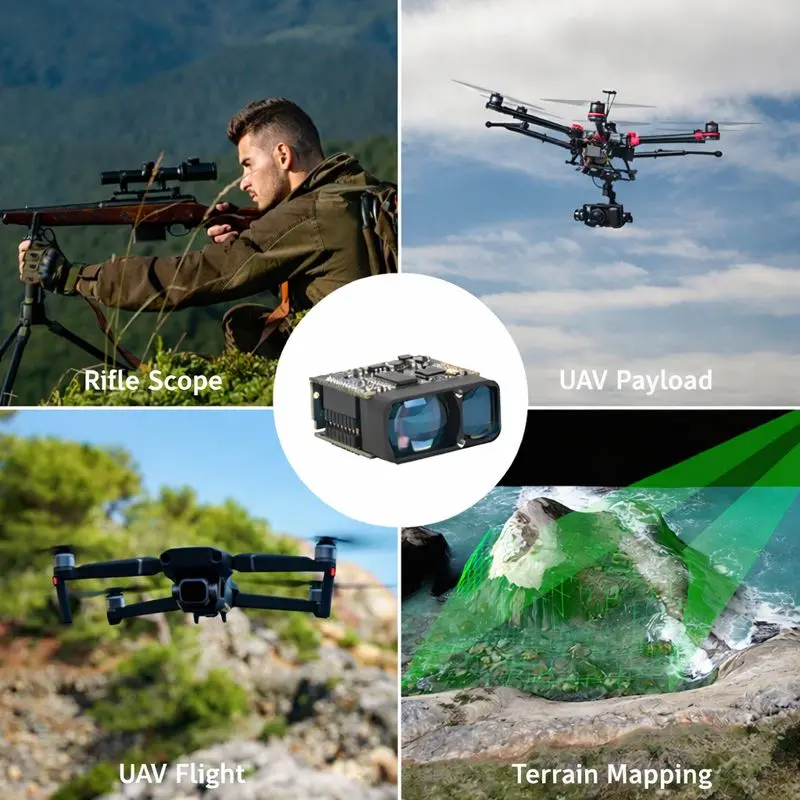
3.3 UAV and Drone Applications
In UAV systems, laser distance measurement solutions are commonly used for:
- Altitude measurement
- Terrain following
- Landing assistance
Compared to barometric or ultrasonic sensors, laser-based solutions provide more accurate and responsive distance data, especially at low altitudes.
3.4 Outdoor and Infrastructure Monitoring
For infrastructure projects, laser ranging solution are used in:
- Bridge and tunnel monitoring
- Structural deformation measurement
- Long-range distance inspection
Outdoor environments introduce challenges such as sunlight interference, weather conditions, and long measurement distances, all of which must be addressed at the system level.
4. Core Technologies Behind Laser Distance Measurement Solutions
Understanding the underlying measurement principle is essential when choosing the right solution.
TOF-based laser distance measurement solutions calculate distance by measuring the time it takes for a laser pulse to travel to a target and return.
Advantages:
- Suitable for long-range measurement
- Works well in outdoor environments
- Fast response time
Considerations:
- Accuracy depends on timing resolution
- Performance may vary with target reflectivity
4.2 Phase-Shift Measurement
Phase-shift technology measures the phase difference between emitted and reflected laser signals.
Advantages:
- High accuracy at short to medium distances
- Stable measurements for industrial environments
Considerations:
- Limited maximum measurement range
- More sensitive to environmental noise
4.3 Pulse-Based Long-Range Measurement
Pulse-based laser distance measurement solutions are often used for very long distances, such as surveying or outdoor monitoring.
These solutions typically focus on:
- Signal amplification
- Advanced filtering algorithms
- Strong resistance to ambient light
5. Key Components of a Reliable Laser Distance Measurement Solution
A dependable solution is built on multiple technical factors, not a single specification.
5.1 Measurement Range and Accuracy
Define the actual required range, not just the maximum theoretical distance. Over-specifying range can increase cost and complexity without real benefit.
Accuracy requirements should match the application:
- Millimeter-level accuracy for industrial positioning
- Centimeter-level accuracy for large-scale outdoor measurement
5.2 Output Interfaces and Integration
Industrial laser distance measurement solutions often provide multiple output options, such as:
- UART or TTL for embedded systems
- RS485 or CAN for industrial networks
- Analog output for PLC integration
Choosing the right interface simplifies system integration and reduces development time.
5.3 Environmental Adaptability
Important environmental factors include:
- Ambient light and sunlight exposure
- Dust, smoke, or moisture
- Operating temperature range
A robust laser distance measurement solution must maintain stability under these conditions.
5.4 Power Consumption and System Design
In battery-powered systems such as UAVs or mobile robots, power consumption is a critical factor. Efficient laser distance measurement solutions balance performance with energy efficiency.
6. How to Choose the Right Laser Distance Measurement Solution
Selecting the right solution requires a structured evaluation process.
6.1 Define Application Requirements Clearly
Start by answering key questions:
- What is the minimum and maximum measurement distance?
- What accuracy is truly required?
- Is the system used indoors or outdoors?
Clear requirements prevent overengineering and unnecessary costs.
6.2 Consider Integration and Development Resources
A solution that looks ideal on paper may require significant firmware or hardware modification. Choosing a laser distance measurement solution with compatible interfaces and documentation can significantly reduce development time.
6.3 Evaluate Long-Term Reliability
Industrial systems are often expected to operate for years. Stability, component quality, and supplier support are just as important as performance specifications.
7. Standard vs. Customized Laser Distance Measurement Solutions
Not all applications can be addressed with off-the-shelf products.
7.1 Standard Solutions
Standard laser distance measurement platform are suitable when:
- Application requirements are common
- Integration complexity is low
- Time-to-market is critical
They offer quick deployment and predictable performance.
7.2 Customized and OEM Solutions
Customized laser distance measurement solutions are often required when:
- Space or mechanical constraints exist
- Special communication protocols are needed
- Performance must be optimized for a specific environment
OEM solutions allow system designers to integrate laser ranging technology seamlessly into their products while maintaining full control over system architecture.
8. Common Challenges and Practical Solutions
Even well-designed laser distance measurement setup can face challenges.
8.1 Target Reflectivity Variations
Different materials reflect laser light differently. Advanced signal processing and adaptive gain control help maintain measurement stability across various targets.
8.2 Strong Ambient Light Interference
Outdoor applications often suffer from sunlight interference. Optical filtering and algorithm optimization are key to reliable operation.
8.3 Installation and Alignment Issues
Incorrect installation angles or unstable mounting can cause measurement errors. Mechanical design and calibration procedures are essential parts of the overall solution.
9. Conclusion: Building the Right Laser Distance Measurement Solution
A successful laser distance measurement configuration is the result of system-level thinking, not just selecting a sensor with impressive specifications.
By carefully evaluating:
- Application requirements
- Measurement technology
- Environmental conditions
- Integration complexity
engineers and system integrators can design solutions that deliver accurate, stable, and long-term reliable distance measurement.
Whether for industrial automation, robotics, UAVs, or infrastructure monitoring, choosing the right laser distance measurement solution is a critical step toward building efficient and dependable systems.
FAQ
How does a laser ranging system work?
Most laser distance measurement solutions work by emitting a laser beam toward a target and analyzing the reflected signal. The distance is calculated using methods such as time-of-flight (TOF), phase-shift measurement, or pulse-based ranging, depending on the required range, accuracy, and application environment.
What are the main advantages of laser ranging solution?
Laser distance measurement solutions offer non-contact measurement, high accuracy, fast response times, and long measurement ranges. They are widely used in industrial automation, robotics, UAVs, and outdoor monitoring where traditional sensors cannot meet performance requirements.
What industries commonly use laser ranging solution?
Laser distance measurement solutions are commonly used in industrial automation, robotics and AGV systems, UAV and drone applications, infrastructure monitoring, smart manufacturing, and OEM measurement systems. Their flexibility makes them suitable for both indoor and outdoor environments.
What is the difference between TOF and phase-shift laser distance measurement?
Time-of-Flight (TOF) laser distance measurement calculates distance based on the travel time of a laser pulse and is ideal for long-range and outdoor applications. Phase-shift measurement offers higher accuracy at short to medium distances but typically has a shorter maximum range.
How accurate are laser distance measuring system?
Accuracy depends on the technology, measurement range, and environmental conditions. Industrial laser distance measurement solutions can achieve millimeter-level accuracy for short to medium ranges, while long-range solutions may provide centimeter-level accuracy over hundreds of meters.
How do I choose the right laser distance measurement system?
Choosing the right solution requires defining the required measurement range, accuracy, environment (indoor or outdoor), integration interface, and long-term reliability needs. A system-level evaluation is more important than selecting a sensor based only on specifications.
Can laser ranging system work outdoors in sunlight?
Yes, many laser distance measurement solutions are designed for outdoor use. They incorporate optical filtering, signal processing algorithms, and optimized laser power to reduce the impact of strong ambient light and sunlight interference.
What interfaces are commonly available in laser distance sensing solution?
Common interfaces include UART, RS485, CAN, and analog outputs. The choice of interface depends on the control system, such as PLCs, embedded controllers, or industrial networks.
When is a customized laser ranging solution required?
Customized laser distance measurement solutions are required when standard products cannot meet specific requirements, such as limited installation space, unique communication protocols, special accuracy needs, or harsh environmental conditions. OEM solutions allow better system integration and performance optimization.