High-Frequency vs Low-Frequency Laser Distance Sensors: How to Choose the Right Measurement Rate for Your Application
Przy wyborze lasera czujnik odległości, most buyers focus on range and accuracy. However, one critical parameter is often misunderstood or overlooked: measurement frequency, also known as update rate or sampling rate.
Is a higher frequency always better?
Does low frequency mean outdated or less precise?
And when does it actually make sense to customize the frequency of a odległość lasera sensor?
This guide explains the real-world impact of pomiar laserowy frequency, compares high-frequency and low-frequency laserowe czujniki odległości, and helps you choose the most cost-effective solution for your application.
What Does “Laser Measurement Frequency” Actually Mean?
Laser measurement frequency refers to how many distance measurements a sensor outputs per second, typically expressed in Hz:
- 10 Hz → 10 distance readings per second
- 100 Hz → 100 readings per second
- 1,000 Hz → 1,000 readings per second
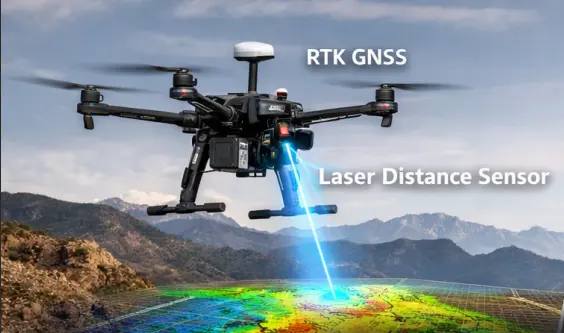
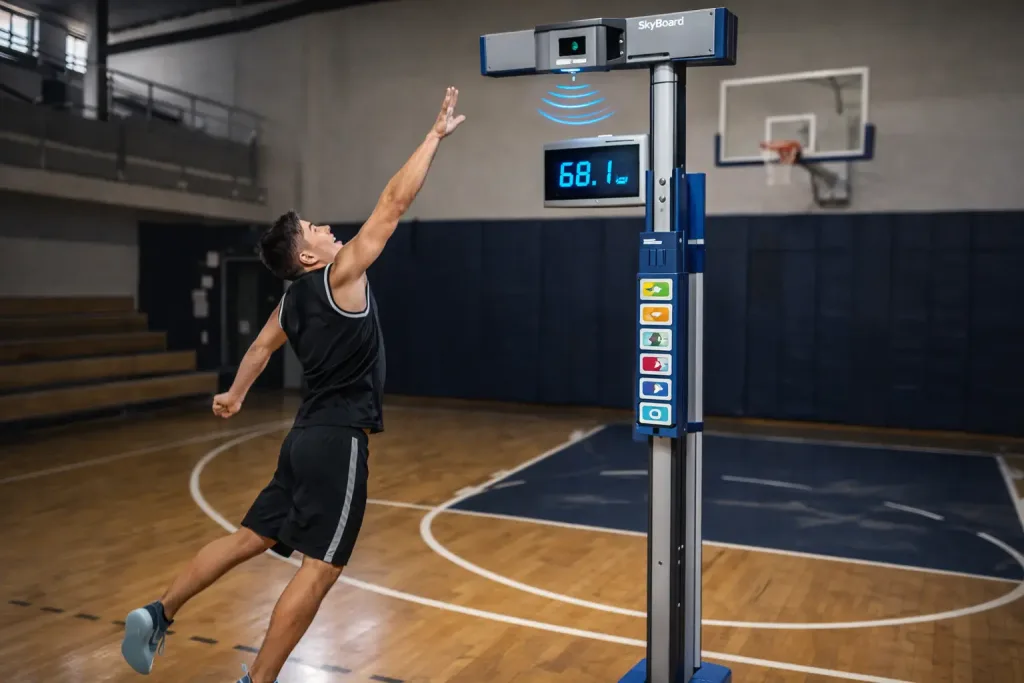
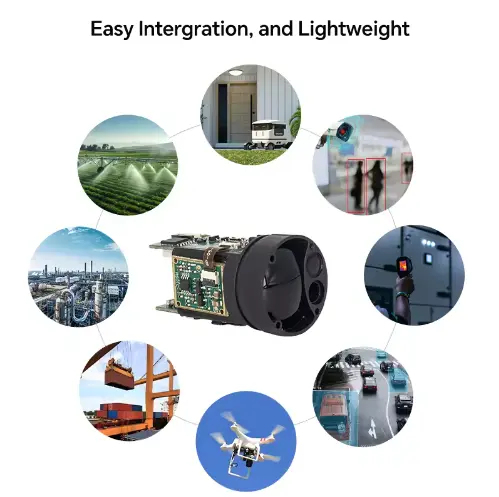
A higher frequency means faster updates, not necessarily higher accuracy. This distinction is crucial—and often misunderstood by buyers.
Laser distance sensor modules with configurable update rates
High-Frequency Laser Distance Sensors: When Speed Really Matters
Typical Frequency Range
- 100 Hz – 2 kHz (or higher, depending on design)
Key Advantages
- Captures rapid motion and dynamic targets
- Enables real-time control and feedback
- Reduces motion-induced measurement gaps
Typowe zastosowania
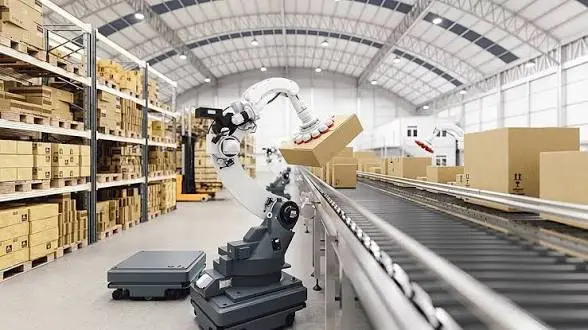
- Mobile robots and AGVs
- Autonomous vehicles and Omijanie przeszkód
- High-speed industrial automation
- Conveyor belt tracking
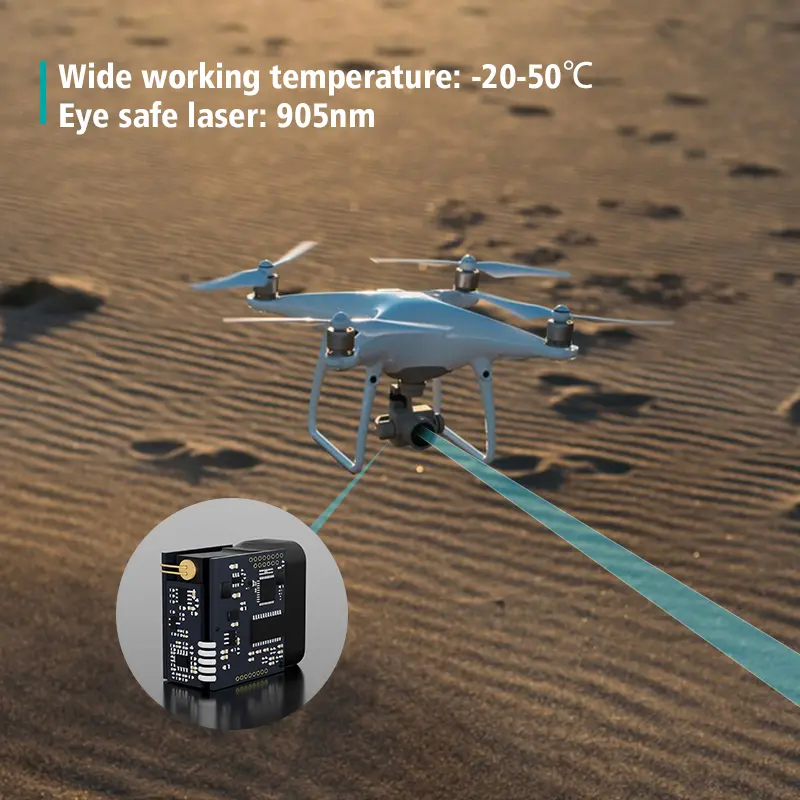
- UAV altitude control
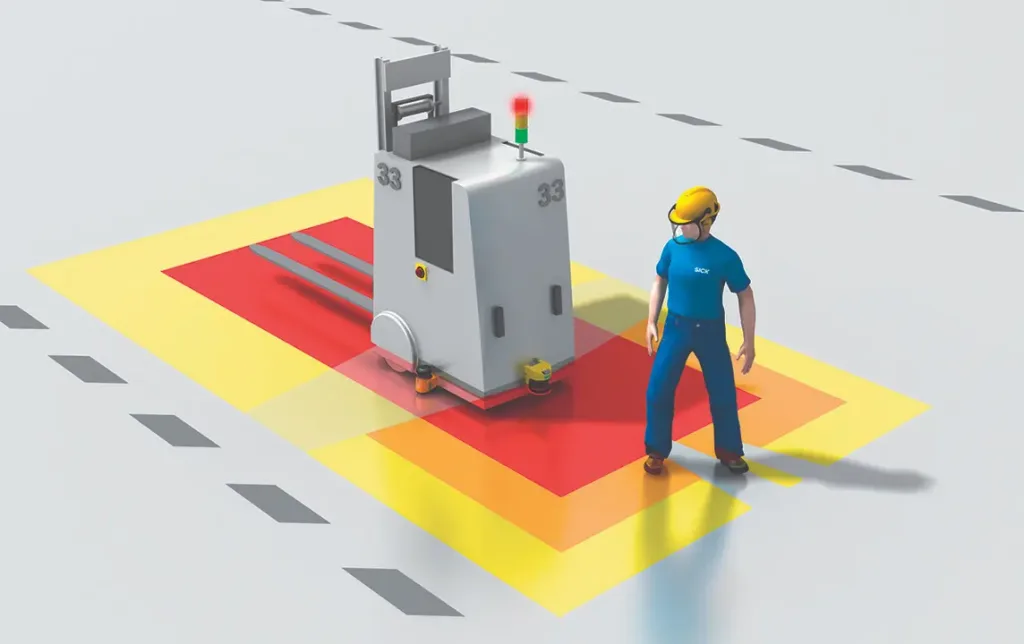
Practical Insight
If your target is moving quickly or your system relies on closed-loop control, high-frequency measurement is essential. Missing distance updates can mean unstable control or delayed reactions.
High-frequency laser distance sensors for robotics and automation
Low-Frequency Laser Distance Sensors: Efficient, Stable, and Often Sufficient
Typical Frequency Range
Key Advantages
- Niższe zużycie energii
- Reduced system cost
- More stable data for static or slow-changing targets
Typowe zastosowania
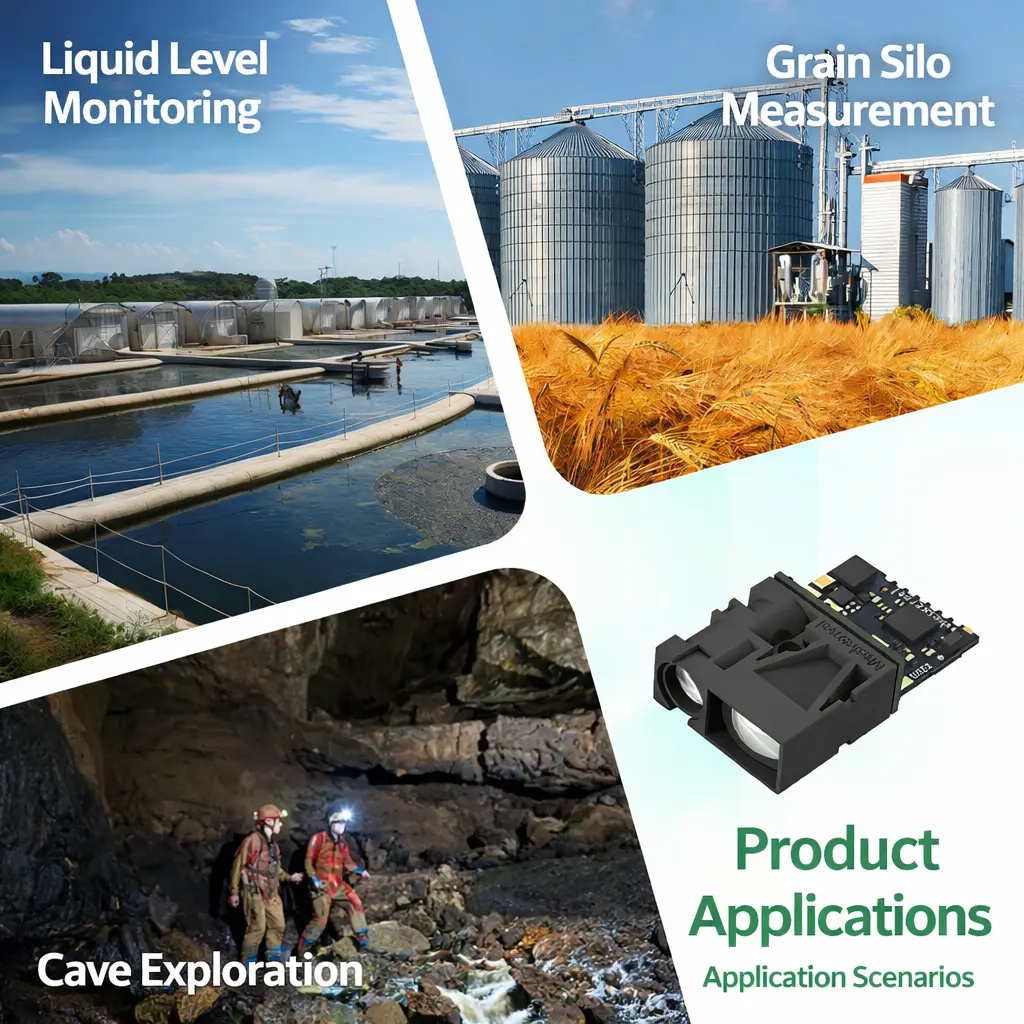
- Tank level measurement
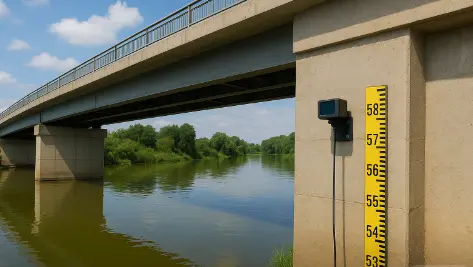
- Structural monitoring
- Perimeter security and intrusion wykrywanie
- Outdoor distance monitoring
- Long-range fixed-point measurement
Practical Insight
If the measured object changes slowly, increasing frequency provides no additional value—only higher cost and unnecessary data processing.
Long-range laser distance sensors for level and monitoring applications
High Frequency vs Low Frequency: A Practical Comparison
| Parametr | High Frequency | Low Frequency |
|---|
| Update speed | Bardzo szybko | Slow to moderate |
| Moving targets | Doskonały | Ograniczony |
| Static monitoring | Overkill | Ideal |
| Power consumption | Wyższy | Niższy |
| System cost | Wyższy | Niższy |
| Data volume | Large | Manageable |
Does Higher Frequency Improve Accuracy?
Short answer: No.
Measurement accuracy is primarily influenced by:
- Optyczne design
- Signal processing algorithms
- Laser stability
- Environmental interference
Higher frequency only means more measurements per second, not better single-point accuracy. In some scenarios, excessive frequency can even increase noise if not properly filtered.
For readers who prefer a visual explanation, our engineers also demonstrate how laser measurement frequency affects real-world performance in a short video walkthrough.
You can watch a detailed laser distance sensor frequency explanation with real test examples on our YouTube channel.
When Choosing High Frequency Actually Wastes Money
A common mistake in procurement is assuming:
“Higher frequency = higher performance = safer choice”
In reality:
- If your system samples data every 200 ms, a 1,000 Hz sensor adds no benefit
- If your PLC or controller cannot process high-rate data, information is discarded
- If the target is static, high frequency only increases power and cost
Choosing the right frequency is about matching the sensor to the application—not buying the highest specification available.
Selecting the right laser distance sensor for your application
When Should You Consider a Custom Laser Distance Sensor?
Standard frequency options do not always fit every system. Customization becomes valuable when:
- You need a specific frequency to match PLC or MCU timing
- You want to balance power consumption vs update rate
- Your application requires long range + moderate frequency
- Environmental conditions require optimized signal filtering
Because meskernel supports custom frequency, range, and communication parameters, system integrators can avoid overdesign while still achieving reliable performance.
Custom laser distance sensor frequency and range options
How to Decide: A Simple Selection Guide
Choose high-frequency if:
- Your target moves fast
- Your system needs real-time feedback
- Reaction speed is critical
Choose low-frequency if:
- The target is static or slow
- Long-term stability matters more than speed
- Power and cost efficiency are priorities
Consider custom frequency if:
- Your system timing is fixed
- Standard products are “almost right”
- You want to optimize total system cost
Explore our laser distance sensor product portfolio
Przemyślenia końcowe
Laser distance sensor frequency is not about “higher is better”—it’s about fit.
Understanding how measurement frequency impacts system performance allows engineers and buyers to:
- Avoid unnecessary costs
- Reduce system complexity
- Improve reliability
By choosing the right frequency—or a customized one—you get better results with fewer compromises.
Below are common questions engineers ask when selecting laser distance sensor frequency.
FAQ
What is the difference between high-frequency and low-frequency laser distance sensors?
High-frequency laser distance sensors provide many measurements per second, making them suitable for fast-moving targets and real-time control systems. Low-frequency sensors update more slowly but are ideal for static or slow-changing measurements where stability and cost efficiency matter more than speed.
How do I know if my application really needs a high-frequency laser distance sensor?
You need a high-frequency laser distance sensor if the measured object moves quickly, or if your system requires real-time feedback for motion control or obstacle avoidance. For static monitoring or slow movement, a low-frequency sensor is usually sufficient and more cost-effective.
Does a higher laser measurement frequency improve accuracy?
No. Measurement frequency affects how often data is updated, not how accurate each measurement is. Accuracy depends on optical design, signal processing, and environmental conditions, not on how fast measurements are taken.
What happens if I choose a laser distance sensor with frequency higher than needed?
Using a higher frequency than necessary can increase system cost, power consumption, and data processing load without improving performance. In many applications, excess data is ignored or filtered out, resulting in wasted resources.
What is a typical frequency range for laser distance sensors?
Laser distance sensors typically operate from 1 Hz to several thousand Hz. Low-frequency sensors (1–10 Hz) are common for level measurement and monitoring, while high-frequency sensors (100 Hz–1 kHz or more) are used in robotics, automation, and dynamic tracking applications.
Is low-frequency laser ranging suitable for long-distance measurement?
Yes. Low-frequency laser distance sensors are often preferred for long-range measurements because the target is usually static, and lower frequency allows for better signal stability, reduced noise, and lower power consumption.
When should I consider a custom frequency laser distance sensor?
Custom frequency is recommended when standard update rates do not match your controller timing, power budget, or system architecture. Customization helps balance performance and cost, especially in industrial or embedded systems.
Is high-frequency laser distance measurement always better for industrial applications?
Not always. Industrial applications vary widely. High-frequency measurement is beneficial for automation and motion control, but many industrial tasks—such as level sensing, positioning, or monitoring—perform better with lower frequencies due to improved stability and reduced system complexity.
If your system requires a specific update rate or measurement range, you may consider a customized laser distance sensor solution.