Modern agriculture is rapidly evolving toward automation, data-driven decision-making, and precision control. From autonomous tractors to smart irrigation systems, accurate medição de distâncias plays a critical role in improving productivity and reducing operational costs.
An agricultural ranging sensor is a key component in this transformation. Among different sensing technologies, distância do laser sensors are increasingly adopted in agricultural equipment due to their long range, high accuracy, and medição sem contacto capabilities.
This article explores how agricultural ranging sensors work, where they are used, and why laser-based distance sensing is becoming essential for modern farming systems.
What Is an Agricultural Ranging Sensor?
An agricultural ranging sensor is a device used to measure the distance between agricultural machinery or systems and objects such as crops, soil surfaces, storage materials, or obstacles. These sensors enable machines to perceive their environment, maintain safe distances, and execute precise actions.
Typical measurement targets include:
- Crop canopy height
- Ground distance and terrain variation
- Grain or feed level in silos
- Position of plants, rows, or obstacles
Sensores de distância used in agriculture must operate reliably in dusty, humid, outdoor, and high-vibration environments, which makes industrial-grade sensor selection especially important.
Why Laser Distance Sensors Are Ideal for Agricultural Applications
Compared with ultrasonic or basic sensores de infravermelhos, sensores de distância por laser provide clear advantages for agricultural use.
High Accuracy Over Long Distances
Laser distance sensors can measure from a few centimeters to several hundred meters with millimeter-level precision. This is critical for applications such as:
- Field mapping
- Navegação autónoma de veículos
- Large-scale crop monitoring
Because sensores laser do not require physical contact, they avoid contamination from soil, moisture, or chemicals—an important factor in farming environments.
Strong Directionality and Anti-Interference
Laser beams are highly directional, allowing precise targeting even in complex outdoor scenes. Advanced signal processing helps reduce interference from sunlight, dust, or plant movement.
Easy Integration with Agricultural Control Systems
A maioria sensores de distância laser industriais support standard interfaces such as:
This makes them easy to integrate into agricultural robots, automated machinery, and IoT monitoring platforms.
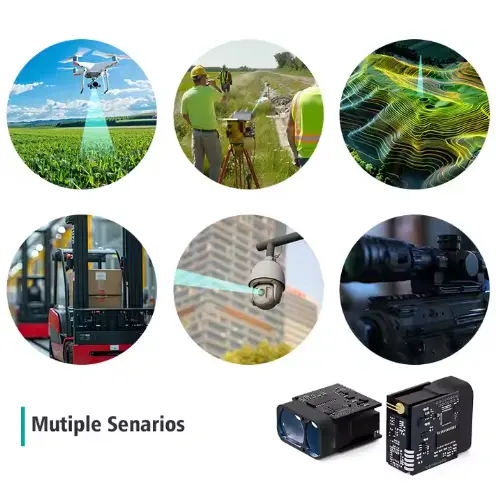
Key Applications of Agricultural Ranging Sensors
1. Autonomous Agricultural Vehicles and Robots
Autonomous tractors, harvesters, and robotic platforms rely heavily on distance sensors for navigation and desvio de obstáculos. Laser distance sensors help machines:
- Maintain safe distances from crops and structures
- Detect unexpected obstacles in fields
- Perform precise path planning
For robotic farming systems, a reliable agricultural ranging sensor directly impacts safety and operational efficiency.
2. Crop Height and Growth Monitoring
Laser distance sensors can continuously measure the distance from the sensor to the crop canopy, enabling:
- Real-time crop medição da altura
- Growth trend analysis over time
- Data-driven fertilizer and irrigation decisions
This application is a cornerstone of precision agriculture, where small measurement improvements can lead to significant yield gains.
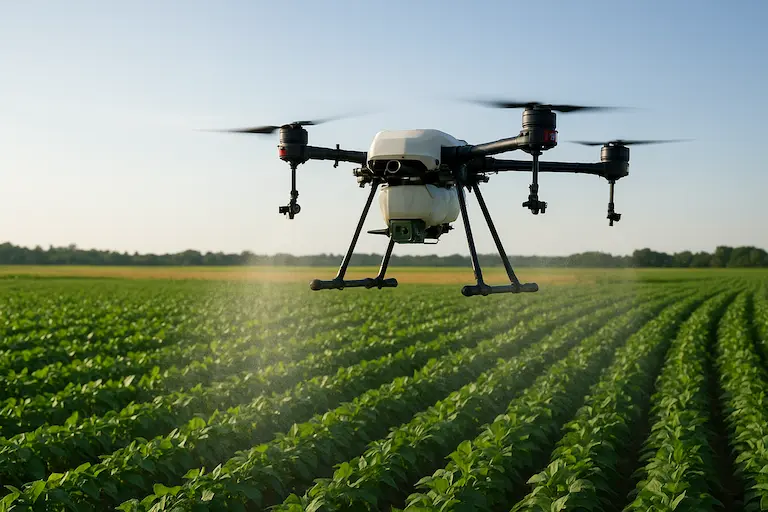
3. Smart Spraying and Variable-Rate Application
In spraying systems, distance sensors allow equipment to:
- Adjust spray height dynamically
- Maintain optimal distance to crops
- Reduce chemical waste and overspray
Using an agricultural ranging sensor in spraying equipment helps farmers improve efficiency while minimizing environmental impact.
4. Grain, Feed, and Material Level Measurement
Laser distance sensors are widely used for level measurement in silos and storage tanks, where traditional mechanical sensors may fail due to dust or uneven surfaces.
Typical use cases include:
- Grain silos
- Feed storage
- Fertilizer containers
Laser-based level measurement provides continuous, maintenance-free monitoring, even in harsh agricultural storage environments.
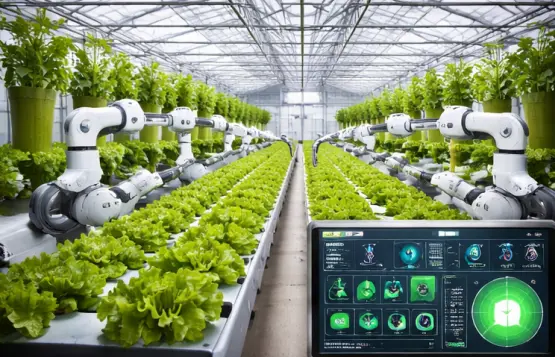
5. Greenhouse Automation and Smart Farming Systems
In controlled environments such as greenhouses, distance sensors help manage:
- Plant spacing and growth uniformity
- Automated lifting or positioning systems
- Environmental control equipment
Sensores de distância a laser support precise automation, enabling consistent crop quality and reduced labor costs.
Choosing the Right Agricultural Distance Sensor
Ao selecionar um sensor de distância for agricultural applications, buyers and system integrators should consider the following factors:
Measurement Range and Accuracy
Choose a sensor with sufficient range for your application while maintaining stable accuracy under outdoor lighting conditions.
Resistência ambiental
Agricultural environments demand sensors with:
- Dust and moisture resistance
- Ampla gama de temperaturas de funcionamento
- Robust housing for vibration and shock
Output Interface and System Compatibility
Ensure the sensor supports interfaces compatible with your control system or PLC.
Customization and OEM Support
For agricultural equipment manufacturers, customizable sensor de distância por laser modules offer flexibility in size, output format, and firmware behavior.
Laser Distance Sensor Modules for Agricultural Equipment Manufacturers
Many agricultural systems require embedded distance sensor modules rather than standalone devices. Compact laser distance sensor modules are ideal for:
- Integration into agricultural robots
- OEM machinery design
- Smart farming devices
These modules can be tailored for specific agricultural needs, including measurement range, housing design, and communication protocols.
Future Trends in Agricultural Distance Sensing
As agriculture continues to adopt automation and AI-driven systems, distance sensing technology will evolve toward:
- Smarter sensor fusion with vision systems
- Higher resistance to environmental interference
- Deeper integration with agricultural IoT platforms
The role of the agricultural ranging sensor will expand from simple measurement to a critical component of intelligent farming systems.
Conclusão
An agricultural ranging sensor is no longer a niche component—it is a fundamental building block of modern precision agriculture. Among available technologies, laser distance sensors stand out for their accuracy, reliability, and adaptability to harsh outdoor environments.
For agricultural equipment manufacturers, system integrators, and smart farming solution providers, selecting the right laser distance sensor can significantly improve performance, efficiency, and long-term system reliability.
By investing in high-quality agricultural distance sensing solutions, modern agriculture moves one step closer to fully autonomous, data-driven farming.
FAQ: Agricultural Ranging Sensor
What is the best distance sensor for agricultural applications?
Laser distance sensors are often preferred due to their long range, high accuracy, and strong resistance to environmental interference.
Os sensores de distância a laser podem funcionar ao ar livre sob a luz do sol?
Yes. Industrial-grade laser distance sensors are designed with ótico filtering and signal processing to operate reliably under strong ambient light.
Are agricultural ranging sensors suitable for autonomous farming robots?
Absolutely. Distance sensors are essential for navigation, obstacle deteção, and precise control in agricultural robotics.