Introduction to Laser Distance Sensor ESP32 Integration
From UART Wiring and Command Control to Industrial Applications
Modern embedded systems increasingly rely on accurate and reliable medição de distâncias. From mobile robots and AGVs to IoT sensing nodes and industrial automation, distância do laser sensors have become a core component for spatial awareness and feedback control.
At the same time, ESP32 has emerged as one of the most popular microcontroladores thanks to its high performance, rich peripherals, and strong ecosystem. Combining ESP32 with a laser sensor de distância enables developers to rapidly build prototypes and scale them into industrial-grade systems.
This guide provides a practical, engineering-oriented walkthrough of integrating a sensor de distância por laser with ESP32. You will learn how alcance laser technologies work, how to connect and control a sensor via UART, how to structure your firmware, and how to select the right laser distance module for real-world applications.
1. Understanding Laser Distance Sensor Technologies for ESP32 Integration
Before wiring or coding, it is important to understand the two main laser ranging technologies used in embedded and industrial sensors.
Phase-based laser distance sensors (often referred to as iToF) calculate distance by analyzing the phase difference between emitted and reflected modulated laser signals.
Caraterísticas principais:
- Precisão ao nível do milímetro
- Fast measurement speed (from several Hz up to high-frequency modes)
- Compact size and low power consumption
- Excellent repeatability and stability
These sensors are widely used in:
- Robotics and autonomous navegação
- Industrial positioning and automation
- Smart equipment and IoT systems
Phase módulos de distância laser are especially suitable for ESP32 integration, as they typically support UART-based communication with simple command protocols.
Pulse-based telémetro laser sensors (direct Tempo de voo) measure distance by calculating the time taken for a laser pulse to travel to a target and back.
Caraterísticas principais:
- Measurement range from hundreds of meters to several kilometers
- Robust outdoor performance
- Ideal for long-distance and open-field applications
Typical use cases include:
- Drones and UAVs
- Topografia e cartografia
- Security, defense, and outdoor monitoring
These sensors often operate at lower measurement frequencies but excel in long-range accuracy.
2. ESP32 and Laser Distance Sensor Hardware Connection
2.1 Typical UART Wiring for ESP32
Most laser distance sensor modules communicate via UART (TTL level), which makes them straightforward to connect to ESP32.
A typical wiring configuration is shown below:
| Pino do ESP32 | Sensor de distância a laser |
|---|
| GPIO16 (RX) | TX |
| GPIO17 (TX) | RX |
| GPIO6 | Power Enable (PWR_EN) |
| 3.3V | VCC |
| GND | GND |
Important notes:
- TX and RX must be cross-connected
- ESP32 and the sensor must share a common ground
- Ensure the sensor supports 3.3V logic levels
Proper wiring is the foundation for stable communication and reliable measurement results.
2.2 Power Control and Stability Considerations
Many laser distance modules support power enable control, allowing ESP32 to turn the sensor on or off through a GPIO pin. This is particularly useful for:
- Low-power systems
- Battery-operated devices
- Duty-cycled measurement scenarios
Stable power supply and clean grounding significantly improve communication reliability and measurement consistency.
3. ESP32 Software Setup for Laser Distance Sensor Integration
To begin development, prepare the following:
- Arduino IDE (version 2.x recommended)
- ESP32 board support package installed via Board Manager
- USB cable for programming and power
Set the serial monitor baud rate to 115200, which is commonly used by laser distance sensor modules.
3.2 Why UART Communication Is Ideal for Laser Distance Sensors
UART communication offers several advantages:
- Simple implementation
- Low overhead
- Deterministic timing
- Wide compatibility across microcontrollers
For embedded distance measurement, UART provides a reliable balance between performance and simplicity, making it a preferred interface for sensores laser.
4. Laser Distance Sensor Command Control on ESP32
Once connected, ESP32 controls the laser distance sensor through text-based or binary commands.
4.1 Basic UART Commands for Laser Distance Sensors
Typical command sets include:
| Command | Função |
|---|
| on / off | Enable or disable laser emission |
| poweron / poweroff | Control module power |
| single | Perform a single distance measurement |
| cont | Start continuous measurement mode |
| stop | Stop continuous measurement |
| status | Query module status |
| offset N | Apply distance offset compensation |
| volt | Read input voltage |
These commands allow developers to fully control the sensor behavior without complex drivers.
4.2 Single vs Continuous Measurement Modes on ESP32
Single measurement mode is ideal for:
- Event-triggered sensing
- Low-power applications
- Sporadic distance checks
Continuous measurement mode is better suited for:
Selecting the correct mode helps balance responsiveness, power consumption, and system complexity.
5. ESP32 Firmware Structure for Laser Distance Sensors
A well-structured firmware design improves stability and scalability.
5.1 Initialization and Setup
After defining RX, TX, and power control pins, the laser module is initialized during system startup:
Laser myLaser(RX_PIN, TX_PIN, PWR_PIN);
myLaser.begin();
This sets up UART communication and prepares the sensor for operation.
5.2 Continuous Handling in the Main Loop
In real projects, the laser sensor requires periodic handling to:
- Receive measurement data
- Manage timeouts
- Update internal state
Calling a handler function inside the main loop ensures reliable operation:
void loop() {
  myLaser.handle();
  // Other application logic
}
This approach allows the sensor to operate seamlessly alongside other ESP32 tasks.
6. Selecting the Right Laser Distance Sensor for Your Project
Choosing the right sensor is as important as proper integration.
6.1 Selection by Distance and Accuracy
- 0.03–40 m, millimeter accuracy: Phase laser distance modules
- 200 m to several kilometers: Pulse laser rangefinder sensors
Understanding your required range and precision helps narrow down suitable options.
6.2 Environmental and Industrial Considerations for ESP32 Laser Sensors
- Indoor or embedded systems: compact PCB modules
- Outdoor or industrial environments: IP-rated metal housings (IP54, IP67)
Environmental protection ensures long-term reliability in harsh conditions.
6.3 Communication Interfaces and Protocol Customization
Many sensores de distância laser industriais apoio:
- UART, RS232, RS485 interfaces
- Custom or MODBUS communication protocols
- Adjustable baud rates and addressing
This flexibility allows seamless integration into existing control systems and networks.
7. ESP32 Laser Distance Sensor Application Scenarios
Sensores de distância a laser integrated with ESP32 are widely used in:
- Robotics obstacle deteção and navigation
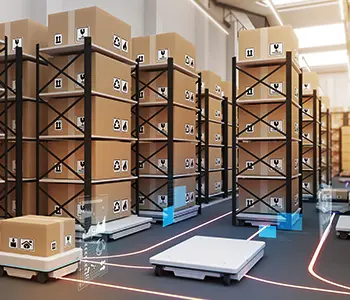
- AGV and AMR positioning feedback
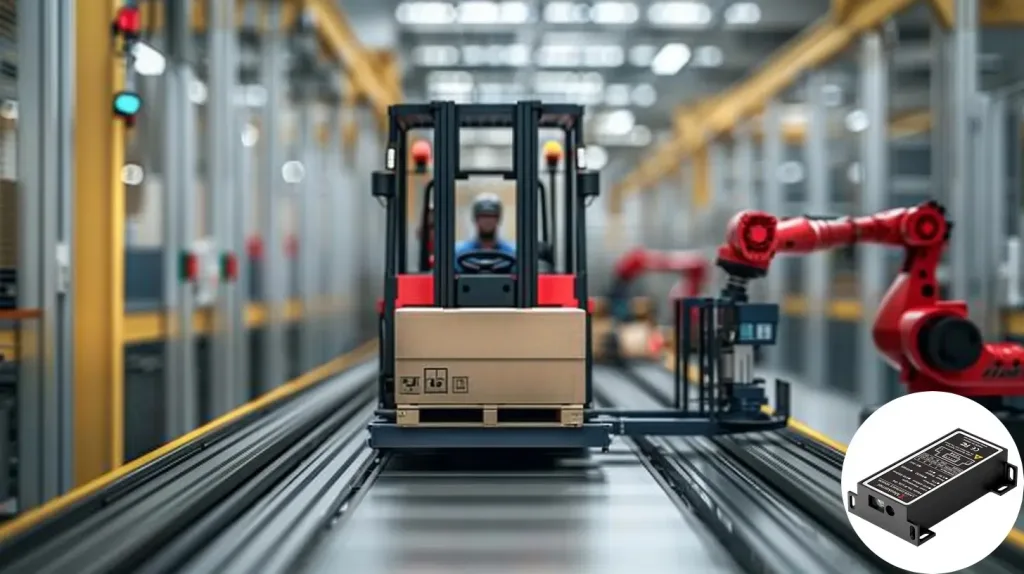
- Automação industrial e sistemas de posicionamento
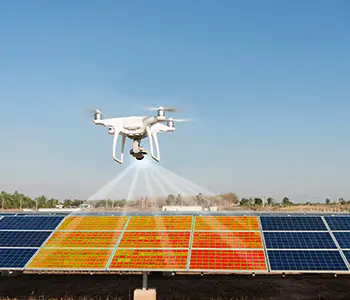
- Drone altitude and ranging measurement
- Smart IoT sensing nodes
These applications benefit from medição sem contacto, high accuracy, and fast response times.
8. Laser Distance Sensor ESP32 Integration FAQ
Can ESP32 directly communicate with laser distance sensors?
Yes. Most laser distance sensors use UART communication and can be directly connected to ESP32 without additional hardware.
What baud rate should be used?
115200 is commonly supported, but higher baud rates are available on some modules for faster data throughput.
How do I choose between phase and pulse laser sensors?
Choose phase sensors for high precision at short to medium distances, and pulse sensors for long-range outdoor applications.
Is continuous measurement power-hungry?
Continuous mode consumes more power than single measurement mode, but power control and duty cycling can significantly reduce consumption.
Can communication protocols be customized in Laser Distance Sensor ESP32 projects?
Em industrial Laser Distance Sensor ESP32 projects, communication protocols, baud rates, and command sets can often be customized to match specific system requirements, especially for OEM and system integration scenarios.
Why is ESP32 a good choice for laser distance sensor projects?
ESP32 is widely used in Laser Distance Sensor ESP32 projects because it offers:
Multiple hardware UART ports
Sufficient processing power for real-time distance data handling
Low power consumption for embedded and IoT systems
Excellent compatibility with industrial laser distance sensor modules
What communication protocol is commonly used in Laser Distance Sensor ESP32 systems?
In most Laser Distance Sensor ESP32 integrations, UART-based command protocols are used. These protocols typically support commands for single measurement, continuous measurement, status query, and distance offset calibration.
From ESP32 Laser Distance Sensor Prototype to Industrial Deployment
Integrating a laser distance sensor with ESP32 is a powerful and flexible solution for modern embedded systems. With proper hardware wiring, structured firmware design, and informed sensor selection, developers can move from rapid prototyping to reliable industrial deployment.
Backed by years of experience in laser ranging technology, Chengdu Meskernel Integrated Technology Co., Ltd. provides a comprehensive portfolio of phase and pulse laser distance sensors, along with engineering-level integration support and customization services.
Whether you are building a robot, an IoT device, or an industrial sistema de automação, a well-integrated laser distance sensor can significantly enhance system intelligence, accuracy, and reliability.