Sensor ToF vs LiDAR explicado: princípios de funcionamento, prós e contras, alcance, precisão e casos de utilização. Descubra o melhor laser sensor de distância para drones, AGVs, robótica e integração OEM.
ToF e LiDAR são a mesma coisa?
Tempo de voo (ToF) e os sensores LiDAR são frequentemente mencionados em conjunto porque ambos se baseiam na luz medição de distâncias. No entanto, têm objectivos muito diferentes.
Um sensor de distância ToF é normalmente um módulo compacto, de ponto único ou de matriz pequena, concebido para curto a médio alcance (de centímetros a vários metros).
O LiDAR, por outro lado, é normalmente um sistema laser de varrimento que cria mapas 2D/3D para a robótica, topografia, e navegação autónoma.
A escolha entre eles depende do alcance, da precisão, da cobertura de varrimento, da velocidade e das condições ambientais necessárias - especialmente em exteriores.
Este guia fornece uma comparação profunda, técnica e lado a lado para ajudar engenheiros, integradores e fabricantes OEM a escolher a solução correta.
Comparação do princípio de funcionamento
Onda contínua vs. tempo de voo
Um sensor ToF calcula a distância medindo o tempo que um impulso laser demora a viajar até um objeto e a voltar.
A maioria dos sensores ToF industriais - como os sensores de longo alcance da Meskernel distância do laser (5-2000 m) - utilizar ToF pulsado para máxima precisão e desempenho em exteriores.
Os sistemas LiDAR também utilizam o tempo de voo, mas empregam ópticas de varrimento mais complexas, espelhos rotativos ou matrizes VCSEL de estado sólido para gerar uma nuvem de pontos multiponto ou de área total.
Em suma:
- Sensor ToF = medição de ponto único ou de pequena série
- LiDAR = varrimento multiponto ou de área total
Medição por varrimento vs. medição de ponto único
Sensores de distância ToF são tipicamente de ponto único, fornecendo dados de distância rápidos, estáveis e de alta frequência - ideais para circuitos de controlo em tempo real, tais como
O LiDAR foi concebido para o controlo de áreas, fornecendo:
- Nuvens de pontos 2D ou 3D
- Mapeamento e SLAM
- Navegação e localização
- Deteção de campo de visão alargado
Tabela de comparação lado a lado
| Caraterística | Sensor ToF (ponto único) | LiDAR (Sistema de digitalização) |
|---|
| Gama | Alcance curto-longo (0,1-2000 m consoante o modelo) | Alcance médio-longo (5-300 m típico) |
| Exatidão | Alta precisão (±1-10 mm típico para módulos industriais) | Precisão moderada-alta; depende muito do método de varrimento e da refletividade |
| Custo | Baixa a média; ideal para módulos OEM | Maior devido à ótica, unidades de varrimento ou matrizes de estado sólido |
| Tamanho | Muito compacto; PCB ou caixa metálica pequena | Maior, especialmente LiDAR rotativo |
| Desempenho ao ar livre | Excelente em modelos ToF pulsados de longo alcance; forte imunidade à luz solar | Frequentemente reduzida sob a luz do sol, chuva, nevoeiro ou neve |
| Consumo de energia | Muito baixo | Médio a elevado |
| Melhor caso de utilização | Deteção de altura, controlo de distância, medição de nível, alcance de UAV | Mapeamento, SLAM, navegação autónoma, perceção robótica |
| Saída de dados | Valor de distância único (alta frequência) | Nuvem de pontos completa (2D/3D) |
Quando escolher um sensor ToF
A Sensor de distância ToF é a melhor escolha quando a sua aplicação necessita de uma medição rápida e precisa de um único ponto em vez de uma leitura completa.
Escolha ToF se o seu projeto necessitar:
- Feedback de distância de alta frequência (até 1-10 kHz consoante o módulo)
- Medição de longo alcance (até 2000 m com os nossos módulos ToF OEM pulsados)
- Tamanho compacto para drones, robôs ou dispositivos incorporados
- Forte desempenho no exterior sob a luz do sol
- Medição estável em alvos de baixa refletividade
- Baixo consumo de energia
- Custo mais baixo do que o LiDAR
Aplicações industriais comuns:
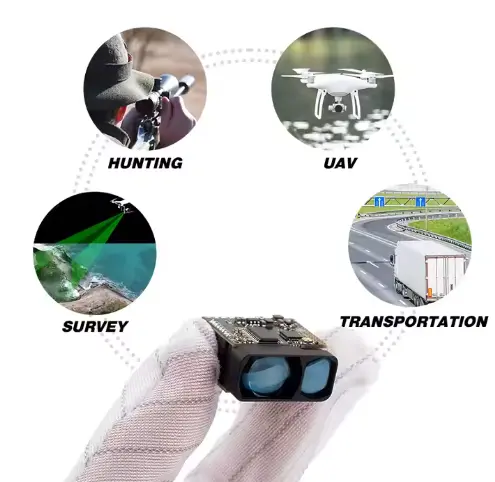
- Manutenção da altitude do UAV / seguimento do terreno
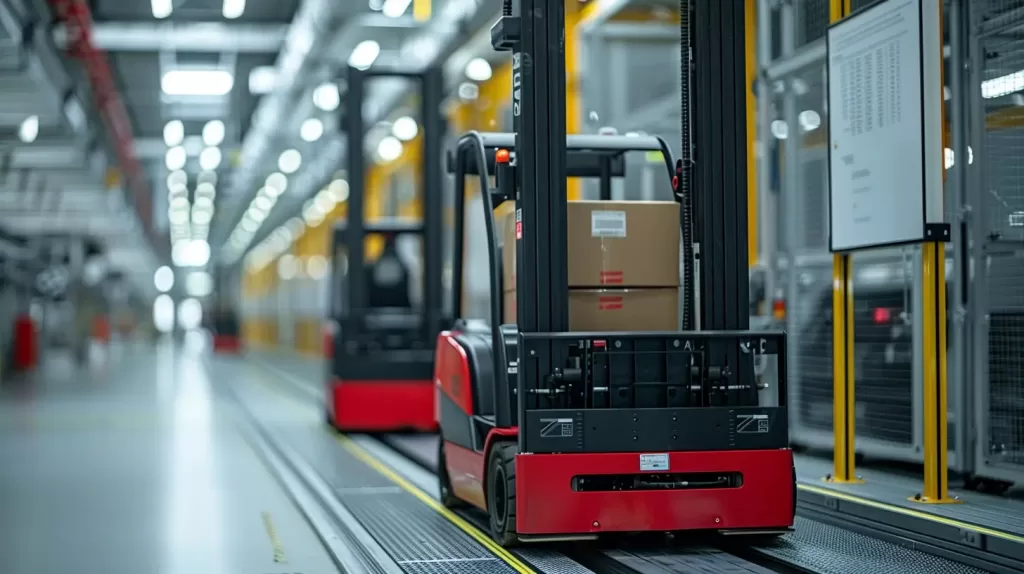
- Controlo da distância AGV/AMR
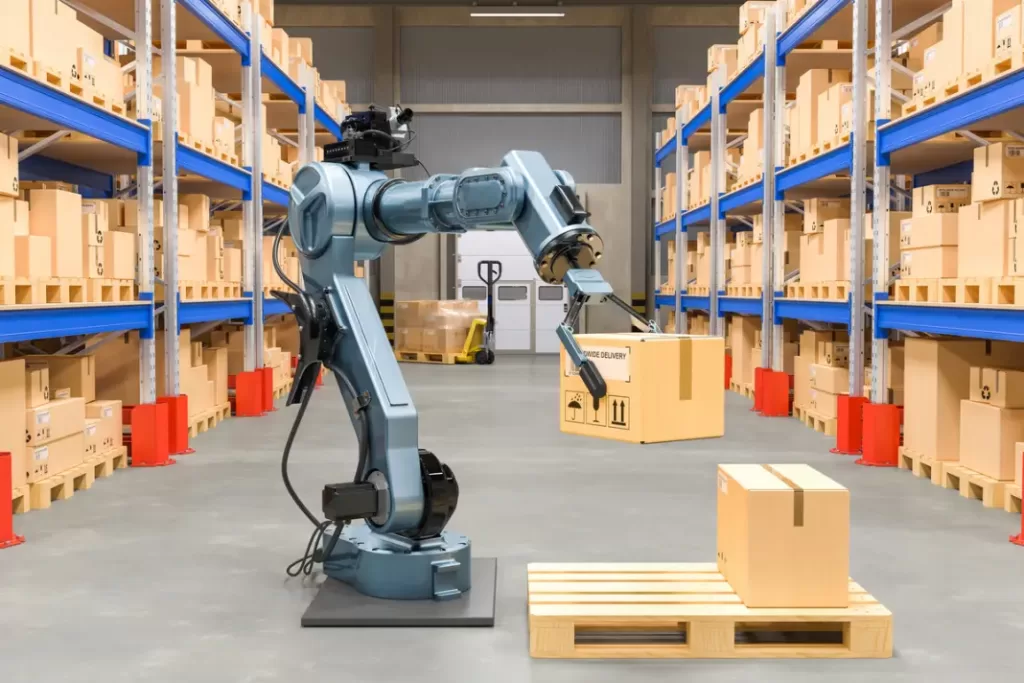
- Armazéns inteligentes
- Deteção de materiais com base em transportadores
- Sistemas de posicionamento industrial
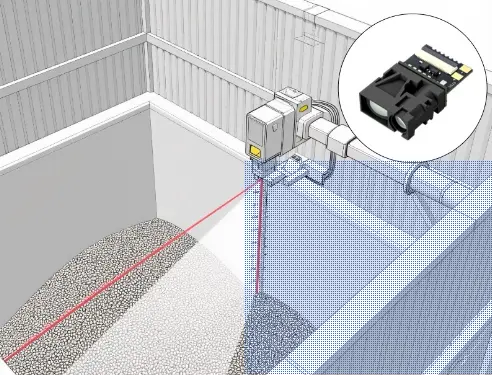
- Medição do nível do tanque
- Sistemas de disparo à distância
- Automação e segurança de máquinas
O sensor de distância por laser industrial são amplamente utilizados no mapeamento de UAV, robótica, agricultura inteligente, mineração e automação de fábricas.


Quando o LiDAR é a melhor escolha
O LiDAR é ideal para aplicações que requerem perceção de áreas amplas, consciência ambiental ou cartografia 3D.
Escolha LiDAR se o seu projeto necessitar:
- Deteção de obstáculos num campo de visão alargado
- Navegação SLAM
- Mapeamento 2D ou 3D
- Perceção espacial em vez de apenas feedback da distância
- Digitalização de grandes áreas para sistemas autónomos
Aplicações mais adequadas:
- Robôs móveis autónomos
- Empilhadores sem condutor e veículos autónomos
- Levantamento e cartografia do terreno
- Digitalização 3D florestal
- Controlo ambiental
- Sistemas de segurança para grandes áreas
Sistemas híbridos (ToF + LiDAR)
Muitos sistemas avançados combinam ToF e LiDAR, tirando partido dos pontos fortes de cada tecnologia.
Exemplo de configuração híbrida:
- LiDAR → Constrói um mapa, detecta obstáculos
- Sensor ToF → Fornece feedback preciso de altura ou distância para circuitos de controlo
Vantagens da deteção híbrida:
- Maior fiabilidade
- Redundância para tarefas de missão crítica
- Melhor desempenho sob baixa refletividade ou luz solar
- Melhor estabilidade de medição
Casos de utilização híbridos comuns:
- Mapeamento do terreno do UAV + manutenção da altitude em tempo real
- Navegação AMR + alinhamento das docas
- Robôs agrícolas inteligentes
- Plataformas de inspeção industrial
FAQ para Sensor ToF vs LiDAR
-
Qual é a principal diferença entre um sensor ToF e o LiDAR?
Um sensor ToF mede a distância de um único ponto, enquanto o LiDAR analisa vários pontos para criar um mapa 2D ou 3D.
Sensores ToF são ideais para a medição precisa de pontos; o LiDAR é ideal para cartografia e navegação.
-
Um sensor ToF é mais barato do que o LiDAR?
Sim. Os sensores de distância ToF são significativamente mais económicos porque não requerem ópticas de varrimento complexas ou espelhos rotativos. Isto torna-os a escolha preferida para fabricantes OEM, UAVs, robótica e sistemas de automação industrial.
-
Os sensores ToF podem funcionar no exterior sob luz solar intensa?
Módulos laser ToF industriais pulsados - tais como os utilizados em aplicações de longo alcance Meskernel oferecem excelente imunidade à luz solar, tornando-os adequados para voos de UAV, mineração, silvicultura e automação externa.
-
O LiDAR proporciona uma melhor precisão do que o ToF?
Nem sempre.
Os sensores de distância ToF de alta qualidade podem atingir uma exatidão de ±1-10 mm, mesmo a longas distâncias. A precisão do LiDAR depende do tipo de varrimento e é frequentemente semelhante ou ligeiramente inferior a longas distâncias.
-
O que devo utilizar para drones - ToF ou LiDAR?
Utilização ToF para:
Retenção de altitude
Assistência à aterragem
Controlo de distância a alta velocidade
Utilização LiDAR para:
Navegação
Mapeamento de obstáculos
Perceção ambiental
Muitos fabricantes de drones utilizam ambos para obter a máxima fiabilidade.
-
Que tecnologia é melhor para a automação industrial?
Para medições de ponto único, os sensores ToF são mais estáveis, económicos e precisos.
Para cartografia ou digitalização de áreas, é preferível o LiDAR.
Comparar modelos industriais ToF e LiDAR
A Meskernel oferece uma gama completa de sensores de distância laser de nível industrial, incluindo:
- Sensores de distância ToF de curto, médio e longo alcance (5-2000 m)
- OEM medição de distâncias por laser módulos para integradores
- Sensores ToF pulsados para exterior/alta luminosidade solar
- Módulos de medição de precisão para UAVs, robótica e automação
👉 Explore os nossos sensores de distância compatíveis com ToF e LiDAR
👉 Solicitar amostras OEM agora
👉 Descarregar fichas de dados e guias de integração
https://meskernel.net/time-of-flight-distance-sensor/