I2C Distance Sensors Explained: Best Choice for Arduino and Raspberry Pi?
Измерение расстояния is essential in many modern electronics projects, from robot navigation and обход препятствий to industrial automation and smart devices.
For developers working with Arduino or Raspberry Pi, choosing the right communication interface is just as important as selecting the sensor itself.
Among the available interfaces, I2C distance sensors have become one of the most popular choices because they offer:
- simple wiring
- reliable digital communication
- compatibility with many микроконтроллеры
- easy integration with embedded systems
In this guide, we’ll explain how I2C distance sensors work, compare them with other sensor interfaces, and explore why they are often the best option for Arduino and Raspberry Pi projects.
What Is an I2C Distance Sensor?
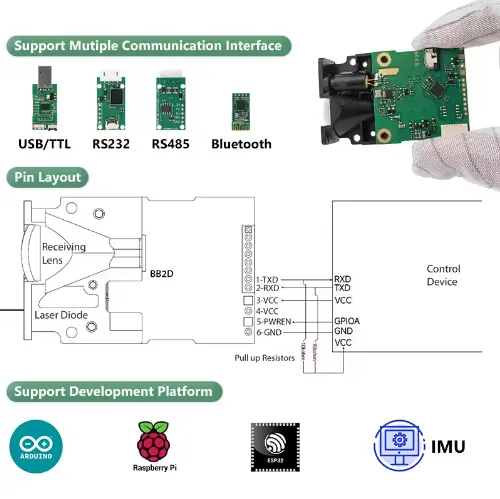
An I2C датчик расстояния is a бесконтактное измерение sensor that communicates with a microcontroller using the I2C (Inter-Integrated Circuit) protocol.
Instead of outputting аналог voltage or pulse signals, the sensor sends digital distance data through the I2C bus.
Typical components include:
- laser emitter or infrared source
- optical receiver
- signal processing chip
- I2C communication interface
These sensors measure the distance to an object and transmit the value directly to the controller.
Common technologies used in I2C distance sensors include:
Because the data is already digitized, the microcontroller can read accurate distance values without complex analog processing.
Why I2C Sensors Are Ideal for Arduino and Raspberry Pi
Compared with analog or UART sensors, I2C modules offer several advantages for embedded developers.
1. Minimal Wiring
I2C requires only two communication lines:
Along with power and ground, this makes wiring very simple.
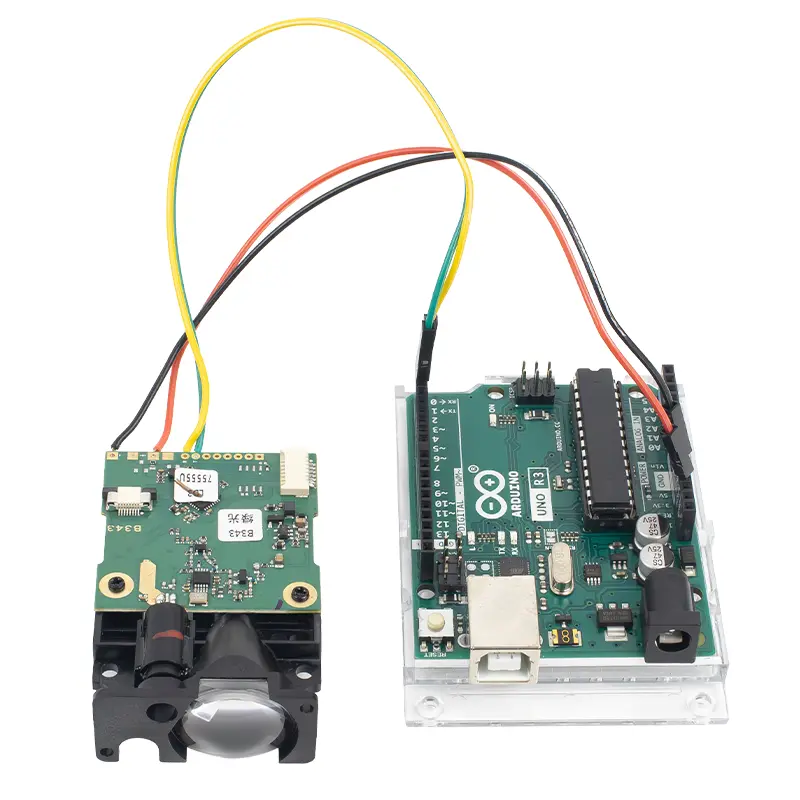
Typical Arduino connection:
Sensor SDA → Arduino SDA
Sensor SCL → Arduino SCL
Sensor VCC → 5V or 3.3V
Sensor GND → GND
For Raspberry Pi, the connection is similar using the I2C GPIO pins.
2. Multiple Sensors on One Bus
One of the biggest advantages of I2C is device addressing.
Multiple sensors can share the same bus.
Example system:
- датчик расстояния
- temperature sensor
- accelerometer
- OLED display
All connected using only two communication wires.
This is extremely useful for:
3. Digital Accuracy
Unlike аналоговые датчики расстояния, I2C sensors output processed digital measurements, which reduces noise and improves reliability.
This is particularly important for:
- industrial automation
- precision robotics
- measurement applications
Types of I2C Distance Sensors
Different measurement technologies are used depending on range and accuracy requirements.
1. Time-of-Flight (ToF) I2C Sensors
Точечные датчики measure the time it takes for emitted light to reflect back from an object.
Преимущества:
- compact
- fast measurement
- good accuracy at short distances
Typical applications:
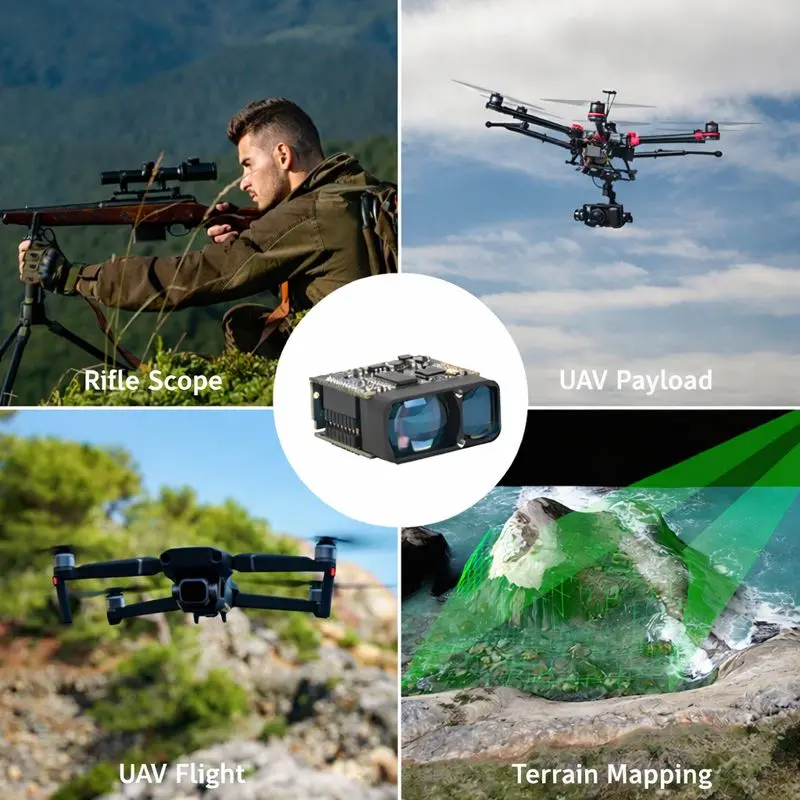
2. Laser Rangefinder Sensors
Laser rangefinder modules use a pulsed laser and measure the time delay of the reflected signal.
Преимущества:
- longer measurement range
- higher precision
- suitable for outdoor use
Common uses:
- drone altitude measurement
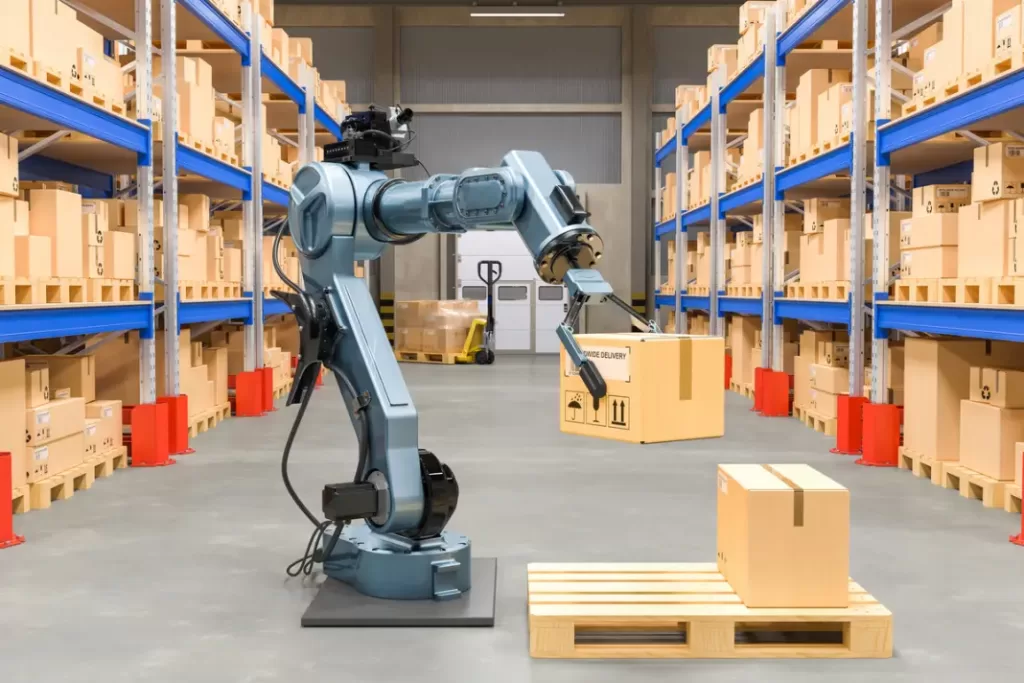
- warehouse automation
- industrial positioning
3. Industrial Optical Sensors
Industrial sensors combine laser optics and digital communication interfaces like I2C or RS485.
These are designed for:
- harsh environments
- long-range detection
- high stability
Example Arduino Code for an I2C Distance Sensor
A simple Arduino example using the Wire library might look like this:
#include <Wire.h>#define SENSOR_ADDR 0x62void setup() {
  Wire.begin();
  Serial.begin(9600);
}void loop() {
  Wire.beginTransmission(SENSOR_ADDR);
  Wire.write(0x00);
  Wire.endTransmission();  Wire.requestFrom(SENSOR_ADDR, 2);  if (Wire.available()) {
    int distance = Wire.read() << 8 | Wire.read();
    Serial.println(distance);
  }  delay(100);
}
This code reads the distance value directly from the sensor over the I2C bus.
Applications of I2C Distance Sensors
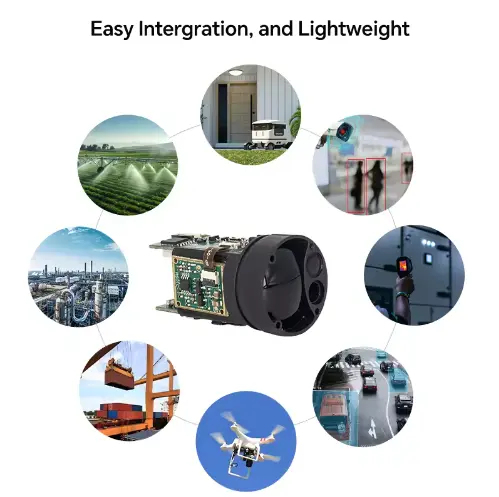
I2C distance sensors are widely used in both DIY projects and industrial systems.
Робототехника
Obstacle avoidance and navigation.
Умные устройства
Touchless interfaces and gesture detection.
Беспилотники и БПЛА
Altitude measurement and landing assistance.
Промышленная автоматизация
Object positioning and distance monitoring.
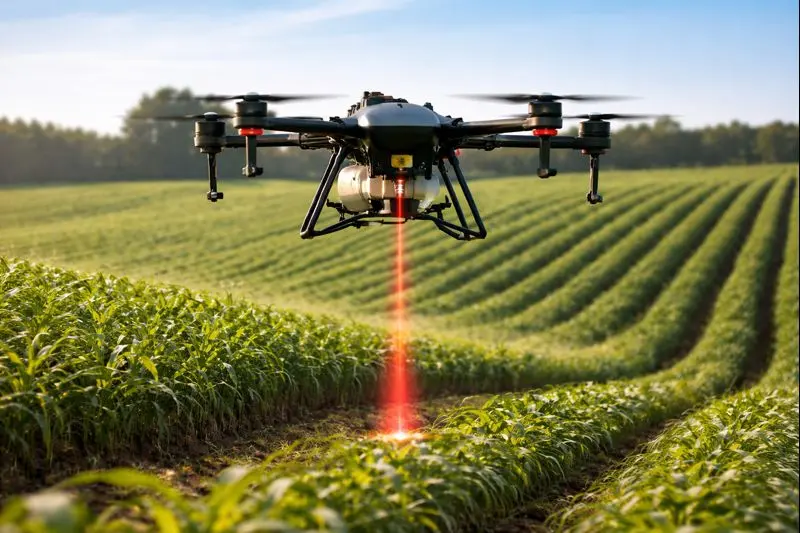
Smart Agriculture
Grain level monitoring and storage automation.
Choosing the Best I2C Distance Sensor
When selecting a sensor, consider the following factors:
| Factor | Почему это важно |
|---|
| Measurement range | Short-range vs long-range applications |
| Точность | Required measurement precision |
| Interface compatibility | Arduino / Raspberry Pi support |
| Sampling rate | Real-time measurement needs |
| Окружающая среда | Indoor vs outdoor conditions |
For example:
- robotics projects may only need 2–4 m range
- industrial automation may require 10–100 m
Recommended Laser Distance Sensor Modules
For applications that require longer measurement ranges and higher accuracy, расстояние до лазера modules with digital interfaces can be a better option.
For example, compact лазерный датчик расстояния modules can provide:
- millimeter-level accuracy
- stable measurement
- easy integration with embedded systems
You can explore more options here:
➡ Laser Distance Sensor Modules
These modules are widely used in:
- robotics
- БПЛА
- industrial automation
- smart логистика
I2C vs UART vs Analog Distance Sensors
| Интерфейс | Плюсы | Cons |
|---|
| I2C | simple wiring, multiple devices | limited cable length |
| UART | stable communication | only one device per port |
| Аналог | simple output | noise sensitive |
For Arduino and Raspberry Pi, I2C is usually the most convenient interface.
Заключение
I2C distance sensors offer a powerful combination of simple integration, reliable communication, and accurate digital measurements.
For developers working with Arduino or Raspberry Pi, they provide an efficient way to build projects involving:
- robotics
- IoT systems
- smart devices
- automation equipment
By choosing the right measurement technology and sensor range, engineers can build systems that are both precise and easy to implement.
ЧАСТО ЗАДАВАЕМЫЕ ВОПРОСЫ
What is an I2C distance sensor?
An I2C distance sensor is a non-contact measurement device that communicates with a microcontroller through the I2C digital protocol, allowing accurate distance data to be transmitted using only two communication wires.
Can I2C distance sensors work with Raspberry Pi?
Yes. Most I2C distance sensors are fully compatible with Raspberry Pi because the Raspberry Pi supports the I2C communication protocol through its GPIO interface.
Are I2C distance sensors better than ultrasonic sensors?
In many applications, I2C optical sensors provide higher accuracy, faster response, and better stability than ultrasonic sensors, especially in compact robotics or indoor environments.
What is the typical range of an I2C distance sensor?