Application-Driven Solutions for Accurate Non-Contact Distance Measurement
Introduction: Why Application-Driven Distance Sensing Matters
Selecting a laser датчик расстояния is no longer just about range or accuracy on a datasheet.
In real-world projects—industrial automation, outdoor monitoring, БПЛА systems, or level measurement—application conditions such as sunlight exposure, target reflectivity, surface color, and installation constraints often determine whether a sensor performs reliably.
This article explores расстояние до лазера sensor applications and use cases, focusing on functional requirements and environmental challenges, and explains how application-driven sensor selection leads to more stable and predictable results in real deployments.
What Is a Laser Distance Sensor?
A лазерный датчик расстояния is a non-contact device that measures distance using laser light, typically based on Время полета (ToF) or Фазовый сдвиг measurement principles.
Compared with ultrasonic or contact-based sensors, лазерные датчики расстояния предложение:
- Long measurement range
- Высокая точность и быстрый отклик
- Бесконтактное измерение without wear
- Strong adaptability to industrial and outdoor environments
Because of these advantages, laser distance sensors are widely used as distance detector sensors, height measurement sensors, and level measurement лазерные датчики across multiple industries.
Application-Oriented Sensor Selection in Real Projects
In practical engineering projects, sensors are rarely selected based on specifications alone.
Instead, measurement stability under real application conditions—such as strong sunlight, long working distance, or low-reflectivity targets—plays a decisive role.
Мескернел designs лазерный датчик расстояния modules with an application-driven approach, focusing on how sensors behave in real environments rather than ideal laboratory conditions. This philosophy helps system integrators reduce commissioning time and long-term maintenance issues.
Core Functional Applications of Laser Distance Sensors
Distance Detector Sensor for Object Positioning
A distance detector sensor provides continuous distance data for detecting object position or movement without physical contact.
Typical applications include:
- Conveyor object positioning
- Robotic arm alignment
- AGV and AMR navigation
- Safety distance monitoring
Laser distance sensors are particularly effective in these scenarios because they deliver stable, real-time distance feedback, enabling precise motion control.
Meskernel’s laser distance sensor modules used in positioning applications are designed for fast response rates and consistent signal output, supporting reliable operation in dynamic automation systems.
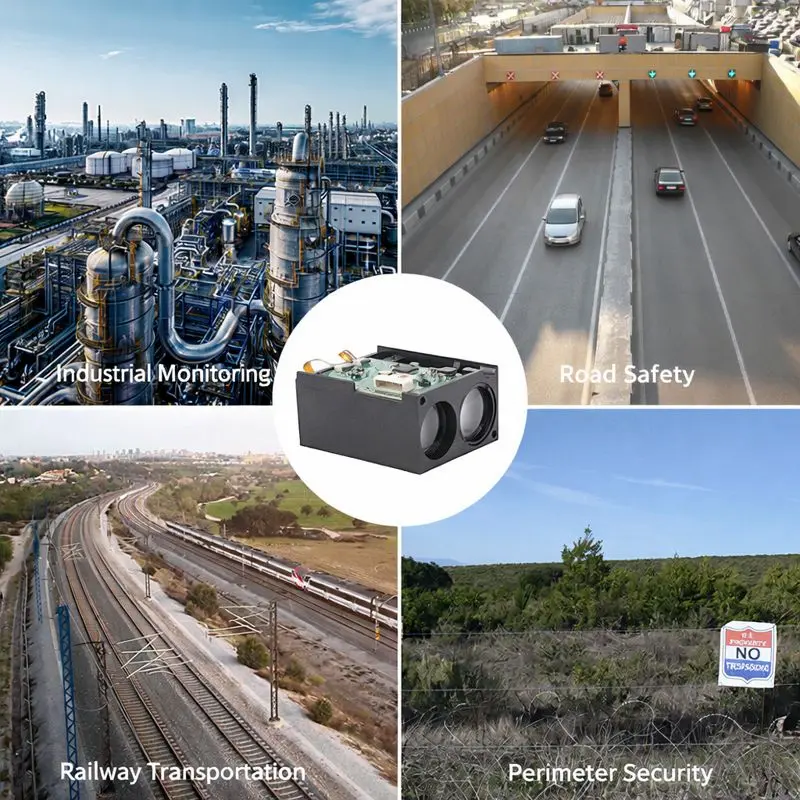
Height Measurement Sensor for Industrial Automation
Using a laser distance sensor as a датчик измерения высоты enables precise vertical measurement without mechanical contact.
К числу распространенных вариантов использования относятся:
- Stack height and pallet height monitoring
- Material thickness and roll diameter measurement
- Robotic Z-axis control
With millimeter-level accuracy and high repeatability, Meskernel’s high-precision laser distance sensors help improve control accuracy while eliminating mechanical wear associated with contact probes.
Level Measurement Laser Sensor for Tanks and Materials
A level measurement laser sensor is widely used in industrial environments where non-contact measurement improves reliability and hygiene.
Typical applications include:
- Liquid level monitoring in tanks
- Solid material level обнаружение in silos
- Bulk material storage monitoring
Meskernel laser distance sensors used for level measurement offer long measurement range, high accuracy, and stable performance in confined or complex structures, making them suitable for demanding industrial process control tasks.
Non-Contact Distance Measurement in Challenging Conditions
Non Contact Distance Measurement Sensor for Sensitive Targets
A non contact датчик измерения расстояния is essential when targets are hot, fragile, moving, or difficult to access.
Laser distance sensors are commonly applied in:
- High-temperature industrial environments
- Moving machinery and rotating components
- Precision positioning systems
Meskernel’s non-contact laser distance sensors reduce system wear and maintenance while maintaining reliable measurement under challenging conditions.
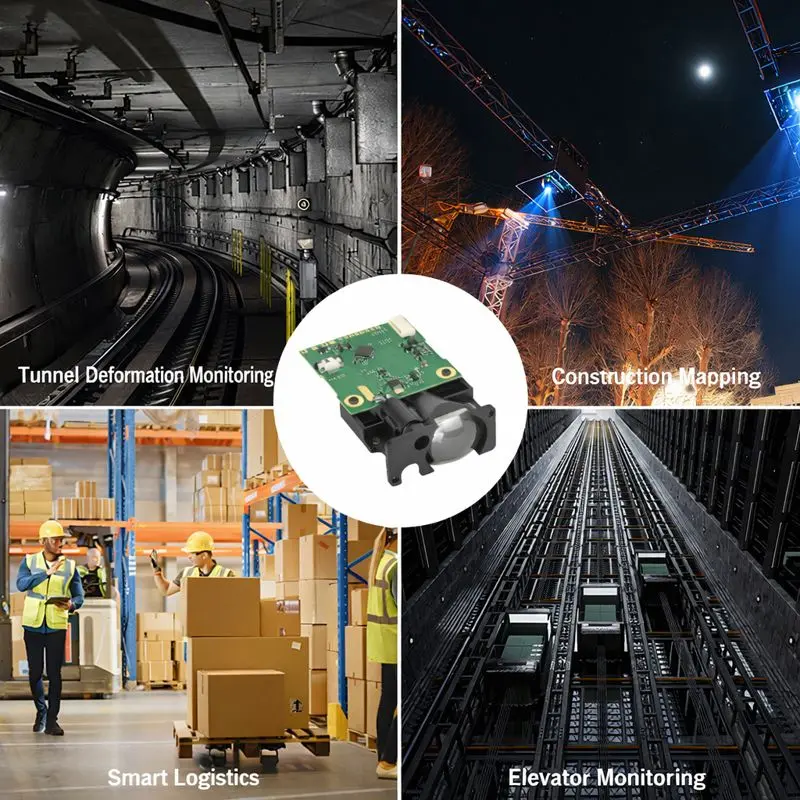
Outdoor Laser Distance Sensor Applications
An outdoor laser distance sensor must perform reliably under strong sunlight, temperature variation, rain, dust, and long working distances.
Typical outdoor applications include:
- Structural displacement monitoring
- Bridge and building measurement
- UAV altitude control
- Open-area automation systems
Meskernel's лазерный датчик расстояния дальнего действия modules are designed with sunlight-resistant optics, high signal-to-noise ratio, and advanced filtering algorithms, helping ensure stable outdoor performance.
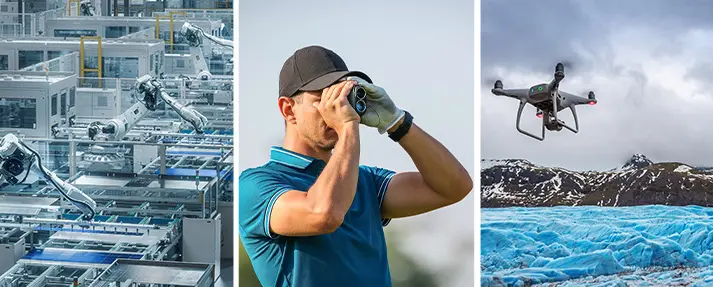
Sunlight Interference Laser Sensor Considerations
Sunlight interference is a common challenge in outdoor and semi-outdoor installations.
A sunlight interference laser sensor typically incorporates:
- Narrow-band оптический filters
- Optimized laser emission power
- Advanced signal processing
These features help Meskernel laser distance sensors maintain reliable точность измерений even under direct sunlight or high ambient light conditions.
Measuring Difficult Target Surfaces
Dark Object Distance Sensor Applications
Dark or low-reflectivity surfaces absorb laser energy, making измерение расстояния more difficult.
A dark object distance sensor is designed to detect weak return signals from black rubber, matte plastic, or other low-reflective materials.
Meskernel laser distance sensors optimized for dark object measurement are widely used in:
- Автомобильное производство
- Rubber and polymer processing
- Packaging and material handling systems
Enhanced weak-signal processing improves measurement stability in these applications.
Reflective Surface Distance Sensor Use Cases
Highly reflective surfaces such as metal sheets, polished components, or glass can cause signal saturation or multi-path reflections.
A reflective surface distance sensor addresses these challenges by stabilizing the return signal and reducing reflection-related measurement errors.
Meskernel laser distance sensors designed for reflective surfaces are commonly applied in:
- Metal fabrication and processing
- Glass manufacturing
- Sheet material positioning
System Integration and Interface Flexibility
To support different automation and control architectures, laser distance sensors must integrate easily with existing systems.
Лазерный датчик расстояния Meskernel modules support multiple output interfaces, including:
This flexibility simplifies integration into PLC systems, embedded controllers, and custom automation platforms.
Why Application Matching Matters More Than Specifications
In many unsuccessful distance measurement projects, the root cause is not sensor quality, but a mismatch between the sensor design and the actual application environment.
Selecting a laser distance sensor based on:
- Target material and reflectivity
- Environmental conditions
- Installation constraints
significantly improves long-term reliability and reduces maintenance costs.
Meskernel’s application-focused sensor design philosophy helps ensure that each sensor performs consistently in real use cases, not just in controlled test environments.
Industries Using Laser Distance Sensors
Laser distance sensors are widely applied across industries, including:
- Промышленная автоматизация
- Robotics and AGV systems
- UAV and drone platforms
- Structural and displacement monitoring
- Level measurement and process control
Conclusion: From Use Case to the Right Laser Distance Sensor
Understanding laser distance sensor applications and use cases is the foundation of reliable non-contact distance measurement.
Whether used as a height measurement sensor, level measurement laser sensor, outdoor laser distance sensor, or for measuring dark or reflective targets, selecting sensors based on real application conditions leads to better performance and fewer system failures.
An application-driven approach helps engineers and system integrators achieve accurate, stable, and long-term distance measurement solutions.
Selecting the right laser distance sensor starts with understanding your application.
Matching measurement technology to real-world conditions leads to more reliable results.
Frequently Asked Questions: Laser Distance Sensor Applications
-
What are the most common laser distance sensor applications?
The most common laser distance sensor applications include height measurement, level measurement, object positioning, and non-contact distance detection.
Laser distance sensors are widely used in industrial automation, robotics, UAV altitude control, structural monitoring, and material handling systems where high accuracy and reliability are required.
-
How are laser distance sensor applications different from ultrasonic or infrared sensors?
Compared with ultrasonic or infrared solutions, laser distance sensor applications offer longer measurement range, higher precision, and faster response speed.
Laser distance sensors are especially suitable for applications involving long distances, narrow spaces, or complex environments where ultrasonic sensors may suffer from signal scattering or interference.
-
Which laser distance sensor applications require non-contact measurement?
Many laser distance sensor applications require non-contact measurement, particularly when targets are hot, fragile, moving, or difficult to access.
Typical examples include high-temperature industrial processes, rotating machinery, robotic positioning systems, and precision automation equipment where physical contact could cause damage or measurement errors.
-
What laser distance sensor applications are suitable for outdoor environments?
Outdoor laser distance sensor applications include bridge and building monitoring, UAV altitude measurement, open-area level measurement, and outdoor automation systems.
For these applications, sensors must be resistant to sunlight interference, temperature changes, dust, and atmospheric conditions to ensure stable long-term performance.
-
How do laser distance sensor applications handle strong sunlight interference?
In outdoor and semi-outdoor laser distance sensor applications, sunlight interference is managed through narrow-band optical filters, optimized laser emission, and advanced signal processing algorithms.
These technologies allow laser distance sensors to maintain reliable distance measurement even under direct sunlight or high ambient light conditions.
-
Are laser distance sensor applications suitable for measuring dark objects?
Yes, many laser distance sensor applications involve measuring dark or low-reflectivity objects such as black rubber, matte plastic, or coated surfaces.
Sensors optimized for these applications use enhanced weak-signal detection to improve measurement stability and accuracy on low-reflective targets.
-
How do laser distance sensor applications work on reflective surfaces?
In laser distance sensor applications involving reflective surfaces like metal sheets or glass, signal saturation and multi-path reflections can occur.
Laser distance sensors designed for these conditions use optimized signal processing to stabilize readings and reduce reflection-related measurement errors.
-
What industries rely most on laser distance sensor applications?
Laser distance sensor applications are widely used in industries such as industrial automation, robotics, логистика, UAV systems, строительство monitoring, and process control.
Any industry requiring accurate, long-range, and non-contact distance measurement can benefit from laser-based solutions.
-
How should engineers choose sensors for specific laser distance sensor applications?
Selecting sensors for laser distance sensor applications should be based on target material, measurement range, environmental conditions, installation constraints, and required interfaces.
Focusing on real application scenarios rather than datasheet specifications alone leads to more reliable and cost-effective system design.
-
Why is application-driven selection important in laser distance sensor applications?
Application-driven selection ensures that laser distance sensor applications perform reliably in real-world conditions, not just in laboratory tests.
Matching sensor design to actual operating environments reduces commissioning time, minimizes failures, and improves long-term system stability.
https://meskernel.net/industrial-laser-distance-sensor/