UART vs SPI vs I2C Distance Sensors is not just a technical comparison—it is a decision that can determine whether a project runs smoothly or fails due to unstable communication and costly redesigns. Choosing the wrong interface often leads to EMI issues, unreliable data transmission, and unexpected delays that engineers and OEM buyers want to avoid at all costs.
Before focusing on measurement range or accuracy, it is critical to understand how UART, SPI, and I2C distance sensors behave in real-world applications. This guide explains the practical differences between these interfaces, highlights the risks of incorrect selection, and helps you choose the right mesafe sensörü interface from the start—before mistakes become expensive.
Why the Communication Interface Matters in Distance Sensors
Distance sensors are rarely used as standalone components. In real-world applications, they must communicate reliably with:
The communication interface directly affects:
- Data latency and refresh rate
- Cable length and noise tolerance
- Ease of firmware development
- Scalability and system architecture
That’s why interface selection is a critical engineering decision, not a minor detail.
Overview of UART, SPI, and I2C Distance Sensors
UART Distance Sensors
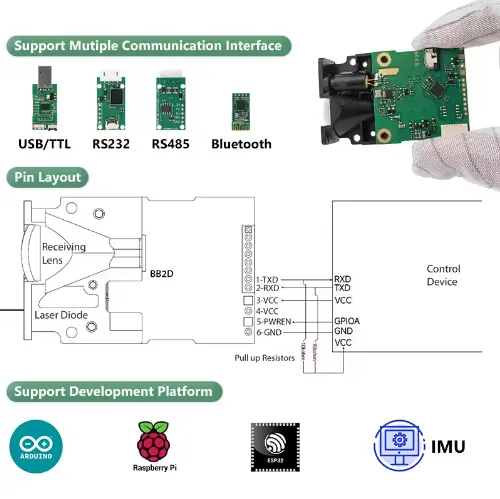
UART (Universal Asynchronous Receiver/Transmitter) uses point-to-point serial communication.
It is widely used in industrial laser distance sensor modules due to its simplicity and robustness.
Key characteristics
- Simple TX/RX wiring
- Long-distance communication capability
- Strong resistance to EMI
- Easy debugging via serial tools
SPI Distance Sensors
SPI (Serial Peripheral Interface) is a synchronous, high-speed communication protocol.
Key characteristics
- Very fast data transfer
- Düşük gecikme süresi
- Requires multiple signal lines
- More complex hardware design
SPI distance sensors are ideal when high refresh rates or fast scanning are required.
I2C Distance Sensors
I2C (Inter-Integrated Circuit) is a bus-based protocol designed for short-distance, low-speed communication.
Key characteristics
- Multiple devices on one bus
- Minimal wiring
- Limited cable length
- More sensitive to noise
I2C distance sensors are common in Arduino, Raspberry Pi, and educational projects.
UART vs SPI vs I2C Distance Sensors (Quick Comparison)
| Arayüz | UART | SPI | I2C |
|---|
| Typical Speed | Orta | Yüksek | Düşük |
| Wiring Complexity | Very Low | Yüksek | Düşük |
| Maksimum Kablo Uzunluğu | Long | Kısa | Very Short |
| EMI Resistance | Yüksek | Orta | Düşük |
| Multi-Device Support | No | Limited | Yes |
| Industrial Suitability | Mükemmel | Good | Limited |
| Development Difficulty | Kolay | Advanced | Kolay |
Quick takeaway:
- Choose UART for industrial reliability
- Choose SPI for high-speed measurement
- Choose I2C for simple, short-range systems
Which Interface Should You Choose? (By Application)
Arduino & Raspberry Pi Projects
Recommended interface: I2C or UART
- Mature software libraries
- Simple wiring
- Ideal for prototyping and education
Industrial Automation & AGV Systems
Recommended interface: UART
- Strong noise immunity
- Long cable support
- Stable continuous operation
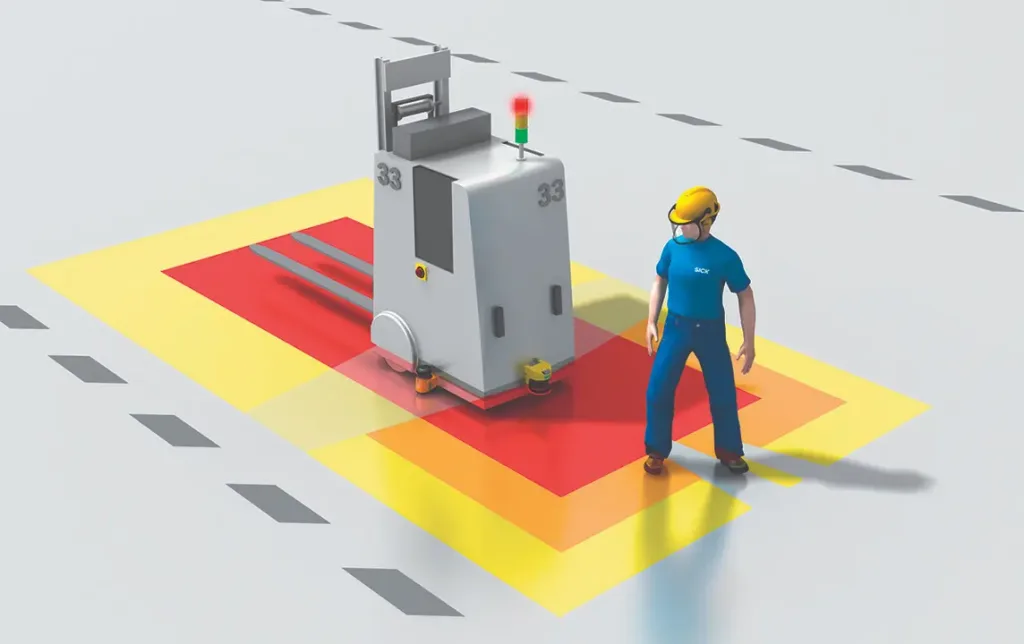
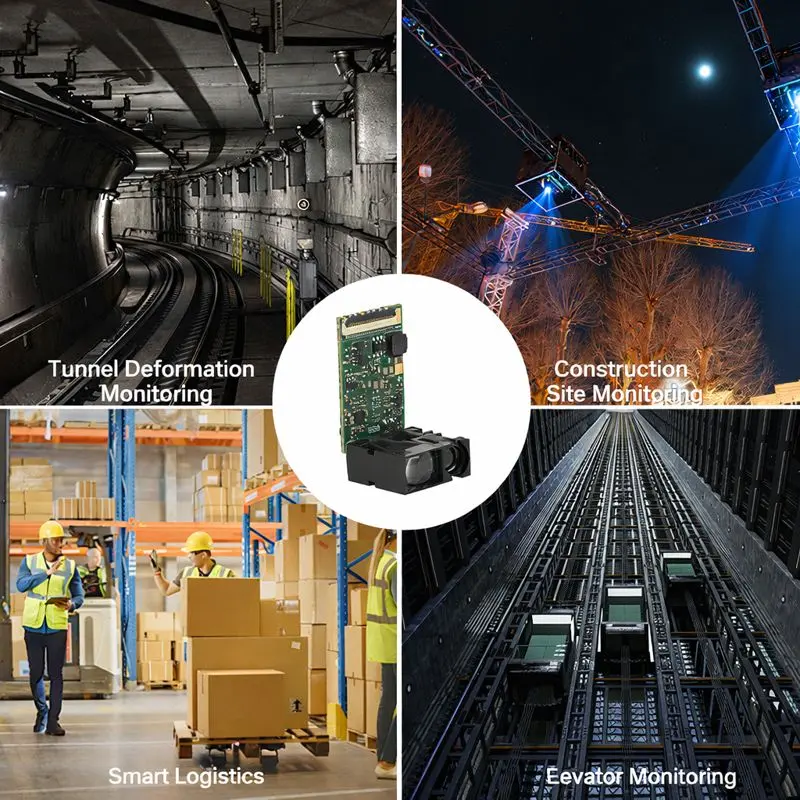
UART distance sensors are commonly used in:
- AGV collision avoidance
- Conveyor positioning
- Warehouse automation
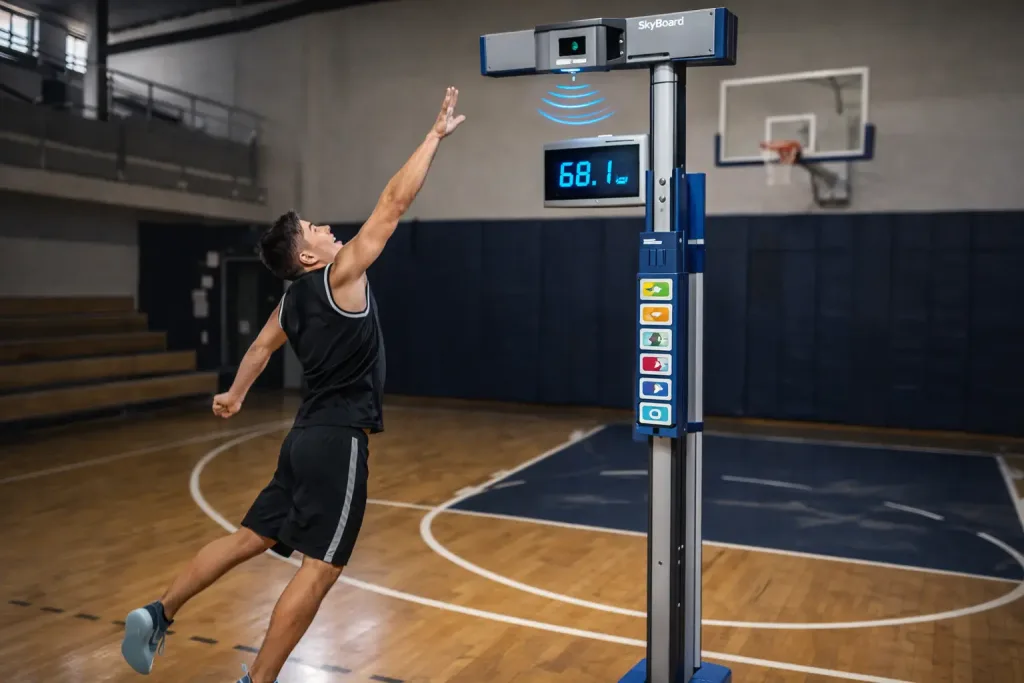
High-Speed Measurement & Scanning
Recommended interface: SPI
- Fast data throughput
- Düşük gecikme süresi
- Suitable for dynamic measurement scenarios
SPI distance sensors are often chosen when timing precision matters more than wiring simplicity.
FAQ: UART, SPI, and I2C Distance Sensors
Is UART more reliable than I2C for distance sensors?
Yes. UART is generally more reliable than I2C, especially for long cable lengths and noisy industrial environments.
Can I use an I2C distance sensor in industrial applications?
I2C distance sensors can be used in industrial systems, but only for short distances and well-controlled EMI conditions. UART is usually preferred.
Which interface is easiest for OEM integration?
UART is the easiest interface for OEM integration due to its simple protocol, wide MCU compatibility, and minimal firmware overhead.
Is SPI always better because it is faster?
No. SPI is faster, but it requires more wiring and careful hardware design. It is only necessary when high-speed data transfer is required.
Can one distance sensor support multiple interfaces?
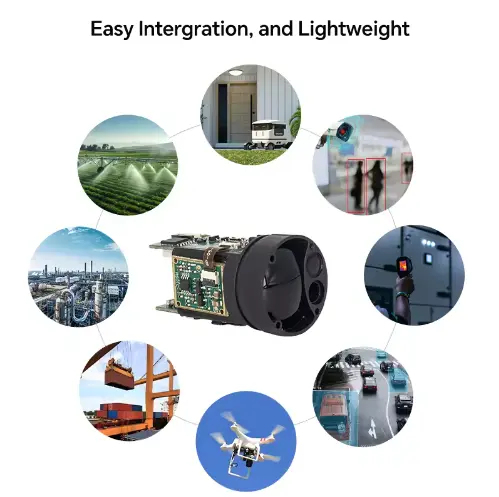
Yes. Some distance sensor modules can be customized to support UART, SPI, or I2C depending on OEM requirements.
Choosing the Right Distance Sensor Module
Bir seçim yaparken mesafe sensörü, do not focus only on the interface. OEM and industrial users should also evaluate:
- Measurement accuracy and stability
- Çalışma sıcaklığı aralığı
- Interface configurability
- Protocol documentation quality
- Long-term supply and technical support
A flexible sensor platform that supports multiple communication interfaces can significantly reduce development risk.
UART, SPI, and I2C distance sensors each serve different engineering needs.
Understanding their strengths helps you design systems that are stable, scalable, and easier to maintain.
If you are developing an industrial or OEM project, selecting the right communication interface early can save months of redesign and debugging.