Laser Distance Sensor for AMR: A Complete Selection Guide for Engineers
Autonomous Mobile Robots (AMRs) are rapidly replacing fixed automation systems in factories and warehouses. Unlike traditional AGVs, AMRs rely on real-time perception to navigate, dock, and avoid obstacles dynamically.
At the core of this perception stack is the laser sensor de distância for AMR, providing accurate distance data essential for safe navegação, precise docking, and reliable operation in complex industrial environments.
This guide helps engineers and system integrators understand how distância do laser sensors are used in AMRs—and how to select the right one for real-world deployment.
What Is a Laser Distance Sensor for AMR?
A sensor de distância por laser for AMR is an optical sensor that measures the distance between the robot and surrounding objects using laser tempo de voo or phase-shift technology.
In AMR systems, these sensors are typically used for:
Unlike metrology-grade displacement sensors, AMR sensores de distância por laser prioritize robustness, range, and real-time response over micron-level precision.
AMR Use Cases: Navigation, Docking, Obstacle Avoidance
Navigation in Dynamic Environments
Laser distance sensors provide continuous distance feedback, enabling AMRs to adjust speed and trajectory in real time while moving through aisles or shared workspaces.
Precise Docking and Alignment
For conveyor docking or pallet transfer, a laser distance sensor enables centimeter- or millimeter-level positioning accuracy that LiDAR alone cannot guarantee.
Obstacle Detection and Safety
Combined with LiDAR and vision, laser distance sensors offer redundancy for detecting obstacles at critical distances, improving overall system safety.
How Laser Distance Sensors Work: ToF vs Triangulation
Tempo de voo (ToF)
Sensores ToF measure the time it takes for a laser pulse to return from a target. They are the preferred choice for AMR navigation due to longer range and stable performance.
Triangulation (Limited AMR Use)
Triangulation sensors offer higher precision but shorter range. In AMRs, they are mainly used for fine docking or close-range alignment tasks.
Key Specifications for AMR Laser Distance Sensors
When selecting a laser distance sensor for AMR, focus on:
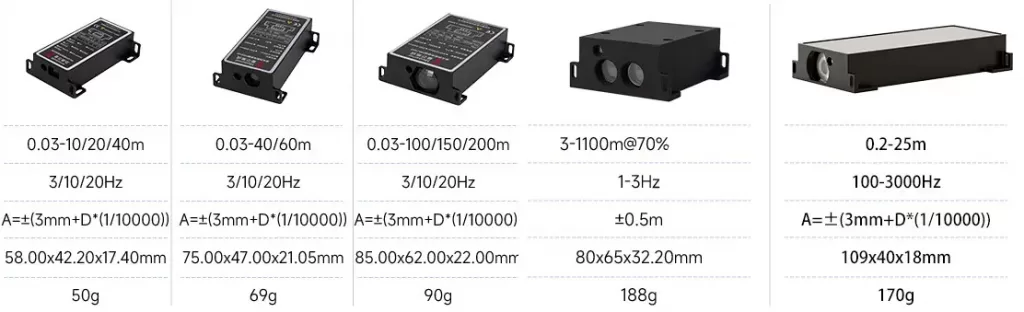
- Measurement range (must exceed stopping distance)
- Accuracy (typically 1–10 mm is sufficient)
- Update rate (100–500 Hz for mobile robots)
- Interface (RS485, CAN, ROS compatibility)
- Environmental robustness (dust, vibration, temperature)
How to Choose the Right Laser Distance Sensor for AMR
- Define navigation and docking distance requirements
- Escolher ToF for navigation; triangulation only for fine alignment
- Verify controller and ROS compatibility
- Evaluate environmental protection (IP rating)
- Consider customization for OEM integration
Laser Distance Sensors vs LiDAR & Ultrasonic Sensors
- LiDAR: Best for mapping and SLAM
- Ultrassónico: Low cost, low precision
- Laser distance sensor for AMR: Best for docking, precise ranging, and redundancy
Most AMRs use sensor fusion, combining all three technologies.
Integration with AMR Controllers and ROS
Modern AMR systems require seamless integration. Laser distance sensors typically support:
- RS485 / Modbus
- CAN / CANopen
- ROS nodes
- Analógico output for legacy systems
Proper mounting, shielding, and calibration are critical for stable operation.
In modern AMR systems, most navigation and control software is built on the Robot Operating System (ROS), which provides standardized tools for sensor integration, messaging, and real-time data processing.
Laser distance sensors that offer native ROS compatibility significantly reduce integration effort and accelerate AMR deployment in industrial environments.
Recommended Laser Distance Sensors for AMR (Meskernel)
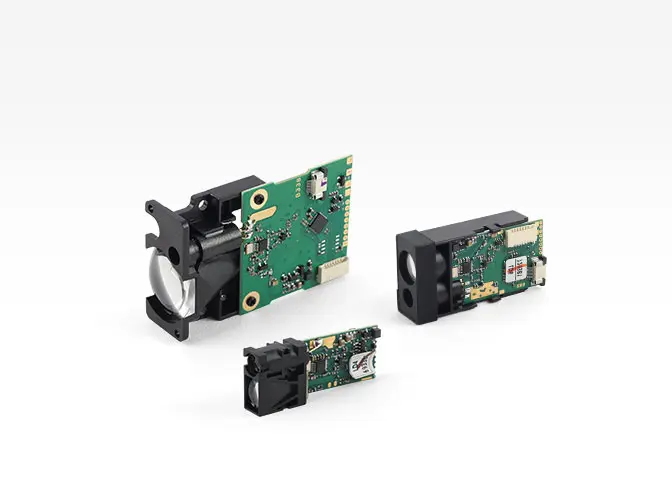
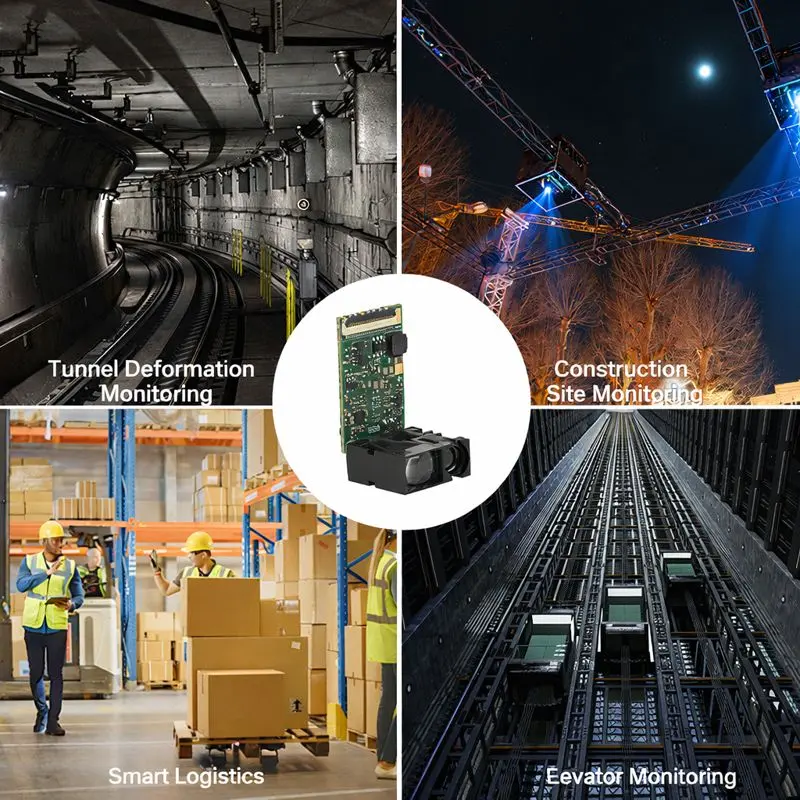
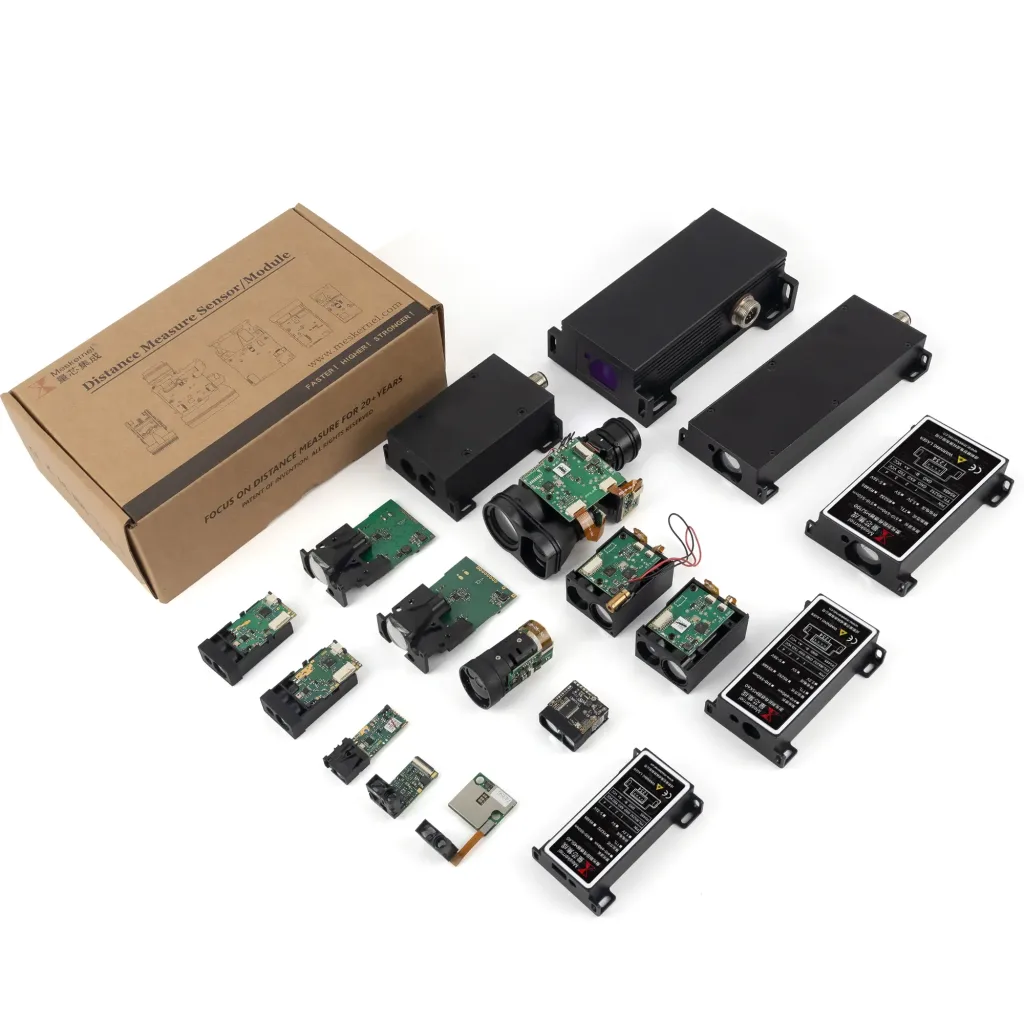
Meskernel offers multiple laser distance sensor modules optimized for AMR applications:
All modules support customization of range, interface, and update rate.
Different rangefinder modules explained in visual demonstrations
FAQs
How does a laser distance sensor work in AMR navigation?
It continuously measures distance to objects, enabling real-time speed control, stopping, and path adjustment.
Which laser distance sensor is best for AMR docking?
Short-range ToF sensors with high update rates provide the best balance of precision and robustness.
Why use laser distance sensors instead of ultrasonic sensors?
Sensores laser offer faster response, narrower beam width, and higher accuracy—critical for precise AMR operation.