Why the Interface for Laser Distance Modules Matters
عند دمج الليزر مستشعر المسافة into your system—whether for robotics, automation, or surveying—choosing the right interface for مسافة الليزر modules is a critical design decision. The interface impacts communication speed, system scalability, wiring complexity, and how easily the sensor connects to your microcontroller, PC, or industrial controller.
في مسك نواة, our customizable وحدات مسافة الليزر support UART, I2C, USB, and even RS232/RS485—ensuring the right fit for every application.
What Are UART, I2C, and USB Interfaces?
Before choosing the right interface for laser distance modules, it’s important to understand what each interface actually is. These protocols determine how your مستشعر المسافة بالليزر communicates with the rest of your system—whether it’s a microcontroller, industrial controller, or a PC.
What is UART?
UART (Universal Asynchronous Receiver-Transmitter) is a point-to-point الاتصال التسلسلي protocol commonly used in embedded systems. It uses just two lines—TX (transmit) and RX (receive)—to send and receive data asynchronously, meaning it doesn’t require a clock signal. Most المتحكمات الدقيقة مثل ESP32, STM32, and أردوينو support UART, making it ideal for single-sensor setups.
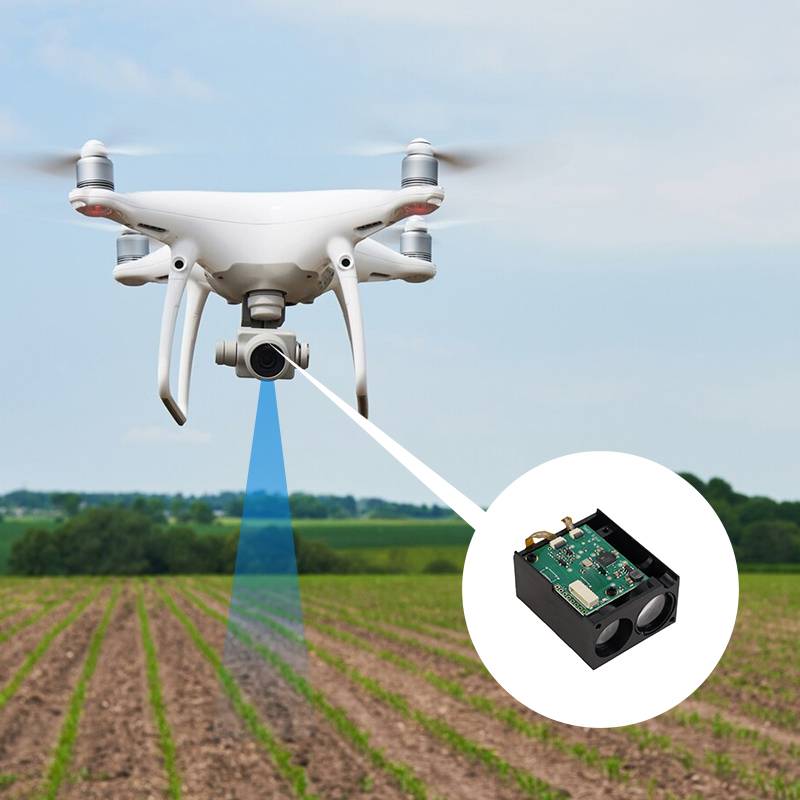
Example: A laser distance sensor with a UART interface sends measurement data to a flight controller on a drone.
What is I2C?
I2C (Inter-Integrated Circuit) is a synchronous, multi-device communication protocol designed for short-range communication between chips on the same board. It uses two lines—SCL (clock) and SDA (data)—and allows a single master device to communicate with multiple slave devices by assigning each one a unique address. This makes it a space-saving solution when using multiple sensors in one system.
Example: A robotic arm uses multiple I2C laser distance modules to detect obstacles from several angles.
What is USB?
USB (Universal Serial Bus) is a high-speed, plug-and-play communication standard most commonly used with PCs and laptops. Unlike UART and I2C, USB provides both data and power over the same cable, making it ideal for desktop or lab environments. It’s commonly used for data logging, sensor calibration, or when the sensor is operated through a GUI or data collection software.
Example: An engineer connects a USB laser sensor to a PC to monitor distance changes in real time using custom software.
Comparing Interfaces for Laser Distance Modules: UART, I2C, and USB
Here’s a breakdown of the most popular interfaces for laser distance modules, comparing their key features and ideal use cases.
| الميزة | UART | I2C | USB |
|---|
| Wiring | 2 wires (TX, RX) | 2 wires (SDA, SCL) | 4 wires (VCC, GND, D+, D−) |
| السرعة | Up to 1 Mbps | Up to 3.4 Mbps (HS mode) | Up to 480 Mbps (USB 2.0) |
| Cable Length | Short to medium | Very short | متوسط |
| Power | Needs external source | Needs external source | Can be USB-powered |
| Multi-Sensor | No (point-to-point only) | Yes (multi-device capable) | No (host-device only) |
| سهولة الاستخدام | MCU-friendly, simple config | Complex addressing | Plug-and-play for PCs |
UART Interface for Laser Distance Modules
The UART interface for laser distance modules is ideal for embedded systems where a single sensor communicates directly with a microcontroller such as ESP32, STM32, or Arduino.
الإيجابيات:
- Simple setup
- Low power and low pin count
- Great for real-time applications
السلبيات:
- No multi-device support without multiplexing
- Limited range and potential for noise
Recommended For:
Popular Product: LDL-S distance sensor– Compact, UART-based laser module with ±1 mm accuracy.
I2C Interface for Laser Distance Modules
If your application needs multiple sensors communicating with a single host, the I2C interface for laser distance modules offers a scalable solution with just two wires.
الإيجابيات:
- Supports multiple devices on one bus
- Reduces wiring complexity
- Compatible with most MCUs
السلبيات:
- Cable length limitations (<1m recommended)
- Slower speeds and complex addressing
Recommended For:
- Multi-point distance الكشف
- Compact sensor arrays
- Industrial automation systems
Popular Product: LDJ laser distance sensor– Ideal for robotic arms, AGVs, and smart agriculture systems.
USB Interface for Laser Distance Modules
The USB interface for laser distance modules is best for desktop or PC-based environments where plug-and-play access, higher speeds, and data logging are priorities.
الإيجابيات:
- Fast data transfer
- USB-powered, no extra supply needed
- Simple integration with laptops or Raspberry Pi
السلبيات:
- Not suitable for embedded MCU-only setups
- Cable length capped at 5 meters (USB 2.0)
Recommended For:
- Research and lab measurement
- Graphical data visualization
- Sensor calibration and testing
Popular Product: جهاز استشعار الليزر LDJG 10 هرتز USB بالليزر – Plug-and-play module ideal for desktop-controlled setups.
How to Select the Best Interface for Your Laser Distance Module
Choosing the right interface for laser distance module depends on your system’s requirements. Consider the following:
Host Platform:
Microcontroller: UART or I2C
PC or Raspberry Pi: USB
Number of Sensors:
One sensor: UART or USB
Multiple sensors: I2C
Distance Between Devices:
Long cable runs: UART or USB
Short PCB connections: I2C
Power Supply Availability:
USB provides both power and data
UART/I2C may need external power
Data Speed Requirements:
High-speed applications: USB
Standard control: UART or I2C
Meskernel Offers Full Interface Flexibility
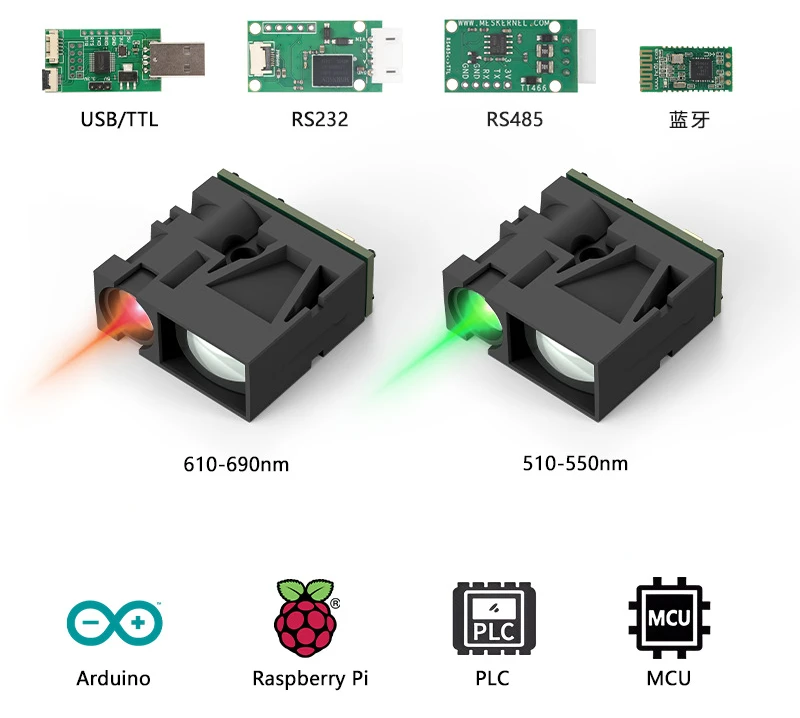
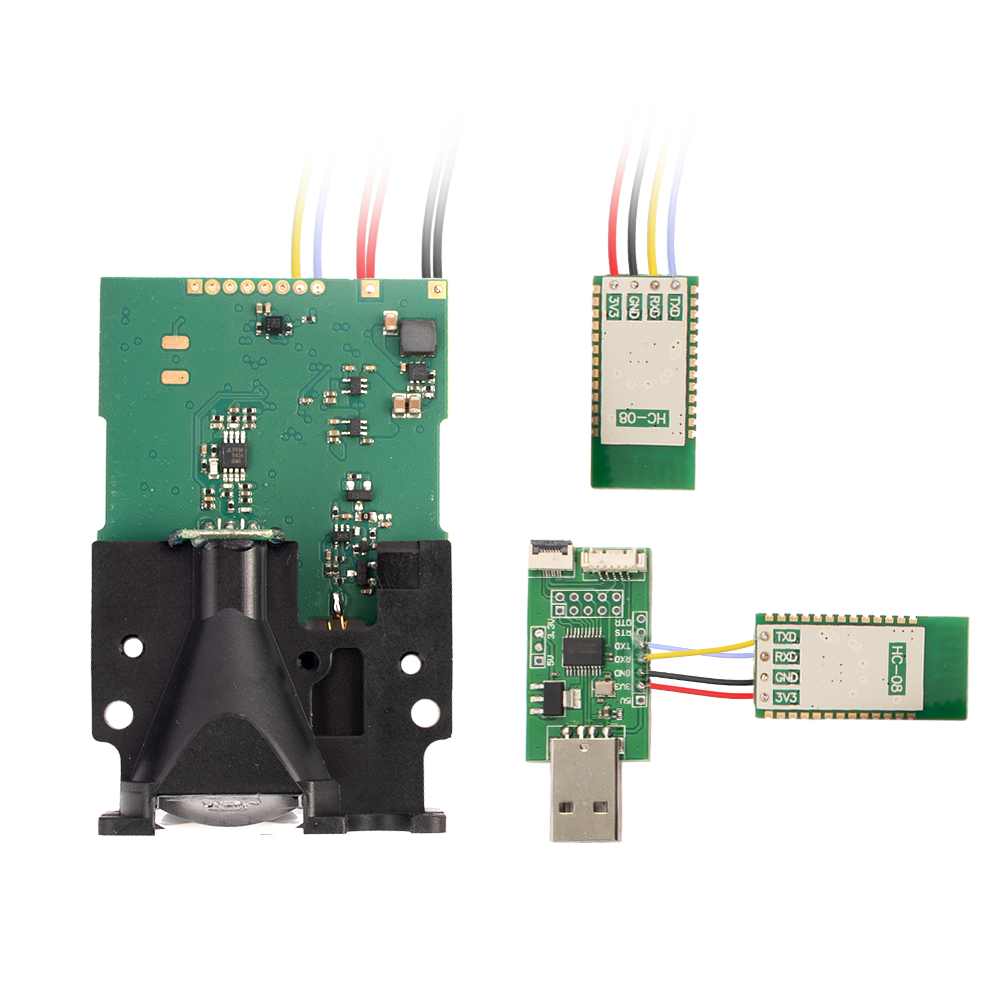
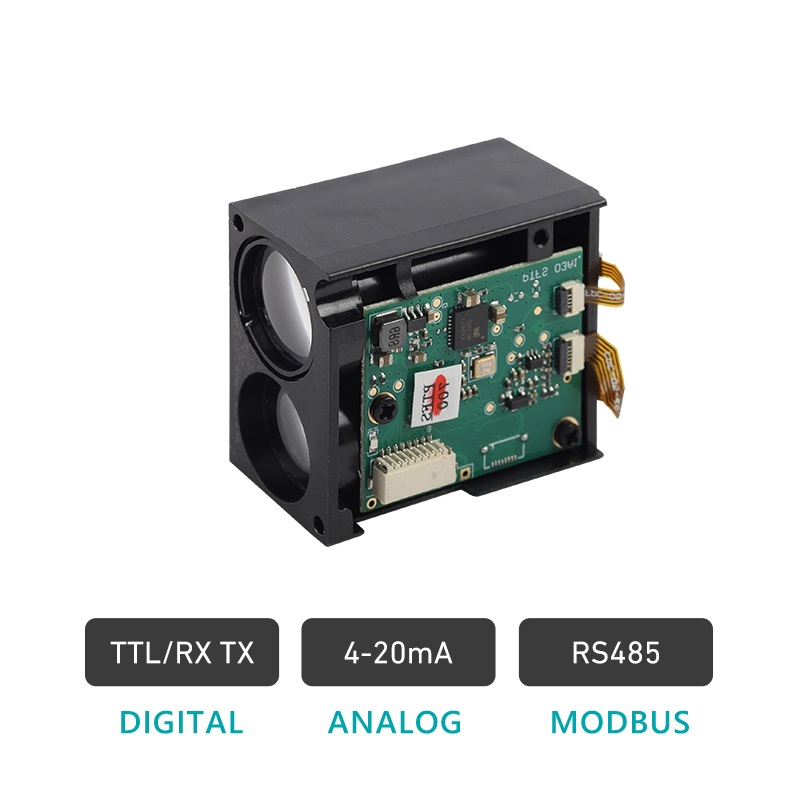
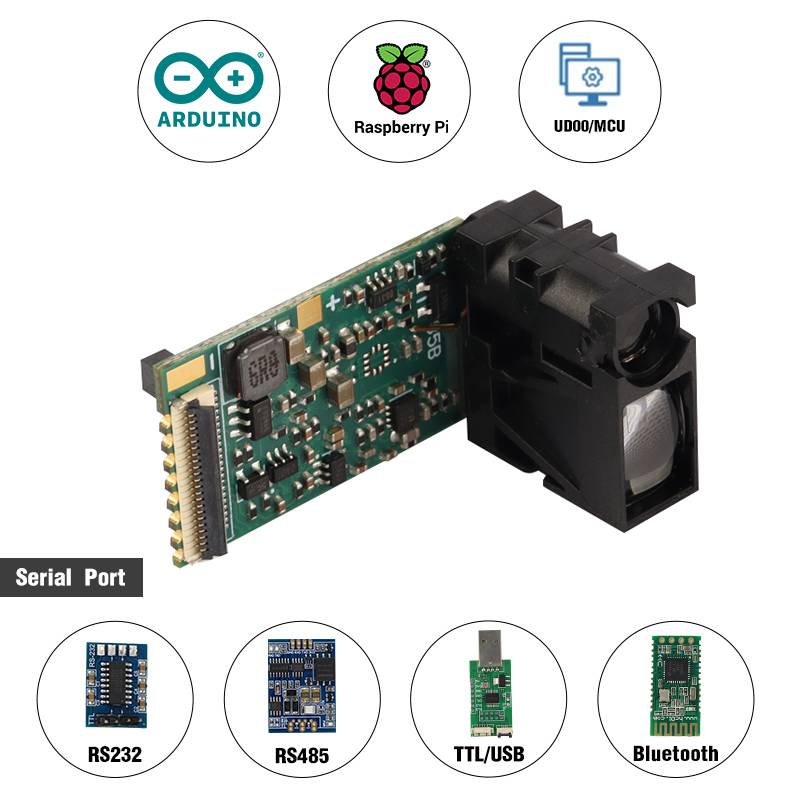
At meskernel, our high-precision أجهزة استشعار المسافة بالليزر are engineered with flexible interface options, including:
- UART for low-power embedded devices
- I2C for multi-sensor networks
- USB for PC-based applications
- RS232/RS485 for long-distance industrial setups
All our modules provide ±1 mm precision, compact design, eye-safe Class 1 lasers, and compatibility with harsh environments.
Optimize Your System with the Right Interface
Choosing the correct interface for وحدات مسافة الليزر is not just a technical choice—it directly impacts the success of your project. Whether you’re building a high-speed data collection system or a compact embedded solution, the interface defines how smoothly your system will run.
🔗 Explore our full range of laser distance modules
📩 اتصل بنا for free technical guidance on interface selection.
https://meskernel.net/distance-sensor-selection/