Why Outdoor Laser Distance Measurement Is So Challenging
Choosing Laser-Abstand Sensors for Outdoor applications is rarely about achieving the highest accuracy under perfect conditions. In real-world deployments, environmental factors such as rain, snow, fog, and strong sunlight usually have a far greater impact on performance than laboratory specifications.
Engineers working with outdoor systems often encounter problems such as:
- Unstable readings during rain or snowfall
- Reduced Erkennung range in foggy conditions
- Signal loss under strong ambient light
- Seasonal performance changes
This article explains how outdoor environments affect Laser-Distanz-Sensoren, what technologies actually improve reliability, and how to select sensors that remain stable in long-term outdoor operation.
How Rain and Snow Affect Outdoor Laser Distance Sensors
Rain and snow do not completely block laser beams, but they introduce scattering and partial reflections that weaken or distort the return signal.
Common challenges include:
- Signal attenuation caused by droplets
- Short-distance false echoes from rain or snowflakes
- Reduced effective measurement range during heavy precipitation
Why Pulse Time-of-Flight Technology Works Better Outdoors
For outdoor Laser-Entfernungsmessung, pulse-based Time-of-Flight (ToF) sensors are far more reliable than continuous-wave designs.
Pulse ToF technology allows the sensor to:
- Separate real target returns from near-field rain echoes
- Ignore short-duration reflections caused by weather
- Maintain stable distance output even in changing conditions
This is why most industrial outdoor laser distance sensors rely on pulse ToF as a foundation.
Fog: The Most Difficult Outdoor Condition for Laser Sensors
Fog is often more challenging than rain or snow. It consists of dense micro-droplets, which cause strong backscattering close to the sensor.
As a result:
- Signal-to-noise ratio drops quickly
- Maximum usable range is reduced
- Measurement stability becomes harder to maintain
High-quality outdoor laser distance sensors reduce fog interference by combining:
- Schmalbandige optische Filter
- Adaptive receiver gain control
- Signal validation and averaging algorithms
While no optical sensor can fully overcome dense fog, these techniques significantly improve reliability in light to moderate fog conditions.
Why 905nm Is the Preferred Wavelength for Outdoor Laser Distance Sensors
Among various laser wavelengths, 905nm has become the industry standard for outdoor laser distance sensors.
This wavelength offers several practical advantages:
- Strong resistance to ambient sunlight
- Mature, cost-effective laser diode technology
- A good balance between optical power and eye safety
- Proven performance in long-range outdoor applications
When paired with proper optical filtering, 905nm sensors perform reliably even under direct sunlight—something that matters far more outdoors than theoretical precision.
Ambient Light: Often a Bigger Challenge Than Weather
Bright sunlight introduces continuous background noise that can overwhelm weak return signals, especially when sensors face:
- Direct sun exposure
- Reflective targets
- Low sun angles in early morning or late afternoon
Outdoor-grade laser distance sensors address this by using:
- Narrow optical band-pass filters matched to the laser wavelength
- High dynamic range receivers
- Firmware algorithms that suppress ambient light interference
Simply increasing laser power is rarely effective without these supporting design features.
Cold Weather, Snow, and Long-Term Outdoor Stability
Outdoor laser distance sensors must also perform consistently across temperature extremes. Cold environments introduce challenges such as:
- Laser wavelength drift
- Reduced battery efficiency
- Condensation or frost inside enclosures
Sensors intended for long-term outdoor deployment typically include temperature compensation, sealed housings, and components rated for industrial temperature ranges to ensure stable performance across seasons.
How to Choose the Right Outdoor Laser Distance Sensor
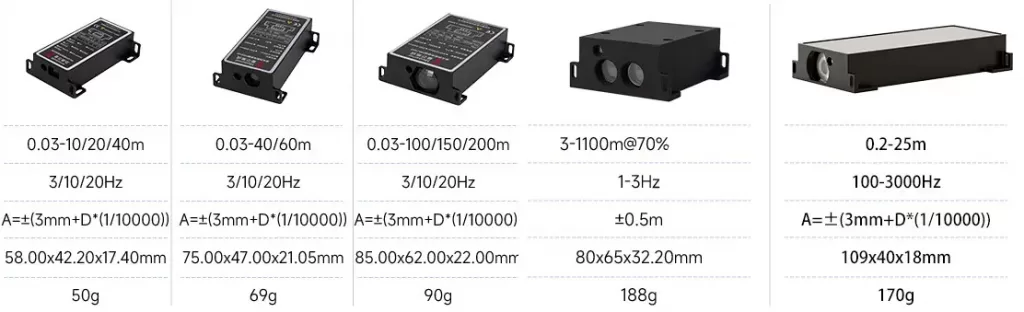
When evaluating Laser Distance Sensors for Outdoor, it is important to look beyond datasheet maximum range values.
A practical selection checklist includes:
- Puls Flugzeit Messung
- 905nm laser wavelength
- Proven ambient light suppression
- Rain and fog mitigation algorithms
- Industrial-grade enclosure and temperature rating
- Real-world outdoor deployment experience
Sensors optimized for stable, repeatable measurements will usually outperform high-spec modules designed only for ideal conditions.
Typical Applications for Outdoor Laser Distance Sensors
Outdoor laser distance sensors are widely used in applications such as:
- Infrastructure and bridge monitoring
- Wind turbine positioning systems
- Outdoor robotics and unmanned platforms
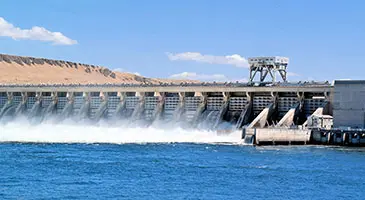
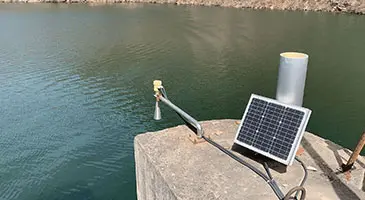
- Water level and flood monitoring
- Messung der Schneehöhe
- Remote industrial automation
In these applications, reliability and consistency are far more valuable than laboratory-level accuracy.

Why System Integrators Choose Meskernel
Meskernel designs outdoor laser distance sensors based on real deployment challenges rather than theoretical assumptions.
Our solutions focus on:
- Stable operation in rain, snow, and fog
- Resistance to strong ambient light
- Low power consumption for remote systems
- Proven reliability in harsh outdoor environments
For system integrators, this translates into fewer field failures, lower maintenance costs, and more predictable performance.
Explore Meskernel laser sensor video library
FAQs: Laser Distance Sensors for Outdoor Use
Can laser distance sensors work in rain or snow?
Yes. Outdoor laser distance sensors can operate in rain or snow, although effective range may be reduced. Pulse-based ToF-Sensoren can distinguish real target reflections from short-distance rain or snow echoes.
How does fog affect outdoor laser distance sensors?
Fog causes strong backscattering of laser light, reducing signal strength and range. High-quality outdoor sensors use optical filters and signal validation algorithms, but very dense fog will still limit performance.
Do laser distance sensors work in direct sunlight?
Yes, if designed for outdoor use. Outdoor laser distance sensors suppress ambient light using narrow band-pass filters, high dynamic range receivers, and firmware-level sunlight rejection.
What wavelength is best for outdoor laser distance sensors?
905nm is the most commonly used wavelength for outdoor laser distance sensors because it balances long-range performance, sunlight resistance, eye safety, and cost efficiency.
Can rain or fog cause false readings?
Rain and fog can cause false reflections in basic laser modules. Outdoor laser distance sensors reduce this using pulse discrimination and threshold filtering to reject near-field interference.
How accurate are laser distance sensors in bad weather?
Accuracy depends on sensor design and conditions. In bad weather, outdoor sensors focus on maintaining consistent and repeatable measurements rather than peak accuracy.
What is the typical outdoor range in harsh conditions?
In harsh weather, effective range is usually 30–60% lower than datasheet values measured indoors. Stable outdoor performance is more important than maximum theoretical range.
What is the difference between indoor and outdoor laser distance sensors?
Indoor sensors are designed for controlled environments, while outdoor sensors handle weather, sunlight, and temperature extremes using stronger optics, filtering, and rugged housings.
How do I choose the right outdoor laser distance sensor?
Choose based on real operating conditions. Key factors include pulse ToF technology, 905nm wavelength, ambient light resistance, weather filtering, and proven outdoor deployment experience.
Abschließende Überlegungen
Outdoor environments quickly reveal the difference between generic laser modules and purpose-built outdoor sensors. By understanding how rain, snow, fog, and ambient light affect laser propagation—and selecting sensors designed specifically for these challenges—you can dramatically improve system reliability and reduce long-term maintenance costs.
If you are planning an outdoor deployment and need application-specific guidance, our engineering team is ready to help.