Selecting the right Laser 거리 센서 Technology is not about choosing the most advanced option on paper, but about identifying the most reliable and application-suitable solution for a specific use case.
For procurement decision-makers, system integrators, and solution providers, the real challenge is balancing 측정 정확도, range, environmental robustness, system integration complexity, and long-term operational reliability. Different 레이저 거리 sensor technologies are designed to solve different engineering problems, and a mismatch between technology and application can result in unstable performance, unexpected costs, or even project failure.
This article explains the main 레이저 거리 센서 Technology types used in industrial and outdoor applications, analyzes their strengths and limitations from an engineering perspective, and provides practical guidance to support informed selection decisions.
Key Laser Distance Sensor Technologies Overview
In industrial practice, 레이저 거리 센서 are typically based on one of the following ranging principles:
- 비행 시간 (Pulse / TOF)
- 위상 편이 측정
- 레이저 삼각 측량
- FMCW (Frequency-Modulated Continuous Wave) – emerging in specific high-end scenarios
Each technology has distinct characteristics that directly affect performance in real-world use.
Time-of-Flight (Pulse / TOF) Technology
How it works
TOF 센서 emit short laser pulses and calculate distance by measuring the time it takes for the reflected light to return.
Strengths
- Long measurement range (tens to hundreds of meters)
- Good performance in outdoor environments
- Less sensitive to target color and surface texture
- Suitable for harsh industrial conditions (dust, vibration, ambient light)
Limitations
- Lower accuracy compared to phase-shift or triangulation at short distances
- Requires more advanced signal processing for high precision
- Typically higher cost for high-performance models
Typical applications
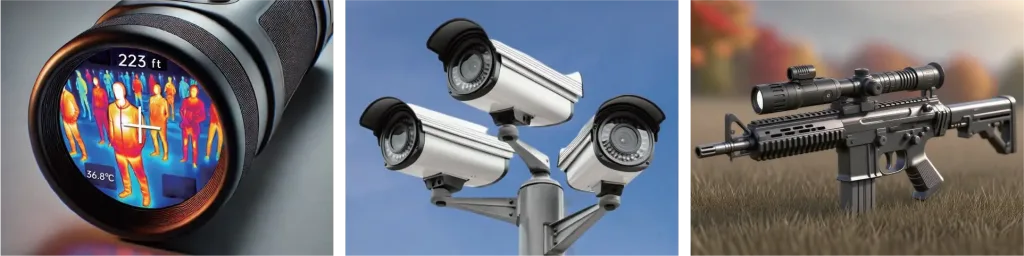
- 아웃도어 거리 측정
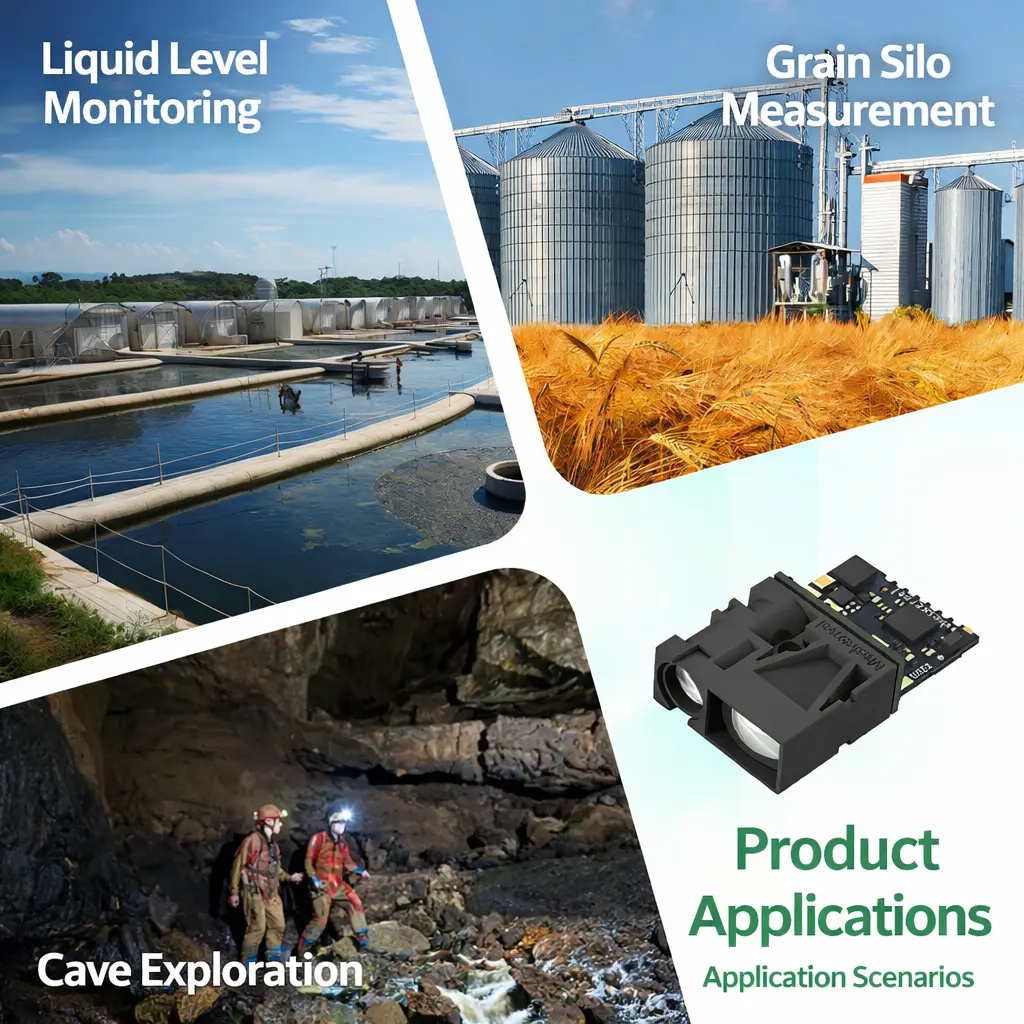
- Level measurement in silos and tanks
- Crane positioning and port automation
- Mobile equipment and autonomous vehicles
Engineering takeaway:
TOF is often the safest choice when range, environmental adaptability, and robustness are more critical than sub-millimeter accuracy.
Phase-Shift Measurement Technology
How it works
그리고 phase-shift measurement sensor emits a continuous modulated laser beam and calculates distance by measuring the phase difference between the emitted and received signals.
Strengths
- High accuracy at short to medium distances
- Faster measurement rates
- Stable performance in controlled environments
Limitations
- Limited maximum range compared to TOF
- Performance degrades in strong ambient light or outdoor conditions
- More sensitive to surface reflectivity and environmental noise
Typical applications
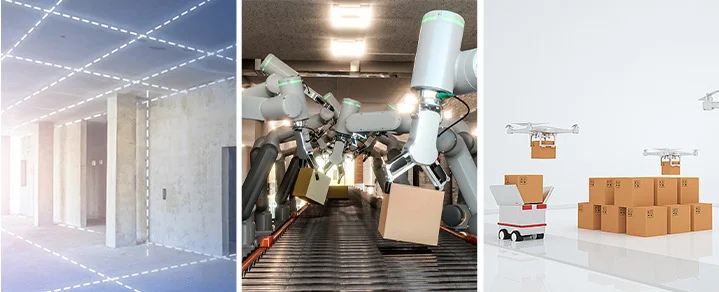
- Indoor automation systems
- Precision positioning and alignment
- 창고 자동화
- Industrial robotics (indoor)
Engineering takeaway:
Phase-shift sensors are ideal for indoor applications requiring high precision, but they are not well suited for long-range or harsh outdoor environments.
Laser Triangulation Technology
How it works
Triangulation sensors calculate distance based on the position of the reflected laser spot on a detector, using geometric relationships.
Strengths
- Extremely high accuracy at very short distances
- Excellent repeatability
- Compact sensor size
Limitations
- Very limited measurement range (typically millimeters to a few meters)
- Highly sensitive to target surface and alignment
- Not suitable for outdoor or dusty environments
Typical applications
- Displacement measurement
- Thickness and profile measurement
- Precision manufacturing and quality inspection
Engineering takeaway:
Triangulation is a precision tool for short-range measurement tasks, not a general-purpose distance sensing solution.
FMCW Laser Ranging (Emerging Technology)
How it works
FMCW sensors measure distance and velocity by analyzing frequency changes in a continuously modulated laser signal.
Strengths
- High accuracy combined with velocity measurement
- Strong resistance to interference
- Potential for long-range, high-precision sensing
Limitations
- Higher system complexity
- Higher cost
- Limited availability and integration experience in industrial markets
Typical applications
- Advanced robotics
- Autonomous systems
- High-end research and defense-related applications
Engineering takeaway:
FMCW is promising, but for most industrial buyers, it is still a niche solution rather than a mainstream choice.
Technology Comparison from a Selection Perspective
| 기술 | 정확성 | 범위 | Outdoor Suitability | 통합 복잡성 | Typical Buyer |
|---|
| TOF (Pulse) | Medium–High | Long | 우수 | Medium | Industrial & outdoor systems |
| 위상 시프트 | 높음 | Medium | 제한적 | Low–Medium | Indoor automation |
| 삼각 측량 | 매우 높음 | 짧은 | Poor | 낮음 | Precision manufacturing |
| FMCW | 높음 | Long | 우수 | 높음 | Advanced systems |
Compare different Meskernel laser distance sensor models in video demos
Common Selection Mistakes in Laser Distance Sensor Projects
Many procurement and integration issues arise not from sensor quality, but from incorrect technology selection:
- Choosing phase-shift sensors for outdoor applications
- Over-specifying accuracy while underestimating environmental impact
- Ignoring long-term stability and maintenance requirements
- Focusing on sensor price instead of total cost of ownership
A technology that performs well in a laboratory may fail in real industrial environments if environmental factors are not considered early in the selection process.
Which Laser Distance Sensor Technology Is Better?
There is no single “best” laser distance sensor technology.
The better choice depends on:
- Measurement range requirements
- Accuracy needs
- Environmental conditions (indoor vs outdoor)
- Integration constraints
- Long-term reliability expectations
For most outdoor, long-range, and industrial applications, Time-of-Flight technology offers the best balance between robustness and performance.
For indoor precision systems, phase-shift or triangulation technologies may deliver superior accuracy.
Final Guidance for Procurement Decision-Makers and Integrators
Before selecting a laser distance sensor, it is recommended to:
- Define real operating conditions, not just nominal specifications
- Evaluate technology suitability, not only sensor parameters
- Consider long-term stability and integration effort
- Validate performance in real application environments
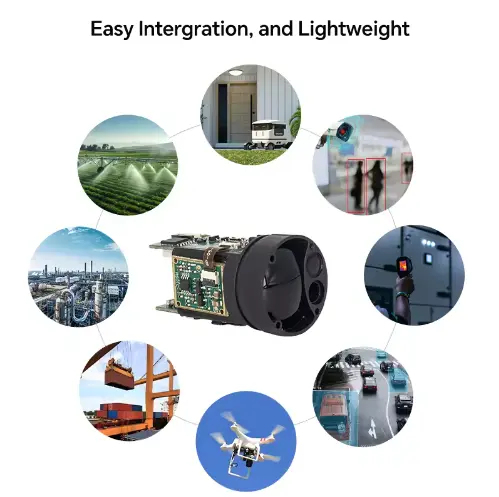
A well-matched 레이저 거리 측정 technology reduces system risk, shortens integration time, and improves overall project reliability.
FAQ: Laser Distance Sensor Technology Comparison
Which laser distance sensor technology is the most accurate?
Time-of-Flight (ToF) laser distance sensors are generally the most suitable for long-range applications, while phase-shift sensors provide higher precision at medium range. Triangulation sensors offer the highest accuracy at short distances but are limited in range.
What is the main difference between TOF, phase shift, and triangulation sensors?
Time-of-Flight measures the time it takes for a laser pulse to return.
Phase shift measures the phase difference between emitted and reflected light.
Triangulation calculates distance based on geometric angles.
Each method is optimized for different ranges and accuracy levels.
Which laser distance sensing technology works best for long distance measurement?
Time-of-Flight (ToF) technology is the best choice for long-distance measurement because it supports high-range 탐지, strong outdoor performance, and works well in low-reflectivity environments.
Which technology is best for high precision short-range measurement?
삼각 측량 레이저 센서 are the best for short-range, high-precision applications, typically within a few centimeters to a few meters. They are widely used in industrial inspection and quality control.
Are TOF sensors better than phase shift sensors?
Neither is universally better.
ToF 센서 are better for long range and outdoor use, while phase shift sensors are better for stable, high-resolution measurements at medium distances.
Which laser distance sensor technology performs best in outdoor environments?
비행 시간 센서 perform best outdoors because they are less sensitive to ambient light and can handle longer distances with varying target reflectivity.
What is the most cost-effective laser distance measurement technology?
Triangulation sensors are often the most cost-effective for short-range applications, while ToF sensors provide better value for long-range industrial use due to scalability.
Which technology is used in LiDAR systems?
대부분 LiDAR systems use Time-of-Flight (ToF) technology because it enables fast scanning, long range detection, and 3D environment mapping.
What are the limitations of each laser distance sensor technology?
TOF: Lower precision at very short range
Phase shift: Limited maximum range
Triangulation: Very short range limitation and sensitive to surface angle
How to choose the right laser distance sensor technology?
Choose based on three factors:
Measurement range (short / medium / long)
필수 정확도
Environment (indoor / outdoor / industrial)
No single technology is best for all applications.
Which laser distance sensor technology is best for industrial automation?
Phase shift and ToF sensors are most commonly used in industrial automation, depending on whether precision (phase shift) or range (ToF) is more important.